


To fix uneven irrigation in Riyadh gardens, inspect the irrigation system for blocked emitters, pressure differences, incorrect watering schedules, leaking pipes, unsuitable sprinkler coverage, and inconsistent soil moisture. Measure how much water reaches each planting zone, repair faulty components, and adjust irrigation according to the water needs of trees, palm trees, lawns, and ornamental plants. The most effective solution is to balance water distribution across the garden rather than simply increasing the watering duration.
In Riyadh, high summer temperatures, intense sunlight, variable soil conditions, and strong evaporation can make uneven watering especially noticeable. One date palm may receive enough water while another remains dry. A lawn may develop yellow patches even though nearby planting beds are excessively wet. Washingtonia palms may receive the same irrigation schedule as smaller ornamental shrubs despite having different root-zone conditions and water requirements.
These problems are not always caused by insufficient water. Sometimes the total water supply is adequate, but the irrigation system distributes it incorrectly. In other cases, poor drainage, compacted soil, or unsuitable planting locations prevent trees from using the supplied water effectively.
This guide explains how to diagnose uneven irrigation, improve water distribution, understand the needs of different trees and palms, estimate planting costs, and plan a more reliable landscape irrigation system for residential and commercial gardens in Riyadh.
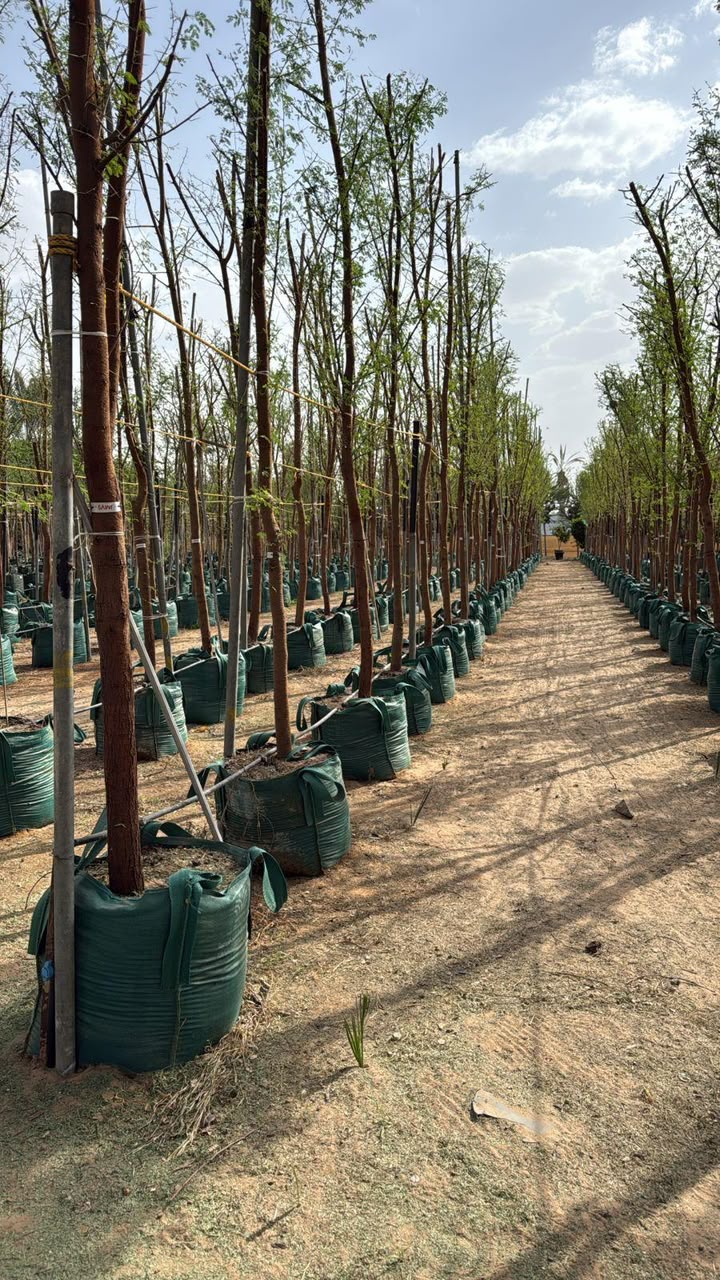
What Is the Quickest Way to Fix Uneven Garden Irrigation?
Quick answer: Run each irrigation zone separately, inspect every emitter or sprinkler, compare the water delivered at different locations, check operating pressure, and measure soil moisture near the active roots.
What should I inspect first when one part of my garden is dry?
Start with the irrigation components serving the dry area. Check whether the valve opens correctly, the pipes are intact, and the emitters or sprinkler heads are functioning as intended.
If the irrigation equipment appears to be working, investigate soil moisture, root-zone conditions, and whether the water is actually reaching the plant.
Should I increase the irrigation time immediately?
No. Increasing watering duration without identifying the cause may overwater healthy sections while leaving blocked or poorly supplied sections dry.
How can I tell whether a tree is receiving enough water?
Measure moisture in the active root zone rather than relying only on the appearance of the soil surface.
A dry surface does not always mean the deeper soil is dry, and a wet surface does not guarantee that water has reached the roots.
Can uneven irrigation be repaired without replacing the entire system?
Often, yes. Problems caused by blocked emitters, damaged pipes, incorrect pressure, unsuitable nozzles, or poor controller settings may be corrected through targeted repairs.
When should I consider redesigning the irrigation system?
Consider redesign when the existing zones combine plants with incompatible water requirements, pipe capacity is inadequate, pressure varies excessively, or the system cannot distribute water uniformly even after maintenance.
Why Is My Garden Watering Unevenly?
Uneven watering usually results from differences in flow, pressure, emitter operation, sprinkler coverage, or soil infiltration.
Why do some drip emitters deliver more water than others?
Possible causes include pressure variation, partially blocked emitters, different emitter specifications, excessive pipe lengths, elevation differences, or damaged components.
Why is the end of my irrigation line receiving less water?
Pressure losses along the pipe, insufficient supply capacity, or poor hydraulic design can reduce flow toward the end of an irrigation network.
Why are some trees wet while others remain dry?
The trees may have different numbers of emitters, uneven distribution around their roots, blocked irrigation outlets, or different soil conditions.
Why does water collect around one tree?
Water accumulation can result from excessive irrigation, low infiltration, compacted soil, poor drainage, or a planting basin that retains more water than the root zone can absorb.
Why does irrigation work properly in the morning but poorly later?
Water pressure and available flow may change during the day because of simultaneous water use, pump operation, tank levels, valve performance, or other system conditions.
How do I distinguish irrigation failure from a drainage problem?
Measure the volume of water delivered and observe how quickly it enters and moves through the soil.
If the irrigation system delivers the intended amount but water remains standing or the root zone stays excessively wet, drainage or soil conditions may be the primary issue.
How Do I Test Irrigation Uniformity in My Garden?
Test irrigation uniformity by measuring water delivery at multiple points within the same zone and comparing the results under normal operating conditions.
How do I measure the flow from a drip irrigation emitter?
Collect water from the emitter for a known period using a measuring container, then calculate the hourly flow rate.
For example, an emitter that delivers 1 liter in 15 minutes has a measured flow rate of 4 liters per hour.
How do I calculate the amount of water delivered to a tree?
Multiply the measured flow rate of each emitter by the operating time, then add the volumes from all emitters serving the tree.
Water delivered (L)=Total emitter flow (L/hour) × Irrigation duration (hours)
If four emitters each deliver 4 liters per hour and operate for two hours, the total nominal water delivery is 32 liters.
This calculation does not establish whether 32 liters is sufficient for the tree. The required volume depends on the species, canopy size, root-zone conditions, climate, and irrigation frequency.
How do I compare emitters within the same irrigation zone?
Measure representative emitters near the beginning, middle, and end of the zone and compare their actual flow rates with the manufacturer's specifications.
How do I test sprinkler coverage on a lawn?
Place identical collection containers across the lawn, operate the sprinklers for a fixed period, and compare the collected water depths.
Uneven container measurements can indicate poor coverage, incorrect nozzle selection, pressure problems, wind effects, or misaligned sprinkler heads.
How do I check irrigation pressure?
Use a suitable pressure gauge at appropriate test points while the zone is running.
Compare measured pressure with the operating range specified for the emitters, sprinklers, pressure regulators, and other installed components.
What is the difference between pressure and flow?
Pressure describes the force available to move water through the system, while flow describes the volume delivered per unit of time.
Both must be evaluated because adequate pressure at one point does not automatically guarantee sufficient flow throughout the irrigation zone.
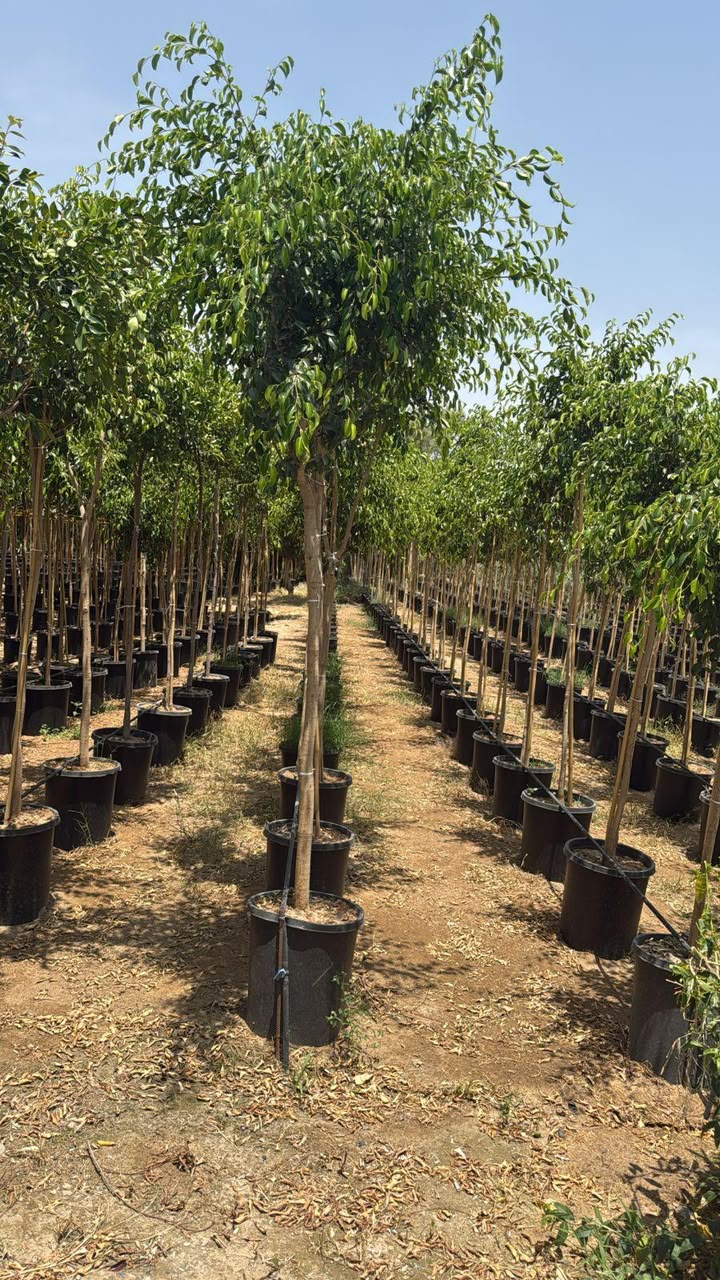
How Do I Fix Uneven Drip Irrigation?
Fix uneven drip irrigation by identifying restricted flow, correcting pressure problems, repairing leaks, and ensuring that each tree receives suitable water distribution across its active root zone.
How do I clean blocked drip emitters?
Follow the manufacturer's recommended cleaning or replacement procedure, flush irrigation lines where appropriate, and inspect the filtration system.
Do not use aggressive chemicals or disassemble pressurized components without suitable safety procedures.
Should I replace ordinary emitters with pressure-compensating emitters?
Pressure-compensating emitters may improve flow consistency where the operating pressure remains within their specified range.
They cannot compensate for inadequate water supply or pressure outside the manufacturer's supported limits.
How do I repair a leaking irrigation pipe?
Isolate the water supply, identify the damaged section, and use compatible fittings or replacement pipe suitable for the installed system.
Should I increase the number of emitters around a large tree?
Additional emitters may improve root-zone coverage as the tree grows, provided the irrigation network has adequate flow and pressure capacity.
Where should drip emitters be placed around a tree?
Position them to wet the active root zone and expand the wetted area as the root system develops.
Avoid concentrating all irrigation directly against the trunk, and consider the actual soil wetting pattern rather than assuming that every emitter wets an identical circular area.
How can I prevent blocked emitters from returning?
Use suitable filtration, maintain the water supply, flush lines when needed, and inspect emitters periodically.
What Are the Trees?
Trees are long-lived woody plants that generally develop a permanent supporting structure, a root system, and a crown or canopy. In Riyadh landscaping, the term commonly includes shade trees, ornamental trees, and palms, although palms differ botanically from typical broadleaf or conifer trees.
What are the main categories of trees used in Riyadh gardens?
Common landscaping categories include shade trees, flowering ornamental trees, evergreen screening trees, fruit trees, and palm species.
Are palm trees the same as ordinary shade trees?
Not botanically. Palms belong to the family Arecaceae and have different growth structures from most dicotyledonous woody trees.
Both may perform important landscaping functions, but their maintenance, pruning, root growth, and irrigation requirements can differ.
Which trees are suitable for the Riyadh climate?
Species should be selected according to heat tolerance, water requirements, available rooting space, soil conditions, irrigation water quality, and intended landscape function.
Examples worth evaluating include suitable native or regionally adapted acacias, ghaf trees, sidr, date palms, and certain ornamental palms.
Final suitability depends on the exact species, cultivar, planting location, and site conditions.
Do all trees need the same amount of water?
No. Water requirements vary according to species, establishment stage, canopy size, weather, soil, irrigation efficiency, and landscape design.
How do I choose between a shade tree and an ornamental tree?
Choose a shade tree when canopy coverage and cooling are major objectives. Choose an ornamental species when visual form, seasonal interest, or landscape composition is the primary purpose.
What Are the Benefits of Palm Trees?
Palm trees provide architectural character, vertical landscape structure, and, depending on the species, shade, edible fruit, habitat value, or visual screening.
Why are date palms popular in Saudi landscaping?
Date palms are closely associated with Saudi agriculture and landscape identity, and suitable cultivars can provide edible dates under appropriate growing and management conditions.
Do palm trees provide useful shade?
Yes, although the amount and pattern of shade depend on the species, crown size, tree height, orientation, and planting arrangement.
Can date palms help improve the appearance of a villa garden?
Yes. Their distinctive form can provide visual rhythm and a recognizable Saudi landscape character, especially when integrated with suitable planting beds and pathways.
Do mature palms need irrigation?
Yes. Established palms may tolerate certain dry conditions, but maintaining healthy growth and fruit production often requires appropriate irrigation, particularly in hot, arid landscapes.
Should palm trees be irrigated directly against the trunk?
Water should be distributed where active roots can absorb it. Persistently wet conditions immediately against the trunk or crown area should be avoided.
Are palm trees always low-maintenance?
No. Maintenance requirements can include irrigation, nutrient management, pruning of dead fronds, pest monitoring, and species-specific care.
What Are the Benefits of Washingtonia Trees?
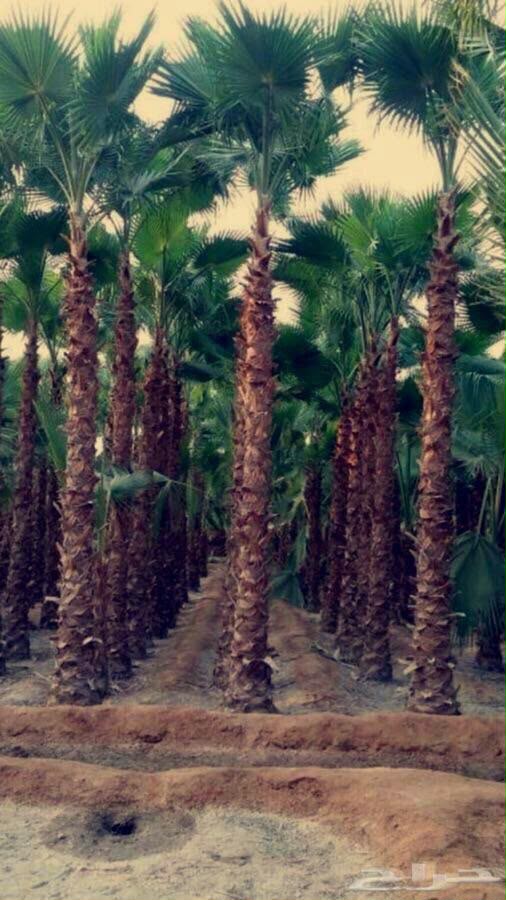
Washingtonia palms provide tall, distinctive vertical landscape features and can be used for entrances, boulevards, and formal planting arrangements where sufficient space and appropriate site conditions are available.
What is a Washingtonia palm?
Washingtonia is a genus of fan palms that includes Washingtonia robusta and Washingtonia filifera.
Different species and hybrids may vary in mature height, trunk form, environmental adaptation, and maintenance requirements.
Why are Washingtonia palms used along roads and entrances?
Their tall trunks and fan-shaped crowns create a strong vertical form that can complement large-scale streetscapes, entrances, and formal landscapes.
Do Washingtonia palms require less water than date palms?
Water requirements should not be compared using species names alone.
Actual demand depends on plant size, establishment, weather, soil, irrigation design, and the performance level expected from the landscape.
Can Washingtonia palms grow in Riyadh?
They can be cultivated in suitable Riyadh landscapes, but successful establishment depends on appropriate species selection, irrigation, drainage, planting conditions, and long-term management.
Do Washingtonia palms have invasive roots?
Their root systems can spread through available soil. Planting distances should account for the mature tree, soil conditions, nearby infrastructure, and long-term maintenance.
Do not assume that any palm can be safely planted directly beside foundations or underground utilities without evaluating the location.
Should I plant Washingtonia next to a swimming pool?
Evaluate the available space, mature height, leaf and fruit litter, maintenance access, nearby services, and the pool structure before deciding.
What is the difference between Washingtonia and date palms?
Washingtonia palms are typically used primarily for their tall ornamental form, whereas date palms can provide both ornamental value and fruit production, depending on the cultivar and management.
| Plant Category | Main Landscaping Benefits | Irrigation Considerations | Important Planning Factors |
|---|---|---|---|
| Date Palm | Saudi landscape identity, ornamental form, potential fruit production | Requires irrigation appropriate to tree size, establishment, and production goals | Cultivar, mature dimensions, fruit management, and maintenance |
| Washingtonia Palm | Tall ornamental structure and formal entrance planting | Site-specific irrigation during establishment and maturity | Mature height, overhead clearance, frond maintenance, and rooting space |
| Suitable Acacia Species | Potential shade, ecological value, and arid-landscape character | Establishment watering followed by species-specific management | Species identification, canopy spread, thorns, and planting location |
| Sidr (Ziziphus spina-christi) | Shade, ornamental interest, and ecological value | Water according to establishment, root development, and site conditions | Canopy size, available space, and long-term maintenance |
| Ghaf (Prosopis cineraria) | Shade and suitability for appropriately designed arid landscapes | Establishment irrigation and careful long-term water management | Rooting space, canopy development, and local site suitability |
Important: These categories are not interchangeable irrigation groups. Even trees of the same species may require different watering quantities depending on age, size, soil, and exposure.
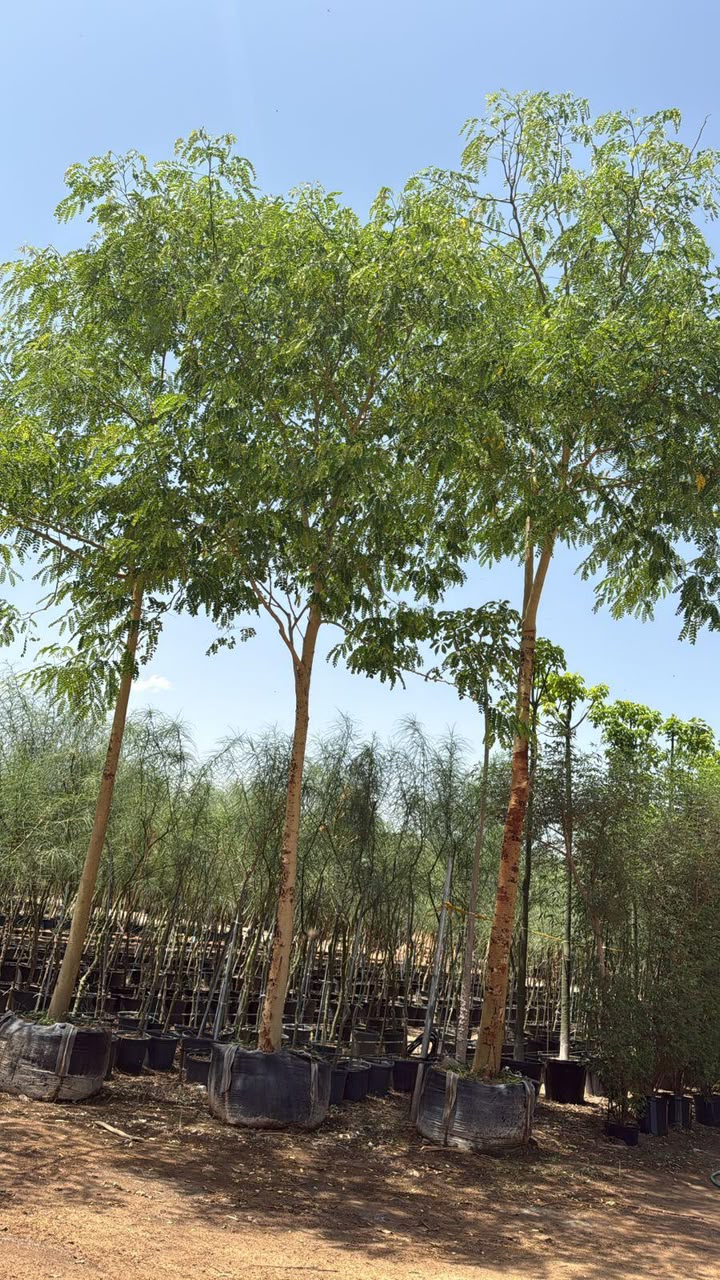
Where Are Trees Planted?
Trees should be planted where their mature canopy and root systems have sufficient space, where soil and drainage conditions are suitable, and where irrigation can reach the active root zone without damaging nearby buildings or infrastructure.
Where should I plant shade trees in a Riyadh villa garden?
Place shade trees where their mature canopy can benefit outdoor seating, walkways, or exposed landscape areas without obstructing buildings, utilities, or required access.
Where should palm trees be planted?
Palms can be used at entrances, along suitable pathways, within large planting beds, or as visual focal points, provided the site accommodates their mature size and maintenance needs.
Where should Washingtonia palms be planted?
Choose locations that allow their mature height and crown to develop safely, with adequate clearance from overhead services, buildings, and areas where falling fronds could create maintenance or safety concerns.
Can trees be planted next to a villa wall?
Only after evaluating mature root spread, canopy size, wall foundations, underground utilities, and required access.
There is no universal planting distance suitable for every tree species and wall construction.
Can I plant large trees near underground irrigation pipes?
Tree roots and underground services should be considered together during the landscape design.
Use appropriate separation, access arrangements, and pipe specifications to reduce future maintenance conflicts.
Where should trees be planted if part of the garden receives more sunlight?
Match the planting location to each species' light tolerance and expected water demand, and separate irrigation zones when exposure creates materially different requirements.
Should I plant trees in the lowest part of the garden?
Not automatically. Low areas may collect runoff or develop drainage problems. Evaluate soil infiltration and water movement before planting.
How Are They Planted?
Trees are planted by selecting healthy stock, preparing a suitable planting location, positioning the root system correctly, backfilling with appropriate soil, irrigating the root zone, and monitoring establishment.
How do I prepare the planting hole?
Prepare a planting hole wide enough to accommodate the root system and allow suitable root development, while avoiding unnecessary deep placement.
The exact dimensions should reflect the root ball, soil conditions, and species-specific planting guidance.
How deep should I plant a tree?
For many conventional woody trees, the root flare should remain at an appropriate level relative to the finished soil surface.
Palms may have species-specific planting requirements, so the original growing depth and relevant horticultural guidance should be checked.
Should I add fertilizer immediately after planting?
Do not apply fertilizer automatically. Soil testing, species requirements, root condition, and product guidance should determine whether nutrient supplementation is appropriate.
How do I water a newly planted tree?
Apply water to the root ball and surrounding establishment zone, then adjust frequency and volume according to soil moisture, tree size, and weather conditions.
Should I add mulch around newly planted trees?
Suitable organic mulch can help moderate soil temperature and reduce evaporation, but it should not be piled against the trunk or crown.
How do I support a newly planted tree?
Use staking only when required for stability, and install supports so they do not damage the trunk or restrict normal development.
How do I know when a newly planted tree is established?
Look for sustained healthy growth, improved root-zone stability, and decreasing dependence on frequent establishment irrigation.
Establishment time varies considerably with species, stock size, transplant method, climate, and maintenance.
How Do I Water Newly Planted Trees in Riyadh?
Water newly planted trees according to the moisture needs of the root ball and the developing surrounding root zone, using frequent monitoring rather than a fixed schedule for all species.
Should newly planted trees be watered every day?
Not necessarily. Frequency depends on the plant, soil, weather, root-ball size, drainage, and irrigation application rate.
Some newly planted trees may require frequent attention during hot weather, while others can be damaged by excessive watering.
How do I check whether the root ball is too dry?
Measure moisture within the root-ball area and compare it with surrounding soil.
A tree may experience water stress even when nearby soil is wet if the original root ball is not receiving adequate irrigation.
How do I prevent the root ball from staying excessively wet?
Adjust irrigation based on measured moisture and drainage conditions, and ensure water is not repeatedly accumulating in the planting hole.
Should young trees use the same irrigation zone as mature trees?
Separate control may be preferable because newly planted and established trees often have different watering frequencies and root-zone distributions.
How do I expand irrigation as a tree grows?
Gradually adjust the wetted area and emitter placement to reflect the developing root system, while continuing to monitor soil moisture.
How Often Should Palm Trees Be Watered?
Palm irrigation frequency depends on the species, maturity, soil texture, weather, water quality, emitter flow, and size of the wetted root zone.
How often should date palms be watered in Riyadh?
There is no single watering frequency suitable for every date palm.
Use site-specific moisture measurements and irrigation calculations, especially during the hottest months when water demand may increase.
Do Washingtonia palms need daily watering?
Not necessarily. Established Washingtonia palms may have different requirements from newly planted specimens, and excessive irrigation can be harmful where drainage is poor.
Should date palms and Washingtonia palms share the same irrigation valve?
They can share a zone only if their required irrigation timing and operating conditions are sufficiently compatible.
Separate zones are often easier to manage when the palms differ significantly in size, establishment stage, or water demand.
How do I know whether my palm is receiving too much water?
Persistently saturated soil, poor drainage, abnormal plant condition, or prolonged water accumulation may indicate a problem.
However, visible symptoms can have several causes, so irrigation should be checked before diagnosing the palm.
Can overwatering damage palm roots?
Yes. Excessively wet and poorly aerated soil can impair root function and contribute to root-related health problems.
Should the irrigation schedule change between summer and winter?
Usually, yes. Weather-related water demand changes through the year, although the exact adjustment depends on species, soil, and local conditions.
How Do I Design Irrigation Zones for Different Trees?
Design irrigation zones by grouping plants with compatible watering requirements, similar exposure, and suitable hydraulic operating conditions.
Should lawns and palm trees use the same irrigation zone?
They generally benefit from separate management because lawns and palms can require different application methods, watering depths, and schedules.
Should mature trees and newly planted trees share irrigation?
Separate zones may be preferable when establishment needs differ significantly from the requirements of mature plants.
How do I calculate the total flow for one irrigation zone?
Add the rated or measured flow of every emitter or sprinkler operating simultaneously within that zone.
Total zone flow=Sum of individual emitter or sprinkler flow rates
How do I know whether my irrigation pump is large enough?
Compare the required flow and operating pressure with the pump performance curve, considering pipe losses, elevation, filtration, valves, and the intended operating configuration.
Should I install a pressure regulator?
A suitable pressure regulator can help maintain the correct operating pressure when used within its design limits.
How do I prevent different zones from receiving the wrong schedule?
Label valves clearly, configure each controller program independently, and maintain accurate records of the plants served by each zone.
Can smart irrigation controllers improve water distribution?
They can improve scheduling when configured with suitable weather, plant, soil, and system information.
However, smart scheduling does not repair blocked emitters, leaking pipes, or incorrect hydraulic design.
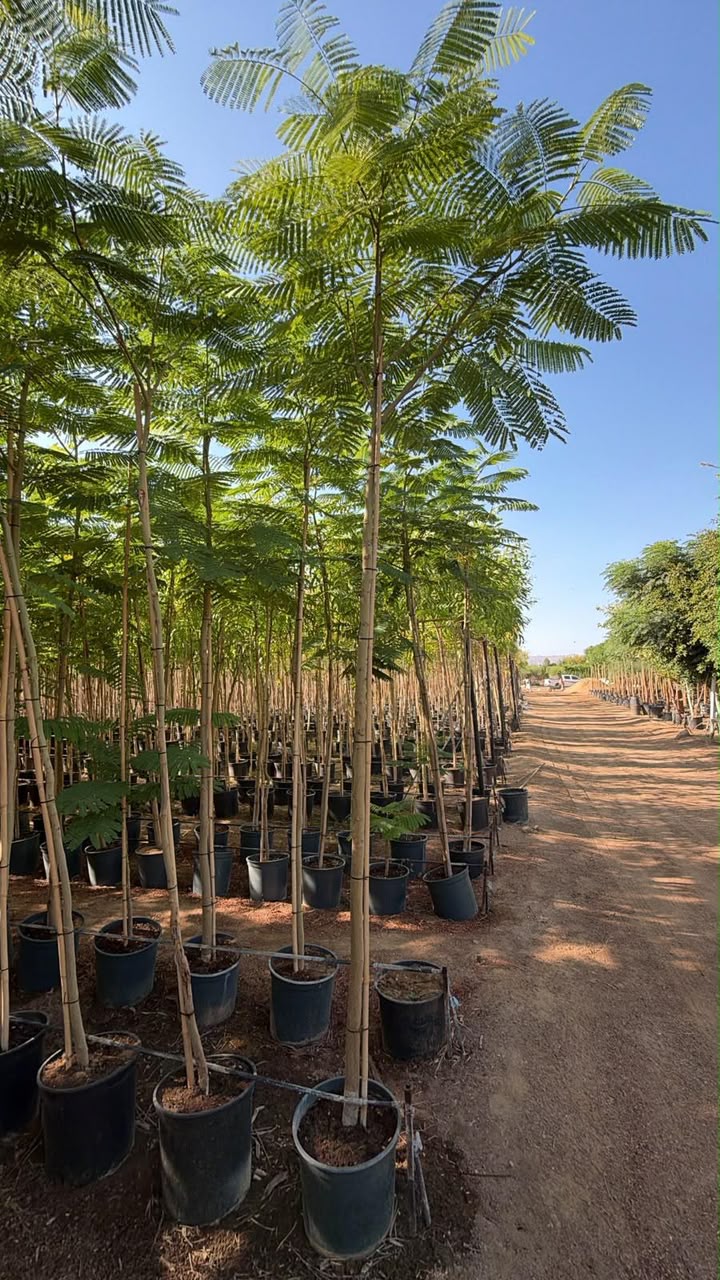
How Do I Calculate Water Requirements for Trees?
Estimate water needs using plant characteristics, local weather, soil conditions, irrigated area, and the efficiency of the irrigation system.
What is evapotranspiration?
Evapotranspiration describes water transferred from the land surface and plants to the atmosphere through evaporation and transpiration.
Does Riyadh's summer climate increase irrigation demand?
High temperatures, sunlight, and atmospheric demand can increase plant water requirements, although the actual amount depends on species and site conditions.
How do I calculate water applied through drip irrigation?
Multiply the total measured emitter flow by the operating time.
How do I calculate irrigation duration from a target water volume?
Divide the desired application volume by the measured total flow serving the plant.
Irrigation duration (hours)=Target water volume (L) ÷ Total emitter flow (L/hour)
Can I use the same water volume for every tree?
No. Required application volumes can differ substantially among species, tree sizes, soil conditions, and establishment stages.
How do I know whether water is moving below the root zone?
Use soil moisture monitoring at multiple depths and evaluate drainage patterns after irrigation.
Can irrigation efficiency be improved without reducing tree health?
Yes, when improvements focus on reducing leaks, runoff, unnecessary evaporation, and uneven distribution while maintaining appropriate root-zone moisture.
| Illustrative Setup | Total Emitter Flow | Operating Time | Applied Water |
|---|---|---|---|
| 2 emitters × 4 L/hour | 8 L/hour | 1 hour | 8 liters |
| 4 emitters × 4 L/hour | 16 L/hour | 2 hours | 32 liters |
| 6 emitters × 8 L/hour | 48 L/hour | 1.5 hours | 72 liters |
| 8 emitters × 8 L/hour | 64 L/hour | 2 hours | 128 liters |
Important: The table illustrates arithmetic only. These volumes are not recommended irrigation prescriptions for particular tree species. The actual schedule must be determined using plant requirements and site measurements.
How Do Soil Conditions Affect Uneven Irrigation?
Soil texture, compaction, structure, infiltration, and drainage influence how irrigation water spreads and remains available to roots.
Does sandy soil need a different watering schedule?
Sandy soils often allow water to infiltrate relatively quickly and may retain less plant-available water than finer-textured soils, although the actual behavior depends on soil composition and structure.
Why does compacted soil cause irrigation problems?
Compaction can reduce pore space, limit water infiltration, restrict root growth, and create uneven moisture distribution.
Can irrigation water quality affect trees?
Yes. Salinity, dissolved minerals, and other water-quality characteristics can influence soil conditions and plant performance.
Should I test the soil before redesigning irrigation?
Soil testing may be valuable when plants show persistent stress, drainage problems, salinity concerns, or inconsistent growth despite apparently adequate irrigation.
Does mulch reduce the need for irrigation?
Suitable mulch can reduce soil-surface evaporation and moderate temperature, but irrigation should still be adjusted according to actual root-zone moisture.
Can two nearby trees need different watering quantities?
Yes. Differences in species, size, root development, exposure, and soil conditions can create different water requirements even when the trees are planted close together.
How Much Does Planting Cost?
Tree planting costs in Riyadh depend on the species, tree size, nursery stock quality, transportation, excavation, soil preparation, irrigation work, access conditions, and maintenance requirements.
How much does planting a palm tree cost?
The actual cost varies with palm species, size, transportation requirements, equipment access, and whether the quotation includes planting materials and irrigation.
How much does planting a Washingtonia palm cost?
Pricing depends on the palm's size, source, delivery method, installation requirements, and the conditions at the planting site.
Are mature trees more expensive to plant than small trees?
They often require more complicated transportation, handling, excavation, irrigation establishment, and sometimes specialized lifting equipment.
Does planting cost include irrigation installation?
Not necessarily. Confirm whether pipes, emitters, valves, controller settings, and irrigation testing are included in the quotation.
How do I calculate the cost of planting several trees?
Calculate the quantity and unit cost of each tree type, then add delivery, planting labor, soil preparation, irrigation work, and any applicable taxes.
Should I compare planting quotations using the tree price alone?
No. Compare the entire scope, including plant quality, delivery, installation, site preparation, irrigation, warranty conditions, and establishment support.
How can I request an accurate landscaping quotation?
Provide the project location, garden dimensions, required tree types, approximate sizes, available irrigation system, site photographs, and desired landscaping layout.
| Budget Item | Illustrative Quantity | Hypothetical Unit Cost | Calculated Total |
|---|---|---|---|
| Ornamental shade tree supply | 5 trees | SAR 250 | SAR 1,250 |
| Washingtonia palm supply | 2 palms | SAR 500 | SAR 1,000 |
| Planting labor and soil preparation | 7 plants | SAR 150 | SAR 1,050 |
| Basic irrigation modifications | Lump sum | SAR 900 | SAR 900 |
| Illustrative subtotal | — | — | SAR 4,200 |
| Illustrative VAT at 15% | — | — | SAR 630 |
| Hypothetical total including VAT | — | — | SAR 4,830 |
Pricing disclaimer: All figures are hypothetical examples used to explain how to prepare a planting budget. They are not verified nursery prices, current Saudi market averages, or official quotations from Rayat Najd Landscaping. Actual pricing must be confirmed for the selected plants, sizes, location, and installation requirements.
What Is the Lifespan of Trees in Years?
The lifespan of trees varies widely by species, genetics, environmental conditions, irrigation management, pests, disease, soil quality, and maintenance. Some species may survive for decades, while others can live for more than a century under suitable conditions.
How many years can a date palm live?
Date palms can be long-lived, and some may survive for many decades or longer under favorable conditions.
However, productive fruiting life and total biological lifespan are different measures.
How many years can a Washingtonia palm live?
Washingtonia palms can potentially survive for several decades and, under suitable conditions, longer periods, but the actual lifespan cannot be predicted accurately from species name alone.
Do shade trees live longer than ornamental palms?
Not necessarily. Lifespan depends on individual species and growing conditions rather than broad landscaping categories.
Can improper irrigation shorten a tree's lifespan?
Yes. Repeated water stress, persistent waterlogging, and unsuitable soil conditions can reduce tree health and increase vulnerability to other problems.
Does planting a large mature tree reduce its lifespan?
Not automatically, but larger transplanted trees can face greater establishment challenges if root handling, transportation, planting, or irrigation is inadequate.
How do I help landscape trees live longer?
Choose suitable species, provide appropriate root space, manage irrigation and drainage, monitor pests, and perform maintenance according to the tree's actual condition.
Can I guarantee that a planted tree will survive for 50 years?
No. Long-term survival cannot be guaranteed because it depends on factors that may change throughout the tree's life.
What Are the Types of Trees, How, When and Why?
Tree selection should answer four practical questions: which species suits the site, how it should be planted, when planting conditions are favorable, and why the tree is needed in the landscape.
What types of trees are commonly considered for Riyadh gardens?
Options may include suitable date palms, Washingtonia palms, sidr, ghaf, selected acacias, and other species appropriate for the property's soil, space, and maintenance capacity.
How should different types of trees be planted?
Planting methods should reflect each species' root characteristics, nursery stock form, required spacing, soil conditions, and establishment needs.
When is the best time to plant trees in Riyadh?
Milder periods can make establishment easier for many species by reducing extreme heat stress.
However, planting windows vary by species, nursery stock, site conditions, and the ability to maintain suitable irrigation.
Why should I choose native or regionally adapted trees?
Suitable native or adapted species may offer advantages in environmental compatibility, ecological function, and long-term landscape management.
They still require appropriate establishment care and site assessment.
Why should I not plant every tree at the same spacing?
Mature canopy size, root distribution, access requirements, light exposure, and infrastructure clearances differ among species.
How do I combine palms and shade trees in one garden?
Use palms for vertical structure and suitable broad-canopy trees for shade, while coordinating planting distances, irrigation zones, and long-term maintenance access.
When should I replace a poorly performing tree?
Consider replacement only after evaluating irrigation, soil, root conditions, structural stability, and the causes of decline.
Some problems can be corrected without removing the tree.
Why is irrigation planning important before planting?
Because a suitable irrigation design influences tree establishment, root development, water use, maintenance requirements, and long-term garden performance.
How Do I Identify Common Irrigation Mistakes in Riyadh Gardens?
Common mistakes include combining incompatible plant types in one zone, using incorrect emitter flow rates, overwatering, insufficient filtration, unsuitable scheduling, and ignoring soil conditions.
Why is using one irrigation schedule for every plant a problem?
Different plants and landscape areas may need different watering depths, volumes, and frequencies.
Why do blocked emitters cause uneven tree growth?
Restricted water delivery can create localized water stress and inconsistent root-zone moisture.
Why does excessive irrigation waste water?
Water that exceeds the soil's storage and plant-use capacity may move below the active root zone or become surface runoff.
Why should I not rely on the soil surface alone?
Surface appearance may not reflect moisture conditions deeper in the root zone.
Can a leaking valve create uneven irrigation?
Yes. A valve that fails to close correctly can deliver unintended water to one zone and affect irrigation performance.
Can incorrect sprinkler nozzles cause dry lawn patches?
Yes. Nozzle mismatch, insufficient overlap, pressure variation, and improper alignment can produce uneven coverage.
How do I prevent the same irrigation problems from recurring?
Maintain filters, flush lines appropriately, monitor water pressure, inspect emitters, verify controller settings, and document repairs.
| Problem | Possible Cause | Recommended Action |
|---|---|---|
| One tree remains dry | Blocked emitter or inadequate root-zone coverage | Measure flow and inspect moisture distribution |
| Water accumulates around a palm | Excessive watering or poor drainage | Evaluate soil infiltration and adjust irrigation |
| Low flow at the end of a drip line | Pressure loss, restrictions, or poor hydraulic design | Measure pressure and review pipe sizing |
| Uneven lawn watering | Poor sprinkler coverage or nozzle mismatch | Conduct a catch-can test and correct coverage |
| Repeated emitter blockage | Insufficient filtration or contaminated water | Inspect filtration and flush lines as appropriate |
| High water consumption | Leaks, excessive duration, or inappropriate zoning | Audit water delivery and controller settings |
| New tree struggles despite watering | Root-ball moisture differs from surrounding soil | Measure moisture inside the root ball and nearby soil |
| Different species receive identical irrigation | Improper plant grouping | Reorganize zones according to compatible requirements |
How Do I Improve Irrigation Efficiency Without Damaging Trees?
Improve efficiency by matching water delivery to plant demand, reducing leaks and runoff, increasing distribution uniformity, and monitoring the soil rather than simply reducing watering time.
Should I switch from sprinklers to drip irrigation for trees?
Drip irrigation can offer targeted water delivery for many tree planting beds, but the appropriate method depends on plant needs, soil, existing infrastructure, and irrigation design.
Can pressure-compensating emitters reduce uneven watering?
They can improve flow consistency within their specified operating range, particularly in systems where pressure varies across the zone.
Should I irrigate early in the morning?
Early morning irrigation can reduce some evaporation and wind-related losses, although the appropriate schedule depends on system type, plant needs, and operational constraints.
Can soil moisture sensors improve irrigation decisions?
Yes. Properly installed sensors can provide useful information about root-zone moisture and help guide irrigation adjustments.
How do I reduce runoff from compacted soil?
Investigate soil conditions, adjust water application rates, consider shorter irrigation cycles where appropriate, and correct drainage or compaction problems when necessary.
Does reducing irrigation always save water safely?
No. Excessive reductions can cause water stress. The objective is to reduce unnecessary losses while maintaining sufficient water availability for healthy plant growth.
How Do I Plan a Garden Irrigation Inspection?
Plan an inspection that covers water supply, valves, filters, pipes, pressure, emitter flow, soil moisture, plant condition, and controller settings.
What should I inspect before running the irrigation system?
Check the main water supply, pump condition if applicable, filtration, valves, visible pipe damage, and controller configuration.
What should I inspect while irrigation is operating?
Observe valve operation, leaks, sprinkler coverage, emitter flow, pressure behavior, and unexpected water accumulation.
What should I inspect after the watering cycle?
Measure moisture at suitable root-zone depths and check for runoff, persistent ponding, or areas that remain dry.
How do I document irrigation problems?
Record each zone, its plant types, operating time, measured pressure, emitter flow, soil conditions, and any repairs made.
When should irrigation be inspected again?
Reinspect after repairs, major weather changes, new planting, controller changes, and recurring performance problems.
How Can Rayat Najd Landscaping Help Improve Garden Irrigation?
Rayat Najd Landscaping can be contacted to discuss garden landscaping, tree planting, irrigation systems, and the requirements of residential or commercial landscape projects in Riyadh.
Can I request an assessment of uneven garden watering?
Contact the company with details about the garden, irrigation system, plant types, and observed problems to discuss the appropriate next steps and available service options.
Can I discuss date palm and Washingtonia planting?
Yes. Provide the preferred palm types, approximate sizes, intended planting locations, and available irrigation arrangements when requesting project information.
What information should I prepare for an irrigation project?
Prepare the property location, garden dimensions, number and types of plants, existing irrigation equipment, water source, and photographs showing the affected areas.
Should I repair irrigation before planting additional trees?
It is generally advisable to resolve major distribution and drainage problems before expanding the landscape, so new trees are not exposed to preventable irrigation difficulties.
Where can I contact Rayat Najd Landscaping?
Visit the official Rayat Najd Landscaping website to discuss tree planting, garden landscaping, and irrigation requirements in Saudi Arabia.
 Call Now
 WhatsApp
What Should I Check Before Changing My Garden Irrigation System?
Use the following checklist to ensure that irrigation changes are based on actual plant and system requirements rather than assumptions.
What should I verify about the irrigation equipment?
Confirm the water supply, filters, valves, pressure, pipe conditions, emitter specifications, and controller settings.
What should I verify about the trees?
Identify the species, planting age, root-zone conditions, watering needs, and visible health concerns.
What should I verify before approving irrigation modifications?
Ensure that the proposed modifications address the measured problem, maintain suitable water delivery, and remain compatible with the overall system.
- ☐ Have I identified every irrigation zone in the garden?
- ☐ Do I know which trees and plants are served by each zone?
- ☐ Have I checked for blocked emitters?
- ☐ Have I checked for damaged or leaking pipes?
- ☐ Have I measured operating water pressure?
- ☐ Have I measured representative emitter flow rates?
- ☐ Have I checked water distribution at the end of each irrigation line?
- ☐ Have I evaluated sprinkler coverage where applicable?
- ☐ Have I inspected the irrigation filters?
- ☐ Have I checked valve operation?
- ☐ Have I compared moisture conditions around different trees?
- ☐ Have I checked the original root balls of newly planted trees?
- ☐ Have I evaluated drainage and soil infiltration?
- ☐ Have I identified the date palms and Washingtonia palms correctly?
- ☐ Have I reviewed tree-specific irrigation requirements?
- ☐ Have I separated incompatible planting groups where necessary?
- ☐ Have I checked controller schedules for seasonal suitability?
- ☐ Have I assessed any irrigation water-quality concerns?
- ☐ Have I documented required repairs?
- ☐ Have I planned a follow-up inspection after adjustments?
What Are the Most Frequently Asked Questions About Trees and Irrigation?
These answers address common questions from villa owners, garden managers, property developers, and customers planning tree planting and landscaping projects in Riyadh.
1. How to fix uneven irrigation in Riyadh gardens?
Check emitter flow, water pressure, leaks, sprinkler coverage, and soil moisture. Repair faulty components and adjust irrigation according to the needs of each planting zone.
2. What are the trees?
Trees are long-lived woody plants with root systems and supporting structures. Landscape categories include shade trees, ornamental trees, fruit trees, and palms, although palms are botanically distinct from many conventional trees.
3. What are the benefits of palm trees?
Palms provide ornamental value, vertical landscape structure, and species-dependent benefits such as shade or fruit production.
4. What are the benefits of Washingtonia trees?
Washingtonia palms provide tall ornamental features suitable for certain entrances, avenues, and large landscape compositions when adequate space and maintenance are available.
5. Where are trees planted?
Plant trees where suitable soil, irrigation, drainage, sunlight, root space, and clearance from buildings and infrastructure are available.
6. How are they planted?
Prepare a suitable planting location, position the root system correctly, backfill appropriately, irrigate the establishment zone, and monitor the plant after installation.
7. How much does planting cost?
Costs depend on species, tree size, nursery supply, transportation, planting labor, soil preparation, irrigation, and site conditions. Obtain a project-specific quotation.
8. What is the lifespan of trees in years?
Lifespan varies by species and environment. Some trees live for decades and others may live for more than a century, but no specific lifespan can be guaranteed.
9. What are the types of trees, how, when and why?
Choose species based on climate, available space, irrigation, and landscape purpose. Use species-appropriate planting methods and select a season that supports establishment whenever possible.
10. How often should palm trees be watered?
Watering frequency depends on species, maturity, root-zone conditions, weather, and irrigation flow. Use soil measurements and site-specific scheduling rather than one fixed rule.
Where Can I Find Reliable Information About Tree Irrigation?
Technical guidance from agricultural, horticultural, and environmental organizations can help explain irrigation efficiency, tree establishment, plant selection, and water management.
Where can I learn about agricultural irrigation and water management?
Visit the Food and Agriculture Organization of the United Nations (FAO) for information about agriculture, irrigation, water management, and plant production.
Where can I learn about efficient landscape watering?
Review EPA WaterSense for information about landscape water efficiency and irrigation management.
Where can I find horticultural guidance for arid climates?
Explore educational resources from University of Arizona Cooperative Extension, including material relevant to plants and landscapes in dry environments.
Where can I learn more about palms and landscape tree care?
Review University of Florida IFAS Extension for horticultural and palm management information.
Recommendations from other climates should be adapted to actual Saudi site conditions rather than applied without verification.
Where can I find official Saudi agricultural information?
Visit the Saudi Ministry of Environment, Water and Agriculture for information relevant to agriculture, water, and environmental management.
Where can I learn about environmental conservation in Saudi Arabia?
Consult the National Center for Wildlife for information relevant to wildlife and biodiversity conservation.
How Do I Start Improving My Riyadh Garden Today?
Begin with an irrigation inspection, identify the trees and palms growing on the property, measure the water reaching each planting zone, and evaluate whether the current system matches the soil and planting requirements.
What is the first practical step?
Run each irrigation zone independently and record where water delivery is too low, excessive, or inconsistent.
Should I repair irrigation before adding more trees?
Yes, when existing problems could compromise the establishment of additional plants. Correcting major issues beforehand can reduce future maintenance difficulties.
How do I plan a garden with date palms and Washingtonia palms?
Determine their mature sizes, planting locations, irrigation requirements, root-space needs, and maintenance access, then organize the irrigation design accordingly.
How do I estimate the cost of improving my garden?
Prepare an itemized scope covering irrigation repairs, any required redesign, new plant materials, planting labor, soil preparation, and maintenance requirements.
How can I contact Rayat Najd Landscaping?
Contact Rayat Najd Landscaping to discuss garden irrigation, palm planting, tree supply, and landscaping requirements for your property in Riyadh or elsewhere in Saudi Arabia.
Final takeaway: Fixing uneven irrigation in Riyadh gardens requires a coordinated approach to water pressure, emitter flow, irrigation zoning, soil moisture, plant selection, and seasonal water demand. The objective is not to deliver the same quantity of water everywhere, but to provide the appropriate amount of water to each planting area.
Date palms, Washingtonia palms, shade trees, and ornamental plants can contribute to an attractive Saudi landscape when they are planted in suitable locations and maintained according to their individual requirements.
Before expanding a garden or installing new palms, evaluate the existing irrigation infrastructure and planting conditions. A well-designed system can reduce unnecessary water loss, support tree establishment, and improve the long-term appearance and functionality of the landscape.