


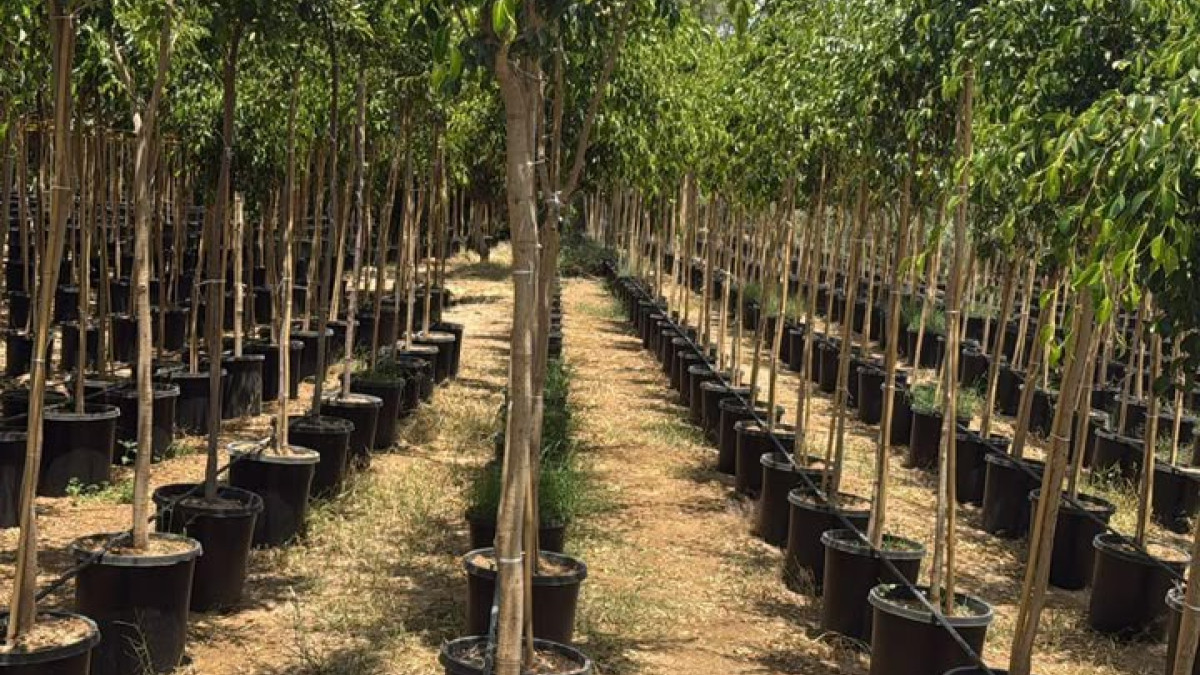
To protect newly planted trees from wind, first check whether the root ball and trunk are stable. If a tree cannot remain upright under ordinary site conditions, install an appropriately designed temporary support system using secure stakes and wide, flexible ties. Keep the support away from the bark, allow controlled trunk movement, inspect it regularly, and remove it once the tree can stand safely without assistance. Large palms and heavy transplanted specimens may require specialized bracing rather than ordinary stakes.
In Riyadh, newly planted trees can encounter strong winds, airborne sand, exposed garden locations, and variable soil conditions. These factors can affect their stability before the root system becomes sufficiently established in the surrounding ground.
However, installing wooden stakes beside every new tree is not necessarily correct. Unnecessary or excessively rigid staking can interfere with normal trunk development, cause bark injuries, and leave the tree dependent on supports for too long.
For Saudi villa gardens, residential compounds, commercial landscapes, and public outdoor spaces, the appropriate solution depends on the plant's species, root system, size, exposure, and planting conditions.
In this guide, Rayat Najd Landscaping | رايات نجد للتشجير explains how to identify wind-related instability, choose safe tree support methods, stabilize newly planted palms, inspect temporary braces, and plan maintenance in Riyadh's climate.
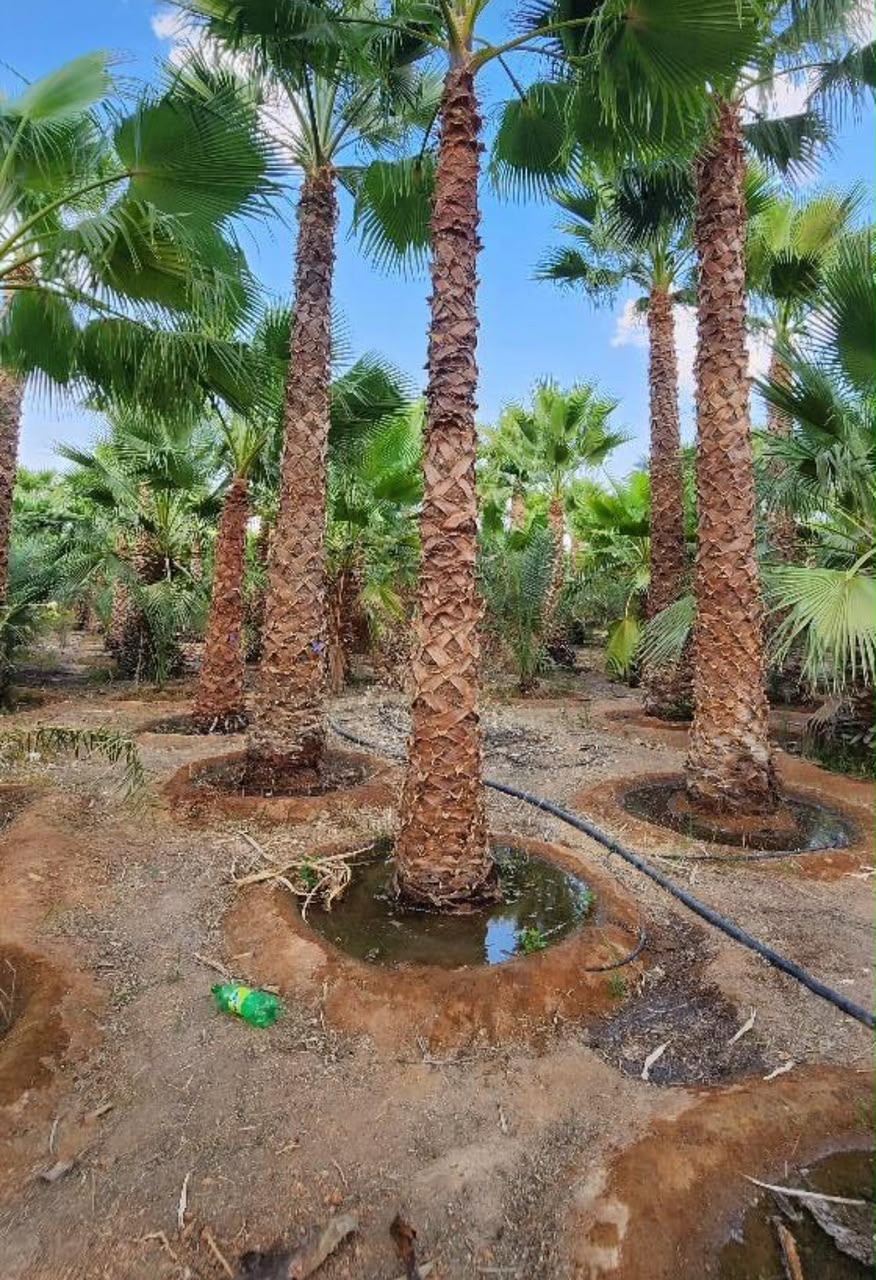
Do not stake a newly planted tree automatically. First verify that its root ball remains stable and the trunk can support itself. If support is necessary, use a temporary system that holds the root ball steady while allowing appropriate trunk movement. Inspect ties and support posts regularly, particularly after windy weather.
Important: Small shade trees, large date palms, and Washingtonia palms have different support requirements. Never apply one universal staking arrangement to all species and sizes.
 Call Now
 WhatsApp
Why Do Newly Planted Trees Lean in Strong Winds?
Newly planted trees may lean because their root systems have not yet anchored into the surrounding soil, the root ball is unstable, the planting material is poorly positioned, or wind pressure exceeds the temporary stability of the plant.
Why does a new tree move after planting?
Some movement is natural, but movement of the entire root ball can indicate inadequate anchorage.
Healthy trees normally experience movement in wind. That movement contributes to their mechanical development, particularly in young woody trees.
The concern is not ordinary movement of branches or the upper trunk. The concern is instability that causes the root ball to lift, rotate, or shift in the planting hole.
Can strong winds damage newly planted roots?
Yes, excessive movement of an unstable root ball may interfere with root establishment and damage newly developing roots.
Keeping the root ball stable while allowing appropriate upper-trunk movement can support successful establishment.
Does sandy soil make trees more likely to lean?
Soil texture and condition can affect anchorage, especially when backfill is loose or poorly prepared.
However, sandy soil alone does not mean a tree will become unstable. Root-ball condition, planting depth, root development, soil compaction, and moisture conditions all influence stability.
Why does a tree lean even when there is little wind?
Possible causes include an incorrectly positioned root ball, uneven planting, weak structural development, or movement of the surrounding soil.
Check the tree's original planting position and whether its roots are properly established before adding support.
What Are the Trees?
Trees are perennial plants that commonly develop a substantial above-ground supporting structure and long-lived growth. In landscaping, the term is often used broadly to include shade trees, ornamental trees, fruit trees, and palms, although palms are botanically distinct from conventional woody trees.
What types of trees are commonly used in Riyadh gardens?
Riyadh landscaping may include suitable native or adapted shade trees, flowering trees, fruit trees, date palms, and ornamental palms.
Possible selections include ghaf, sidr, certain acacias, selected ornamental shade trees, date palms, and Washingtonia palms, depending on the site.
Species selection should consider mature size, root behavior, water needs, heat tolerance, wind exposure, and available planting space.
Are palms the same as ordinary woody trees?
No. Palms are monocotyledonous plants with different trunk structure and growth characteristics from typical broadleaf woody trees.
This distinction matters when selecting support systems because palm trunks and root anchorage can behave differently from young branching trees.
Which newly planted trees are most likely to need support?
Trees with unstable root balls, exposed planting positions, or a high top-to-root-ball size relationship may need temporary support.
The need must be assessed for each plant rather than assuming that a particular species always requires staking.
How do different tree categories compare?
Support needs depend on the combination of plant structure, installation conditions, and wind exposure.
| Plant category | Structural characteristics | Possible support requirement | Main inspection priority |
|---|---|---|---|
| Young shade trees | Flexible woody trunk and developing roots | Temporary flexible staking if unstable | Root-ball stability and tie contact |
| Young ornamental trees | Variable crown and trunk proportions | Only when site conditions justify support | Trunk movement and bark damage |
| Date palms | Single palm trunk and fibrous root system | Species- and size-specific stabilization if needed | Palm anchorage and brace stability |
| Washingtonia palms | Tall palm form with a terminal crown | Professionally selected support for unstable specimens | Trunk alignment and root-ball movement |
| Large transplanted specimens | High mass and potentially reduced root anchorage | Engineered temporary stabilization when required | Support loads, connections and public safety |
These categories describe general considerations. The actual support design must reflect the individual tree and its planting location.
How Do I Know If a Newly Planted Tree Needs Stakes?
A newly planted tree needs stakes when its root ball cannot remain adequately stable without temporary assistance, or when a qualified assessment identifies a specific establishment risk.
Should every newly planted tree be staked?
No. Many young trees establish better without staking when their root balls are stable.
Unnecessary staking may restrict normal trunk movement and interfere with the development of a stronger supporting structure.
The International Society of Arboriculture explains that temporary support may be useful for trees planted in exposed or windy conditions, but is not automatically necessary for every tree.
Reference: International Society of Arboriculture — Planting a Tree.
How do I check whether a tree is stable?
Observe whether the trunk remains reasonably upright and whether the root ball moves or lifts during normal wind conditions.
Do not pull forcefully on a newly planted tree or deliberately destabilize its roots.
If significant movement or visible soil separation occurs, arrange an assessment before further disturbance.
Is a slightly moving tree always unsafe?
No. Controlled trunk movement is normal and can support healthy structural development.
The distinction is between ordinary flexibility and excessive movement at the base that compromises anchorage.
What if the tree is already leaning?
Identify the cause of the lean before attempting to straighten it.
A newly installed tree with a displaced root ball may need corrective planting work or temporary support.
An established tree that suddenly develops a lean may pose a more serious structural risk and should be assessed by a qualified professional.
How Do I Stake Newly Planted Trees Correctly?
Stake a newly planted tree using secure supports positioned outside the main root ball where practical, with wide flexible ties that prevent excessive base movement while allowing appropriate trunk flexibility.
How many stakes should I use for a young tree?
The number depends on the tree size, root-ball stability, soil conditions, and staking system.
One, two, or more support points may be used in different systems, but the appropriate configuration must be selected for the actual plant.
A common temporary method for certain young trees uses opposing support stakes with wide flexible ties.
Where should the stakes be installed?
Place stakes where they provide secure anchorage without damaging the root ball, underground irrigation lines, or nearby utilities.
The support arrangement should also avoid creating hazards for pedestrians, maintenance equipment, and garden users.
What type of tie should I use around the trunk?
Use broad, flexible, non-abrasive tree ties intended for horticultural support.
Avoid narrow wires, rigid metal loops, or tight ropes directly against bark. These can damage the trunk as it moves or grows.
Should I tie the trunk tightly to keep it completely still?
No. Standard young-tree staking should control excessive movement without immobilizing the entire trunk.
Overly rigid support can prevent normal movement and increase the risk of injury where the tie contacts the bark.
How high should the ties be positioned?
Position the ties according to the tree's stability and the selected support system, aiming to stabilize the lower structure while permitting appropriate upper-trunk movement.
The exact position should be tested for the individual tree rather than using a universal height.
What is the correct staking sequence?
Follow a process that starts with stability assessment and ends with regular inspection and eventual removal.
| Step | Required action | What to verify |
|---|---|---|
| 1. Assess stability | Inspect trunk and root-ball movement | Support is actually necessary |
| 2. Check planting | Verify position and root-ball condition | Planting defects are not being concealed |
| 3. Select supports | Choose suitable stakes and anchorage | Materials match plant and site conditions |
| 4. Install stakes | Secure posts in appropriate locations | Roots and buried services remain protected |
| 5. Attach ties | Use broad flexible horticultural ties | No harmful bark pressure or abrasion |
| 6. Test movement | Observe movement under normal conditions | Root ball remains stable |
| 7. Inspect | Check ties and supports during establishment | No damage or loosening |
| 8. Remove | Remove unnecessary temporary supports | Tree is independently stable |
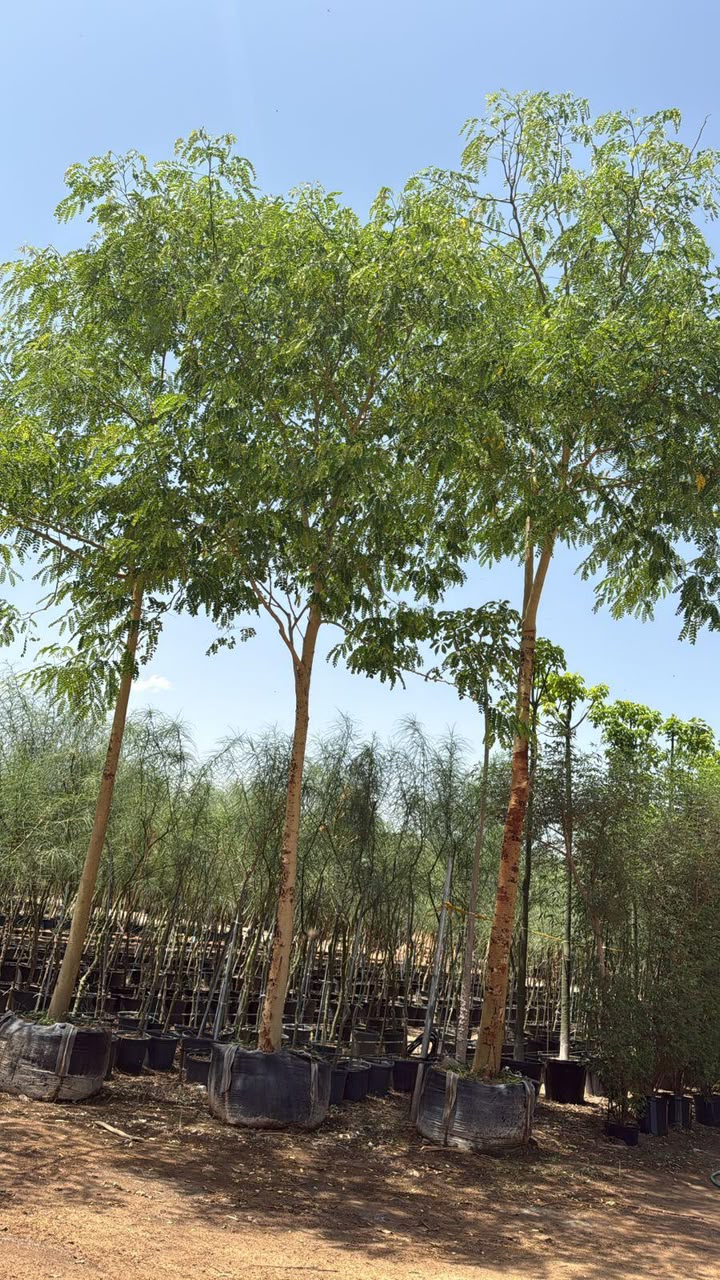
How Do I Protect a Young Tree Without Damaging Its Trunk?
Protect the trunk by using suitable flexible ties, preventing rubbing, avoiding constriction, and inspecting all contact points as the tree develops.
Can tree ties damage the bark?
Yes. Narrow or overly tight ties can abrade or constrict the bark, especially when wind causes repeated movement.
The risk increases when ties are left in place as the trunk expands.
Can I use ordinary metal wire around the trunk?
Do not place bare metal wire directly around the trunk.
If a support design uses tensioned cables, it must include a properly designed, non-damaging connection system suitable for the tree and loading conditions.
Why should the trunk be allowed to move?
Appropriate natural movement supports the development of stronger mechanical structure in young woody trees.
The objective is to prevent root-ball displacement, not to eliminate all movement.
How do I recognize damage from staking?
Look for compressed bark, rubbing marks, swelling around ties, cuts, or evidence that the trunk is being constricted.
If damage appears, have the support adjusted or removed as appropriate. Significant injury or instability should be assessed professionally.
What Are the Benefits of Palm Trees?
Palm trees can provide architectural character, greenery, shade in suitable arrangements, and landscape identity. Date palms can also produce fruit when conditions and cultivation practices are appropriate.
Why are date palms popular in Saudi landscapes?
Date palms are strongly associated with Saudi landscapes and can provide ornamental and productive value.
The suitability of a particular palm depends on cultivar, available space, irrigation, soil conditions, and maintenance requirements.
Do date palms tolerate wind?
Established date palms can tolerate many windy conditions, but newly planted or relocated palms may have limited initial root anchorage.
Stability must be assessed individually, especially when palms are large or installed in exposed locations.
How do I support a newly planted date palm?
Use a support system designed for the palm's size, root-ball condition, and site exposure when stabilization is necessary.
Larger specimens may require temporary external bracing with protected contact points. Support structures must avoid injury to the palm trunk.
Should palm braces be installed by a professional?
Yes, particularly for large or heavy palms where support failure could endanger people or property.
Brace materials, anchorage, connection details, and removal schedules must reflect the actual installation conditions.
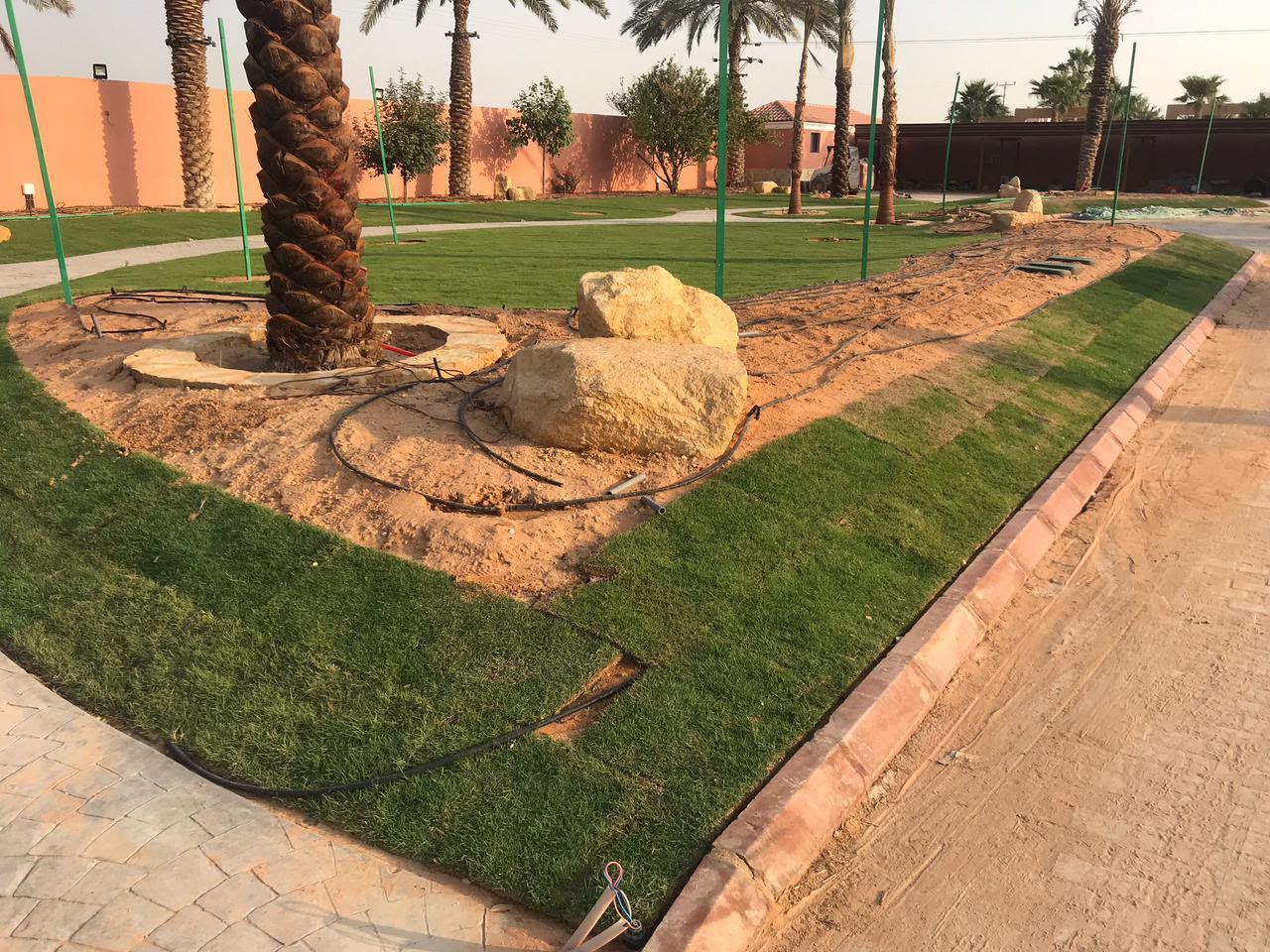
What Are the Benefits of Washingtonia Trees?
Washingtonia palms provide a distinctive tall ornamental form and can create strong vertical accents in suitable landscape designs. Their appearance makes them useful in certain villa entrances, avenues, and larger outdoor spaces.
Why are Washingtonia palms used in landscaping?
Washingtonia palms are valued for their upright form, recognizable crowns, and ornamental appearance.
However, species selection should account for mature height, frond management, available clearance, and maintenance access.
Do Washingtonia palms need support after planting?
Some newly planted Washingtonia palms may require temporary stabilization, particularly when the root ball is unstable or the planting site is exposed.
The decision depends on specimen size, condition, soil, and actual stability.
How do I stop a new Washingtonia palm from leaning?
Check root-ball stability and planting position first, then use a properly designed temporary support system if needed.
Do not assume that tightening ropes around the trunk is a safe solution.
Can strong wind damage Washingtonia fronds?
Yes. Wind can damage or displace fronds, especially where they are already weakened or the palm is under stress.
Frond movement alone does not mean the trunk or root system is unstable.
Any work on tall palms or elevated crowns should be carried out by properly equipped and qualified personnel.
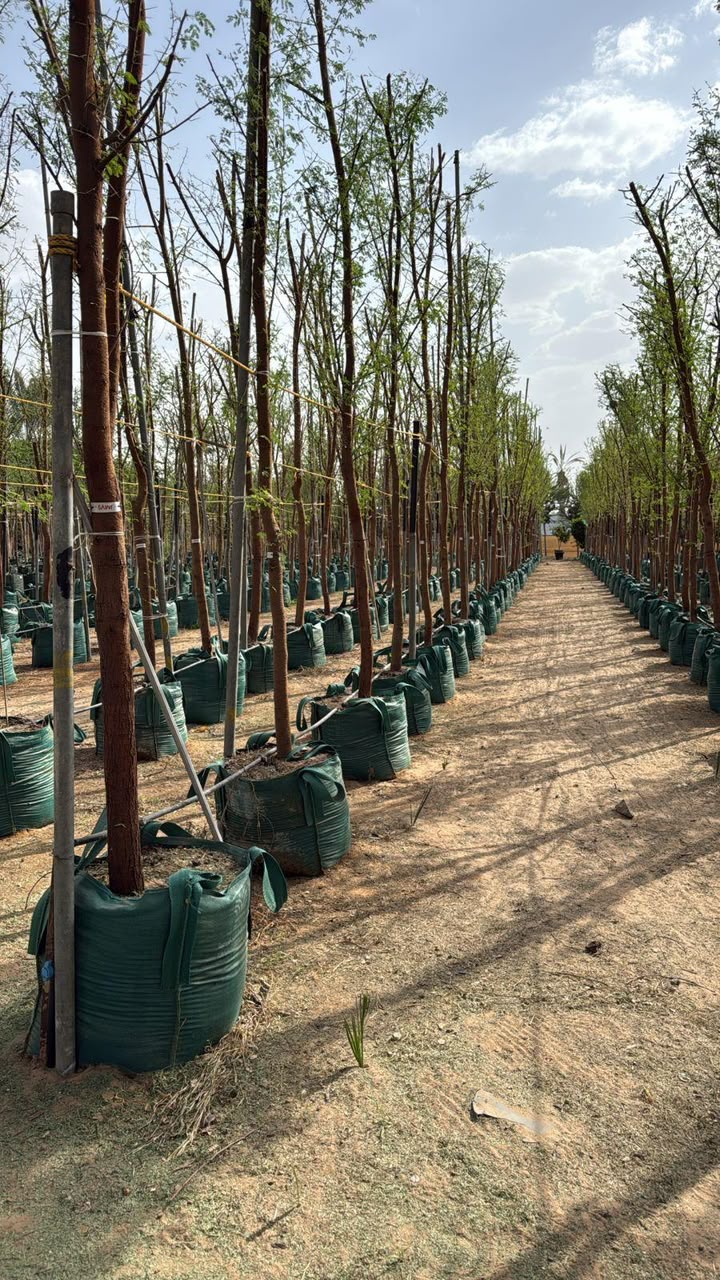
Where Are Trees Planted?
Trees should be planted where their mature size, root development, water needs, sunlight requirements, and exposure to wind are compatible with the surrounding landscape.
Where should I plant young trees in a Riyadh villa garden?
Choose locations with adequate rooting space, appropriate sunlight, safe distance from structures, and access for irrigation and maintenance.
Consider how buildings, boundary walls, and garden features affect local airflow.
Should I plant trees next to a boundary wall?
Only when the selected species has sufficient room to mature and its roots and canopy will not create unacceptable conflicts.
Walls may alter wind exposure, but planting too close can cause long-term space and maintenance problems.
Can trees be planted in exposed open areas?
Yes, when suitable species, planting methods, and establishment procedures are used.
Exposed sites may require additional monitoring or temporary stabilization, particularly for large newly planted specimens.
Where should date palms and Washingtonia palms be placed?
Plant them where their mature dimensions, fronds, root systems, and maintenance requirements can be accommodated safely.
Take particular care around overhead electrical lines, building entrances, vehicle routes, and confined planting areas.
How Are They Planted?
Trees are planted by selecting a suitable site, preparing the planting area, inspecting the root system, positioning the plant at the correct depth, backfilling appropriately, and providing immediate establishment care.
How deep should a tree be planted?
A typical woody tree should not be buried deeper than its appropriate root flare or root collar position.
Planting too deeply can contribute to long-term root and trunk problems.
Palms require species-specific planting practices and should not automatically be treated like broadleaf trees.
Should I add extra soil around the trunk for stability?
Do not bury the trunk simply to prevent movement.
Correct the underlying planting or anchorage problem instead. Excessive soil around the trunk can create other health risks.
Do I need to compact the planting soil strongly?
Backfill should be settled appropriately without creating harmful compaction that restricts root growth or drainage.
Use planting practices suitable for the soil and plant material, and avoid excessive mechanical compaction around the root system.
Should I install supports before or after planting?
Plan any required support system before planting so that anchors and stakes can be positioned without unnecessary root damage.
The final sequence depends on the chosen method and specimen size.
How Can I Protect Newly Planted Trees During Dusty, Windy Weather?
Protect newly planted trees by maintaining root-ball stability, inspecting temporary support systems, avoiding unnecessary exposure to severe conditions during planting, and providing appropriate establishment care.
Should I plant a large tree during a strong wind warning?
It is generally better to postpone high-risk lifting and planting operations when wind conditions make the work unsafe.
The decision should follow the site safety plan, equipment limitations, and professional assessment.
Can dust storms damage newly planted trees?
Wind-driven sand may abrade exposed plant tissues, while strong gusts can place additional stress on unstable specimens.
The severity depends on the species, size, exposure, and storm conditions.
Should I wrap the entire tree to stop wind damage?
No universal wrapping method is appropriate for every tree.
Improper wrapping can trap heat, restrict airflow, damage foliage, or interfere with normal growth.
Use protective materials only where they address a specific documented need.
What should I inspect after a dust storm?
Check trunk alignment, root-ball movement, support stability, tie damage, and any visible structural injury.
Keep people away from visibly unstable trees until they have been assessed.
How Long Should Tree Stakes Stay in Place?
Temporary supports should remain only while they are necessary for stability. Many young woody trees can have their stakes removed after the first growing season, but actual timing depends on root establishment and site conditions.
Can I remove tree stakes after one year?
Often yes, provided the tree has established adequate anchorage and can stand independently.
Guidance from university extension services and the International Society of Arboriculture generally supports removing unnecessary temporary stakes after the first growing season.
Reference: University of Minnesota Extension — Planting and Transplanting Trees and Shrubs.
What happens if tree stakes remain for several years?
Unnecessary long-term staking can cause trunk abrasion, constriction, and undesirable dependence on the support system.
The risk depends on the tree and staking arrangement, but supports should always be reassessed rather than left indefinitely.
How do I know whether the tree is ready for stake removal?
Check that the root ball is stable and the trunk can support the tree under ordinary conditions.
A qualified professional should assess larger specimens or trees that show structural concerns.
Do large transplanted palms follow the same schedule?
Not necessarily. Large palms may require a different support duration based on their size, root establishment, support design, and professional assessment.
Do not remove engineered palm bracing merely because one calendar year has passed.
What maintenance schedule should I follow?
Use an inspection plan that responds to plant condition, windy weather, and the selected support system.
| Inspection stage | What to check | Recommended response |
|---|---|---|
| Immediately after planting | Alignment, root-ball stability and supports | Correct installation defects before handover |
| Early establishment | Tie contact, stake movement and soil condition | Adjust support if necessary |
| After strong wind | Leaning, damaged braces and shifting roots | Restrict access if unsafe and arrange assessment |
| During routine maintenance | Trunk growth, tie tightness and stability | Maintain, reposition or remove support as appropriate |
| Near the first growing-season review | Independent anchorage of young woody trees | Remove unnecessary stakes when stable |
| Large palm support review | Root establishment and engineered brace condition | Follow the professionally approved removal plan |
What Are the Types of Trees, How, When and Why?
The best tree selection depends on the landscape's purpose, local climate, planting space, mature dimensions, establishment requirements, and long-term maintenance capacity.
Which types of trees are suitable for residential gardens?
Choose species suited to the available space and environmental conditions, including adapted shade trees, ornamental species, and suitable palms.
Verify mature canopy size, root characteristics, irrigation requirements, and maintenance needs for each species.
When is a good time to plant trees in Riyadh?
For many species, planting during milder weather is preferable to installation during extreme heat or severe wind conditions.
The exact planting window depends on the species, nursery stock, irrigation availability, and professional planting plan.
Container-grown trees and large palms may have different seasonal considerations.
Why should wind exposure influence species selection?
Wind exposure affects crown loading, establishment conditions, and the level of maintenance required.
A suitable tree in a sheltered courtyard may not be the best choice for an exposed roadside or open landscape.
How do I compare planting options for a windy garden?
Compare their landscape function, mature dimensions, root anchorage requirements, and maintenance obligations.
How Much Does Planting Cost?
Tree planting costs depend on the species, plant size, nursery stock quality, transportation, equipment, soil preparation, installation complexity, irrigation connections, and any necessary temporary support system.
How much does it cost to plant a shade tree in Riyadh?
A reliable price requires the tree species, nursery size, transport distance, site accessibility, and planting specifications.
It is not possible to provide a universal price that accurately represents every shade-tree installation.
How much does it cost to stabilize a newly planted tree?
The cost depends on whether support is needed, the type of staking or bracing, material quantities, labor, and subsequent inspection requirements.
For a stable young tree, additional staking may be unnecessary.
Does supporting a large palm cost more?
Large palms may require more complex support equipment, qualified installation, and additional inspection.
However, an accurate cost comparison requires knowing the palm's actual size and installation conditions.
What should a tree planting and stabilization quotation include?
Request a detailed quotation that separates plant supply, installation, support systems, and maintenance obligations.
| Cost component | What affects the cost? | What should be confirmed? |
|---|---|---|
| Tree supply | Species, size and nursery quality | Exact plant specifications |
| Transportation | Plant size and site accessibility | Delivery and handling scope |
| Planting preparation | Soil condition and excavation requirements | Ground preparation responsibilities |
| Planting installation | Size, handling and equipment requirements | Installation method and supervision |
| Temporary staking | Number and type of supports | Whether support is necessary |
| Palm bracing | Palm size and support loads | Engineering and installation requirements |
| Inspections | Frequency and support complexity | Inspection and reporting responsibilities |
| Support removal | Equipment and accessibility | Removal conditions and scope |
This table identifies the actual cost components without inventing market prices. The final amount should be based on a project-specific quotation.
What Is the Lifespan of Trees in Years?
Tree lifespan varies widely by species, environmental conditions, management practices, pests, structural health, and planting quality. There is no reliable universal lifespan for every tree planted in Riyadh.
How many years can shade trees live?
Many shade-tree species can live for decades, while some may live considerably longer under suitable conditions.
The actual lifespan depends on the selected species and its growing environment.
How many years can date palms live?
Date palms can remain alive for many decades under appropriate conditions, but their productive lifespan and total biological lifespan are not the same.
Fruit yield and commercial productivity depend on cultivar, age, care, and growing conditions.
How many years can Washingtonia palms live?
Washingtonia palms can be long-lived landscape plants, but a precise lifespan cannot be guaranteed for an individual specimen.
Species identity, site conditions, structural safety, and maintenance all affect useful landscape life.
Does proper staking make a tree live longer?
Correct temporary support can help an unstable young tree establish safely, but staking alone does not determine lifespan.
Long-term health also depends on planting quality, root development, appropriate irrigation, suitable growing space, and ongoing maintenance.
How Can I Prevent a Newly Planted Tree From Leaning Again?
Prevent repeated leaning by correcting the underlying cause, ensuring the root ball is properly positioned and stable, selecting a suitable support arrangement when necessary, and monitoring establishment.
Should I simply pull a leaning tree upright?
No. Pulling a tree upright without understanding the cause can damage the roots or create additional instability.
The correct treatment may require adjustment of the root ball or professional corrective work.
Can I add more stakes whenever a tree moves?
Adding stakes is not automatically the solution.
Excessive movement can result from poor planting, unstable supports, weak roots, or unsuitable soil conditions.
Identify the cause before modifying the staking system.
Should I prune the crown heavily to reduce wind movement?
Do not use excessive pruning as an automatic treatment for an unstable newly planted tree.
Improper pruning can remove valuable foliage and damage the plant's structure or health.
Any pruning should be based on species-specific horticultural requirements and actual defects.
What if the tree continues to lean after several inspections?
Arrange a professional assessment of root stability, planting position, soil conditions, and support performance.
A persistent lean may indicate a problem that temporary ties cannot resolve.
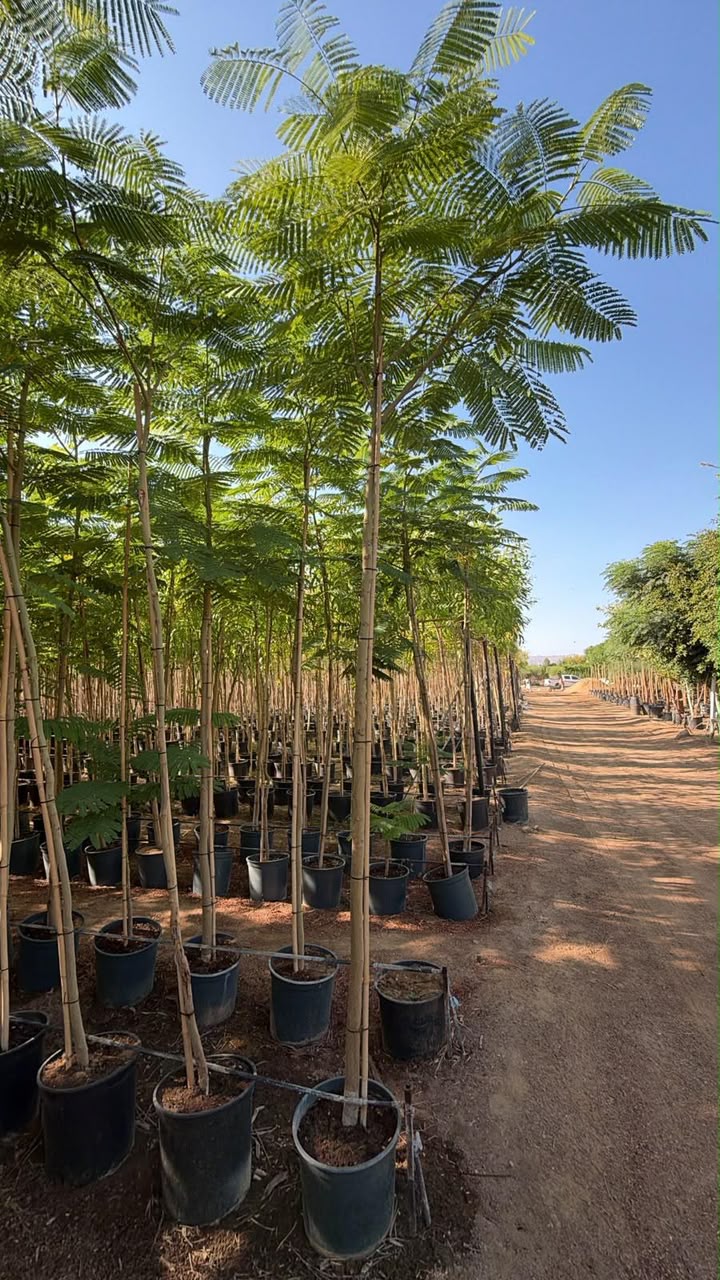
What Are the Most Common Tree Staking Mistakes?
Common mistakes include staking every tree unnecessarily, tying trunks too tightly, attaching abrasive materials directly to bark, installing unstable supports, and failing to remove temporary stakes.
Is staking every tree automatically a mistake?
It can be, because stable young trees may establish better without unnecessary support.
Always evaluate the root-ball stability before deciding.
Is using thin rope or wire dangerous?
Yes. Narrow materials can cut into bark or create concentrated pressure during wind movement.
Use suitable wide, flexible tree ties and inspect them regularly.
Can loose stakes damage a tree?
Yes. Unstable posts or incorrectly positioned components can strike the trunk, damage bark, or fail to stabilize the root ball.
The support system itself must remain secure throughout use.
Is leaving stakes permanently a good idea?
No. Standard temporary stakes should be removed when no longer required.
Long-term supports can create avoidable injury and restrict healthy development.
Can a palm brace damage the trunk?
Yes. Poorly designed contact points or excessive pressure can injure palm trunks.
Large palm supports should use a suitable protected connection system and be installed by qualified personnel.
How Can Rayat Najd Landscaping Help With Tree Stability?
Rayat Najd Landscaping can be contacted to discuss tree planting, site preparation, landscaping requirements, and the assessment of appropriate establishment support for plants in Riyadh.
How can I identify the correct support method for my garden?
Begin with the tree species, size, root-ball stability, planting location, and wind exposure.
This information helps determine whether temporary support is necessary and what type of system should be evaluated.
Can I request guidance for date palms and Washingtonia palms?
Yes. Provide details about the palm species, approximate size, installation conditions, and any visible leaning or root-ball movement.
Larger specimens may require an on-site professional assessment before the support design can be determined.
What information should I prepare before requesting landscaping work?
Prepare the property location, planting area dimensions, number and species of plants, current condition, and available site photographs.
Also explain whether the plants have already been installed or whether planting is still being planned.
How do I contact Rayat Najd Landscaping?
Contact Rayat Najd Landscaping using its official website, phone number, or WhatsApp to discuss planting and landscape requirements.
Official website: Rayat Najd Landscaping | رايات نجد للتشجير.
What Should I Check Before and After Installing Tree Supports?
Before installing supports, confirm that the plant genuinely requires stabilization. After installation, check root-ball stability, trunk contact, support anchorage, and the planned removal conditions.
What should my tree stability checklist include?
Use this checklist to organize the assessment, installation, and maintenance of temporary tree supports.
- ☐ Identify the tree or palm species correctly.
- ☐ Record the approximate plant size and condition.
- ☐ Inspect the original planting position.
- ☐ Check whether the root ball is stable.
- ☐ Distinguish normal trunk movement from root-ball displacement.
- ☐ Review the site's wind exposure.
- ☐ Determine whether temporary support is actually necessary.
- ☐ Choose support materials suitable for the plant.
- ☐ Check for buried irrigation lines before installing stakes.
- ☐ Position stakes to avoid damaging roots.
- ☐ Use wide, flexible ties where suitable.
- ☐ Avoid direct wire contact with bark.
- ☐ Check that support materials do not rub the trunk.
- ☐ Allow appropriate trunk movement.
- ☐ Confirm stability of the support anchors.
- ☐ Use qualified installers for large palm bracing.
- ☐ Inspect supports after strong winds.
- ☐ Check ties as trunk dimensions change.
- ☐ Document maintenance and adjustment requirements.
- ☐ Remove temporary supports once no longer needed.
How should I inspect the tree after a storm?
Assess the area from a safe distance before approaching a visibly unstable plant.
Look for movement at the root ball, newly exposed roots, leaning posts, loose braces, bark damage, and changes in trunk alignment.
Large unstable trees and palms should be evaluated by qualified personnel.
When should the supports be removed?
Remove standard temporary supports once the root system provides adequate anchorage and the tree remains safely upright.
For large palms, follow the specific approved support and establishment plan.
What Are the Most Frequently Asked Questions About Wind Protection for Trees?
The following answers address common questions from homeowners, property managers, and landscaping clients in Riyadh.
1. How do I protect newly planted trees from wind?
Check root-ball stability first, then use a temporary flexible support system only when necessary. Inspect it regularly and remove it once the tree is stable.
2. Do all new trees need stakes?
No. Many young trees with stable root balls can establish without staking. Unnecessary supports may restrict healthy movement.
3. What are the trees?
Trees are long-lived perennial plants used for shade, ornament, fruit production, and environmental benefits. Palms are commonly grouped with landscape trees but differ botanically from ordinary woody trees.
4. What are the benefits of palm trees?
Palms provide ornamental value, landscape identity, and in the case of suitable date palms, fruit production. Their value depends on the site and species.
5. What are the benefits of Washingtonia trees?
Washingtonia palms create a distinctive tall ornamental appearance and can provide strong vertical landscape accents. Mature size and maintenance requirements must be considered.
6. Where are trees planted?
Plant trees in locations with appropriate soil, sunlight, rooting space, irrigation access, and mature-growth clearance. Wind exposure should also influence the planting plan.
7. How are they planted?
Prepare the site, inspect the roots, position the plant at the correct depth, backfill appropriately, and provide establishment care. Add stabilization only if needed.
8. How much does planting cost?
Costs vary according to species, plant size, delivery, soil preparation, installation, support requirements, and maintenance. Obtain a quotation based on actual site specifications.
9. What is the lifespan of trees in years?
Lifespan depends on the species and growing conditions. Many trees and palms can live for decades, but no exact lifespan can be guaranteed for an individual plant.
10. What are the types of trees, how, when and why?
Choose species based on landscape purpose, mature size, environmental suitability, and maintenance needs. Plant during suitable conditions using methods appropriate to the species and site.
11. How long should tree stakes stay in place?
For many young woody trees, unnecessary stakes can be removed after the first growing season once stability is confirmed. Larger palms may require a different assessment and schedule.
12. Can I use wire to support a young tree?
Do not use bare wire directly against bark. Choose appropriate flexible ties or a professionally designed protected connection system.
13. How do I stop a date palm from leaning?
Identify whether the root ball or trunk is unstable and arrange suitable stabilization when required. Large palms should be assessed professionally.
14. Can strong Riyadh winds damage tree roots?
Excessive movement of an unstable root ball can interfere with newly developing roots. Correctly designed temporary support can help prevent that movement.
15. What should I do if a tree moves after removing its stakes?
Assess whether the movement is normal flexibility or a sign of inadequate anchorage. If the root ball shifts or the tree becomes unstable, arrange a professional inspection.
Where Can I Find Reliable Guidance About Tree Planting and Staking?
Tree owners can consult recognized horticultural and arboricultural organizations for evidence-based guidance on planting depth, root establishment, temporary supports, and maintenance.
Where can I learn about professional tree planting?
Review the International Society of Arboriculture's tree owner resources.
Official resource: TreesAreGood — Planting a Tree.
The guidance discusses planting practices, root establishment, and situations in which temporary support may be necessary.
Where can I learn when to remove tree stakes?
Review university extension guidance about the proper use and removal of temporary tree support.
Reference: University of Minnesota Extension — Planting and Transplanting Trees and Shrubs.
This resource explains why many young trees do not need stakes and why temporary supports should be removed after establishment.
Climate-specific planting recommendations must be adapted to Riyadh rather than copied directly from guidance written for cooler regions.
Where can I find information about landscaping in Saudi Arabia?
Refer to relevant official Saudi environmental and municipal authorities for requirements that apply to the project location.
Useful official sources include the Saudi Ministry of Environment, Water and Agriculture and the Balady platform.
Specific requirements should be verified according to whether the planting site is private residential property, commercial land, or a public landscape.
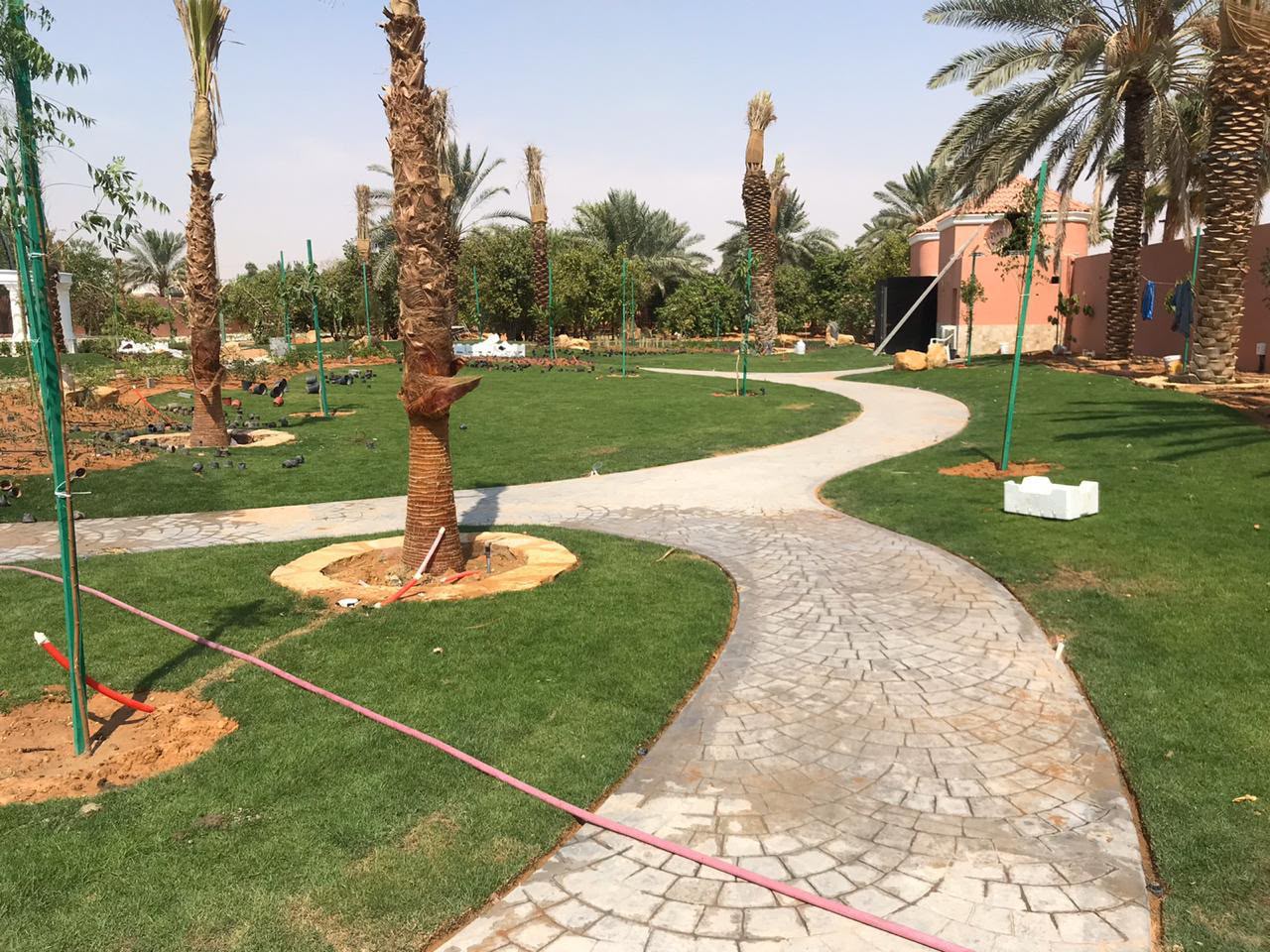
How Do I Protect Newly Planted Trees From Wind for Long-Term Growth?
The best long-term protection for newly planted trees is successful root establishment combined with appropriate species selection, proper planting, suitable temporary stabilization where needed, and regular inspections. Staking should solve a genuine stability problem rather than become a permanent feature of the landscape.
In Riyadh, the decision should account for wind exposure, soil conditions, plant size, irrigation arrangements, and the risks associated with nearby buildings or garden users.
Small shade trees may require little or no support. Newly installed date palms and Washingtonia palms, especially larger specimens, may require a more specialized approach based on their actual condition.
What is the first step I should take today?
Inspect the root-ball stability of recently planted trees and identify any trunks or supports showing signs of movement or damage.
Do not disturb the roots or attempt to force an unstable large tree upright. Arrange professional evaluation where necessary.
How can I reduce future maintenance problems?
Select suitable plant species, establish them correctly, use non-damaging support materials, and remove temporary equipment when it is no longer needed.
A documented inspection routine is particularly valuable for exposed gardens and newly planted large palms.
How can I plan tree planting and support with Rayat Najd Landscaping?
Share your Riyadh property location, planting requirements, tree species, approximate plant sizes, and any existing wind-related stability problems.
These details help define the appropriate scope of landscaping and professional assessment.
If your main question is “How do I protect newly planted trees from wind?”, remember that the correct answer is not simply to install more stakes. The goal is to establish a stable root system, protect the trunk, avoid unnecessary restrictions, and allow the tree to develop safely.
For tree planting, palms, garden landscaping, and tree establishment inquiries in Riyadh and Saudi Arabia, contact Rayat Najd Landscaping | رايات نجد للتشجير through the official Rayat Najd Landscaping website.