


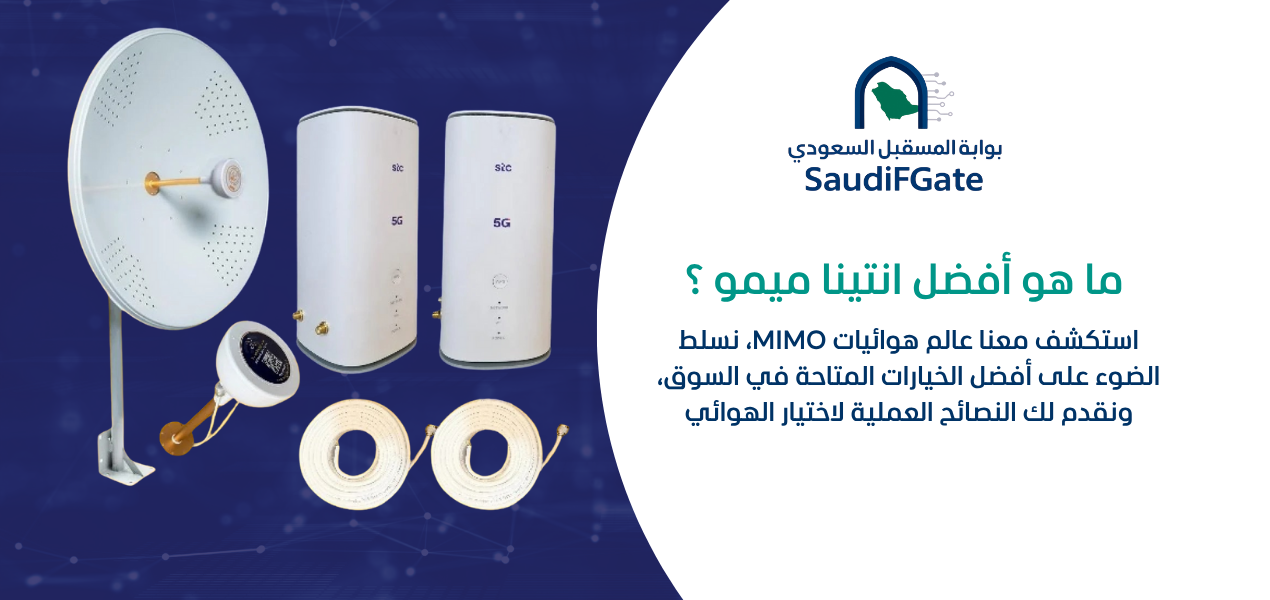
To get strong internet at a desert camp in Saudi Arabia, first check which mobile network provides the best 4G or 5G coverage at your exact location. Then choose a compatible router, test different installation positions, and consider an external antenna if measurements show that it can improve reception. Finally, distribute the connection through properly positioned Wi-Fi access points and protect all equipment from heat, dust, moisture, and unstable power. The most important step is measuring the actual connection before purchasing equipment.
Desert camps are popular across Saudi Arabia, particularly around Riyadh and other recreational areas. Whether a camp is used for weekend gatherings, family holidays, tourism, or business hospitality, reliable internet can support communication, entertainment, online payments, security equipment, and connected devices.
However, internet coverage in remote locations differs significantly from connectivity inside urban buildings. Distance from cellular infrastructure, terrain, network congestion, antenna positioning, and environmental exposure can all affect performance.
This guide from Future Networks | بوابة المستقبل للشبكات explains how to evaluate mobile coverage, select suitable antennas, install a desert internet setup, distribute Wi-Fi, protect equipment, and estimate installation requirements without spending money on unnecessary devices.
The most practical starting point for desert camp internet is testing available mobile operators at the camp itself. If cellular reception is sufficient, use a suitable 4G or 5G router. If reception is better at an external installation point, evaluate a compatible outdoor antenna or outdoor router. If the internet connection works well near the router but poorly around the camp, improve Wi-Fi distribution instead of purchasing another cellular antenna.
Important: No antenna can guarantee a usable connection where the operator has no viable network coverage.
 Call Now
 WhatsApp
Why Is Internet Weak at Desert Camps in Saudi Arabia?
Internet may be weak at a desert camp because the location is far from cellular infrastructure, terrain obstructs radio signals, the available network is congested, or the router is positioned poorly.
Why does internet work in Riyadh but become weak in the desert?
Urban and remote locations have different network infrastructure, coverage conditions, and user demand.
A mobile operator may provide excellent service in Riyadh while offering limited coverage in a remote recreational area. The difference can result from distance to cellular sites, supported frequencies, terrain, and network capacity.
Does the distance from a mobile tower affect internet speed?
Distance can affect signal strength and quality, but it is not the only factor controlling speed.
Terrain, interference, frequency bands, network load, and equipment capabilities may be equally important.
A location farther from a tower does not automatically have slower service than every location closer to it.
Can sand dunes and hills block 4G or 5G signals?
Yes. Terrain can obstruct or weaken radio signals depending on the frequencies and geometry of the connection.
A camp located behind a ridge may experience different reception from another camp only a short distance away.
That is why actual field measurements are more useful than assumptions based on geographic distance alone.
Why does the internet become slower when the camp is crowded?
More connected devices can increase local Wi-Fi demand, while additional users on the cellular network may increase network congestion.
These are different problems and should be diagnosed separately.
If the internet works well directly through the router but poorly over Wi-Fi, the local network may need improvement. If the cellular connection itself slows down, the limitation may be upstream.
How Do I Check Internet Coverage Before Setting Up a Desert Camp?
Check official mobile coverage information, then test the actual location using compatible devices and active SIM cards from available operators.
Where can I check 4G and 5G coverage in Saudi Arabia?
Start with coverage information provided by mobile operators and the Saudi Communications, Space and Technology Commission.
The official regulatory authority can be accessed through CST — Communications, Space and Technology Commission.
Coverage maps are useful planning references, but they cannot guarantee a particular speed or service quality at every campsite.
Should I test more than one mobile operator?
Yes, comparing available operators can help identify the most suitable network for the exact campsite.
Use comparable tests where possible, including similar device capabilities and different periods of the day.
Do not select a provider solely because it performs well at another location.
How do I test internet performance at the campsite?
Test connection stability, download speed, upload speed, latency, and radio signal quality at multiple positions.
Repeat tests under similar conditions and record the location and time of each measurement.
A single speed test is not enough to characterize a connection that will be used for extended periods.
What should I compare when testing mobile coverage?
Compare the same measurable criteria across locations and operators rather than relying only on the signal bars shown by a phone.
| Measurement | What it indicates | Why it matters at a desert camp |
|---|---|---|
| RSRP | Received reference signal power | Helps compare cellular reception between locations |
| RSRQ | Reference signal quality | Provides additional context about radio conditions |
| SINR | Signal compared with interference and noise | Helps assess whether reception is relatively clean |
| Download speed | Rate of receiving data | Important for streaming and browsing |
| Upload speed | Rate of sending data | Important for video calls and security camera uploads |
| Latency | Network response delay | Affects interactive applications |
| Packet loss | Data packets that fail to arrive | Helps identify unstable connections |
Interpret radio measurements together and consider the device, band, and network technology. None of these measurements alone guarantees a particular internet speed.
How Do I Improve My Mobile Signal?
Improve mobile reception by testing the available operator, choosing a better reception location, checking device compatibility, and evaluating an external antenna or outdoor cellular device when the measurements justify it.
Can I improve mobile signal without buying equipment?
Sometimes. Moving the phone or router to a more favorable location may improve reception.
Test locations away from metal barriers, dense equipment, and obstructions, while keeping electrical safety and equipment operating limits in mind.
Changing to a better-performing operator may also help when coverage differs significantly.
Does a high-gain antenna always improve mobile signal?
No. Antenna gain alone does not guarantee better reception or faster internet.
The antenna must support the required frequencies and work with the router's antenna system. Direction, cable losses, interference, and network conditions all influence the outcome.
Can I improve mobile phone reception using a router antenna?
An external antenna connected to a compatible cellular router improves reception for that router when conditions permit; it does not directly strengthen the cellular signal on every nearby phone.
Phones can use the router's Wi-Fi connection for data. Wi-Fi calling may also be available depending on device and operator support.
Should I install a mobile signal repeater at my camp?
Do not install an active cellular repeater without verifying the applicable Saudi regulatory requirements and necessary authorization.
Active repeaters differ from passive reception antennas and can interfere with licensed mobile networks if improperly deployed.
Consult the mobile operator or relevant regulatory authority before considering an active cellular coverage system.
How Do I Make My Internet Strong?
Make your camp internet stronger by improving the incoming connection first, then optimizing Wi-Fi distribution, device placement, available bandwidth, and network settings.
How can I make 5G internet faster at a desert camp?
Begin with measurements of the router's cellular connection and compare performance from different suitable positions.
If the connection is already strong but speeds remain limited, investigate network congestion, router performance, service restrictions, and connected device usage.
Does buying a more expensive router guarantee faster internet?
No. Higher-priced equipment cannot overcome every limitation of the operator's network.
A better router may provide improved radio capabilities, supported bands, antenna options, or network management features, but its benefits depend on local conditions.
Should I use 4G if 5G is unstable?
A stable 4G connection can be preferable to an unreliable 5G connection for some applications.
Compare consistent performance rather than assuming that the newer network generation is always superior at a remote site.
Can switching SIM cards improve internet performance?
Switching to an operator with better local coverage may improve performance.
However, the improvement must be verified through real measurements using suitable devices and service plans.
How Do I Install an Antenna?
Install an external cellular antenna by confirming router compatibility, evaluating reception at the intended location, selecting a suitable mount and cable, and using safe weather-resistant installation methods.
How do I know whether my router supports an outdoor antenna?
Check the exact router model, manufacturer specifications, antenna connectors, and supported external antenna configuration.
Some routers support external antenna inputs, while others rely on internal antennas or require a different type of outdoor connectivity solution.
Do not force connectors or purchase an antenna based only on physical resemblance.
Should I choose a directional or omnidirectional antenna?
Choose the antenna type according to the available radio signal, likely network direction, and installation conditions.
A directional antenna may be useful when a suitable reception direction is known. An omnidirectional antenna may be more appropriate in other circumstances.
Actual measurements should guide the decision.
How high should I install an antenna in the desert?
Install it at a position that provides good reception while meeting structural and electrical safety requirements.
Higher is not automatically better. Raising the antenna can increase cable length and losses, expose the structure to greater wind loading, or create additional safety requirements.
How do I point a directional antenna correctly?
Adjust the antenna direction gradually while measuring signal quality and internet performance.
Do not rely exclusively on visual estimates of where a cellular tower might be located.
Measure several positions and record the results before final tightening.
What are the correct installation steps?
Follow a structured process that addresses compatibility, positioning, weather protection, and performance verification.
| Step | Action | What to verify |
|---|---|---|
| 1. Coverage assessment | Measure the available cellular connection | A usable network is available |
| 2. Equipment compatibility | Match antenna capabilities to the router | Correct frequencies, ports and configuration |
| 3. Site selection | Choose a safe reception location | Signal quality and installation access |
| 4. Mounting | Secure the antenna and supporting structure | Wind resistance and structural stability |
| 5. Cable installation | Route and protect appropriate cabling | Cable losses, connectors and weather sealing |
| 6. Electrical protection | Apply appropriate grounding and protection measures | Compliance with the installation design |
| 7. Final testing | Compare results before and after installation | Actual reception and connection stability |
Outdoor mast installations, electrical protection, and work at height should be carried out by appropriately qualified professionals.
Should I Use an Outdoor 5G Router or an Indoor Router With an Antenna?
Choose between an outdoor router and an indoor router with an external antenna based on coverage conditions, cable length, environmental exposure, and equipment compatibility.
What is the advantage of an outdoor cellular router?
A properly designed outdoor cellular router can receive signals at an exposed location and deliver connectivity indoors through an appropriate network connection.
This may avoid long radio-frequency cable runs, although weather protection, power delivery, and safe mounting remain important.
When is an indoor router with an external antenna suitable?
It can be suitable when the router supports external antennas and the antenna cable can be installed without excessive signal loss.
This arrangement may allow the main router to remain in a more protected environment.
Is an outdoor router safe in extreme Saudi heat?
Only if the specific equipment is rated for the environmental conditions and installed according to the manufacturer's requirements.
Direct sunlight can raise enclosure temperatures above the surrounding air temperature. The operating temperature specification must be checked carefully.
How do I compare the two installation approaches?
Compare the complete system rather than focusing only on the router's purchase price.
| Factor | Indoor router + external antenna | Outdoor cellular router |
|---|---|---|
| Cellular reception | Depends on antenna and RF cable | Depends on integrated antenna system and position |
| Cable considerations | RF cable losses require assessment | Typically uses a network cable for the indoor connection |
| Environmental protection | Router can remain indoors | Outdoor unit needs suitable environmental ratings |
| Installation | Antenna mount and RF cabling | Outdoor unit mount and network cabling |
| Maintenance | Indoor access to primary router | Outdoor access may be required |
| Best choice | Depends on technical feasibility | Depends on technical feasibility |
How Can I Protect Internet Equipment From Heat, Dust, and Rain?
Protect desert networking equipment through suitable environmental ratings, secure mounting, safe cable routing, temperature management, and regular inspection.
Can desert heat damage a 5G router?
Yes. Operating beyond a manufacturer's specified temperature range can reduce reliability or cause equipment failure.
Use a location and enclosure that meet the device's environmental requirements.
Never assume that a sealed box will automatically protect equipment from heat; inadequate ventilation can increase internal temperature.
How do I prevent sand and dust from entering equipment?
Use appropriately rated enclosures and properly sealed cable entries.
The enclosure must protect the installed equipment without compromising its cooling requirements.
Can I leave a standard indoor router outside?
Do not expose a standard indoor router directly to outdoor conditions unless the manufacturer specifically permits it.
Indoor equipment generally requires a protected operating environment.
How do I protect cables from desert weather?
Use cables and protective materials rated for the intended environment, with secure routing and appropriate strain relief.
Protect connectors against moisture and contamination, and avoid routing cables where vehicles, tent movement, or sharp edges may damage them.
Do outdoor antennas need grounding or surge protection?
The installation may require grounding, bonding, and surge protection according to the equipment design and applicable electrical requirements.
These measures should be assessed by a qualified installer, especially when using metallic masts and external cabling.
How Can I Get Wi-Fi Across an Entire Desert Camp?
Distribute Wi-Fi across the camp using suitable access points and a network layout that accounts for tent materials, seating areas, distances, connected devices, and available power.
Will one 5G router cover a large desert camp?
Not necessarily. The router's cellular connection and its Wi-Fi coverage are separate technical considerations.
A router may receive fast internet while providing poor Wi-Fi in distant tents or outdoor seating areas.
Where should I place Wi-Fi access points?
Place access points where they can serve the intended users with minimal obstruction and appropriate environmental protection.
Consider the main seating area, guest tents, reception area, and other locations where a stable connection is required.
Should I use indoor or outdoor Wi-Fi access points?
Choose outdoor-rated equipment for locations exposed to environmental conditions, and indoor equipment only where the environment meets its requirements.
The number and placement of access points should be based on the camp's layout and required performance.
Is a Wi-Fi extender enough for a desert camp?
An extender may help in some small installations, but it is not always the best solution for a larger camp.
Wireless repeaters depend on the quality of their connection to the main network and may reduce available capacity.
Properly connected access points are often a stronger option where suitable cabling can be installed.
How do I provide guest Wi-Fi without exposing private devices?
Use an appropriately configured guest network that separates visitors from administrative and security equipment.
Apply suitable authentication, access controls, and software updates. The exact features depend on the networking equipment.
How Can I Power a Router at a Desert Camp Without Grid Electricity?
Power a router through a properly sized electrical system that matches the device's voltage, current, energy requirements, and operating schedule.
Can I power a 5G router using a battery?
Yes, if the battery system and power conversion equipment provide the correct electrical output and sufficient capacity.
Check the router's actual power requirements and account for conversion losses, environmental temperature, and the usable capacity of the battery.
Can solar panels power desert internet equipment?
A correctly designed solar power system may support networking equipment at an off-grid campsite.
The system must be sized for daily energy consumption, expected solar generation, battery storage needs, and operational reliability.
Solar panels alone do not guarantee uninterrupted overnight service.
How do I calculate router energy consumption?
Multiply average power consumption in watts by operating hours to estimate energy usage in watt-hours.
For example, a hypothetical system averaging 20 watts for 24 hours would consume:
20 W × 24 h=480 Wh per day.
This example excludes additional losses and equipment consumption. Battery sizing must use a complete electrical design rather than assuming that a 480 Wh battery provides 24 hours of reliable runtime.
Is a generator suitable for camp internet equipment?
A generator can supply power when its output and the electrical distribution system are suitable, but voltage stability, safe installation, ventilation, and fuel handling must be considered.
Never operate a fuel-powered generator inside a tent or other enclosed occupied space.
How Much Does Desert Internet Installation Cost?
The cost depends on mobile coverage, router specifications, antenna requirements, mounting and cabling, Wi-Fi distribution, electrical power, environmental protection, and installation complexity.
How much does an outdoor 5G antenna cost in Saudi Arabia?
The actual price depends on the antenna model, supported frequencies, configuration, manufacturer, and supplier.
An antenna quotation should specify whether mounting hardware, cables, connectors, and installation are included.
How much does a complete desert internet setup cost?
A complete installation cannot be priced accurately without knowing the campsite, coverage conditions, required devices, and power availability.
A small camp with grid electricity may need a different solution from a large off-grid camp with several guest areas.
Is the most expensive setup always the best?
No. A properly measured and configured system is more valuable than buying premium equipment that does not solve the actual problem.
For example, additional antennas will not fix a Wi-Fi access point that is positioned incorrectly.
What should a desert internet quotation include?
The quotation should describe the full scope of equipment and installation, with any exclusions clearly identified.
| Cost component | When required | What to confirm |
|---|---|---|
| Cellular router | Primary mobile internet connection | Model, bands, interfaces and compatibility |
| External antenna | Where reception measurements justify it | Antenna type, configuration and supported bands |
| Antenna mounting | Outdoor installations | Structure, wind resistance and safety |
| Cabling | Connecting equipment | Type, length, protection and losses |
| Wi-Fi access points | Larger coverage areas | Quantity, placement and environmental rating |
| Electrical power | Sites needing power infrastructure | Capacity, protection and installation |
| Weather protection | Exposed networking equipment | Temperature, dust and moisture protection |
| Testing and configuration | Final system commissioning | Coverage checks and documented results |
The table identifies cost categories rather than unsupported market prices. A reliable quotation should be based on actual equipment selection and site requirements.
How Do I Choose the Best Internet Setup for My Desert Camp?
Choose the setup that meets the camp's actual connectivity needs, environmental conditions, available power, and network coverage.
What internet setup is suitable for a small family camp?
A compatible cellular router may be sufficient when mobile reception is good and the camp has limited Wi-Fi coverage requirements.
Additional equipment should be justified by measured problems rather than purchased automatically.
What internet setup is suitable for a large hospitality camp?
A larger camp may require multiple Wi-Fi access points, centralized network management, guest network separation, and a reliable primary internet connection.
The design should account for simultaneous users and the applications they use.
How do I provide internet for security cameras?
Verify the cameras' bandwidth requirements, power supply, connectivity method, and recording architecture.
Cameras that upload video continuously can consume substantial upstream capacity. Local recording may reduce dependence on constant cloud uploads, depending on the system.
Should I use a backup internet connection?
A backup connection may be worthwhile when the camp relies on internet for essential operations, payments, or security.
For resilience, evaluate whether the primary and backup connections depend on the same operator or infrastructure.
What Are the Most Common Mistakes in Desert Internet Installation?
Common mistakes include buying equipment before measuring coverage, choosing incompatible antennas, ignoring cable losses, exposing indoor devices to outdoor conditions, and confusing cellular reception with Wi-Fi coverage.
Is buying an antenna before testing the network a mistake?
Yes, because the antenna may not address the actual source of poor performance.
Start with coverage measurements and identify whether the problem is reception, congestion, the router, or Wi-Fi distribution.
Can a very long antenna cable reduce performance?
Yes. Radio-frequency cable loss increases with cable length and depends on the cable type and frequency.
Choose the cable arrangement as part of the complete installation design.
Is placing the router in a sealed plastic box enough?
No. A sealed enclosure must also account for operating temperature, condensation, cable sealing, and the manufacturer's requirements.
Improperly protected equipment may overheat or fail even when dust cannot enter.
Can I assume 5G will always outperform 4G?
No. Actual performance depends on network conditions, coverage, available bands, and equipment capabilities.
A stable 4G connection may provide a better user experience at some remote locations.
Is a stronger Wi-Fi router the same as stronger mobile reception?
No. Wi-Fi distributes the existing internet connection locally, while cellular reception determines how the router connects to the operator.
Each problem must be addressed using the appropriate technology.
How Can Future Networks Help Me Choose Desert Internet Equipment?
Future Networks can be contacted to discuss the selection of compatible routers, antennas, and networking equipment for Saudi campsite connectivity requirements.
What information should I prepare before contacting Future Networks?
Prepare the campsite's general location, available operators, current router model, coverage measurements if available, and the intended number of connected devices.
Also describe whether the equipment will operate outdoors and what electrical power is available.
Can I ask about antenna compatibility before purchasing?
Yes. The exact router model and antenna configuration should be reviewed before choosing equipment.
Provide manufacturer specifications or model information rather than relying on a product's appearance.
Where can I contact Future Networks in Saudi Arabia?
Use the official website, telephone number, or WhatsApp contact information for product and networking inquiries.
Official website: Future Networks | بوابة المستقبل للشبكات.
What Should I Check Before Installing Internet at a Desert Camp?
Before installation, check the actual coverage, equipment specifications, campsite layout, electrical infrastructure, environmental protection, and network distribution requirements.
What should be included in my installation checklist?
Use the following checklist to avoid common compatibility and planning problems.
- ☐ Identify the exact campsite location.
- ☐ Check official mobile network coverage information.
- ☐ Test available operators at the actual site.
- ☐ Compare cellular reception at multiple safe positions.
- ☐ Measure download speed, upload speed and latency.
- ☐ Check the current router model and supported bands.
- ☐ Verify external antenna compatibility where relevant.
- ☐ Determine whether a directional antenna is appropriate.
- ☐ Calculate cable requirements and potential RF losses.
- ☐ Check the safety and stability of antenna mounting.
- ☐ Evaluate environmental temperature and dust exposure.
- ☐ Select suitable equipment enclosures and cable protection.
- ☐ Confirm electrical power capacity and protection.
- ☐ Identify the areas that require Wi-Fi coverage.
- ☐ Determine whether additional access points are required.
- ☐ Consider network security and guest access.
- ☐ Review regulatory requirements for telecommunications equipment.
- ☐ Record connection performance after installation.
How do I know whether the final installation works properly?
Repeat the original coverage and performance tests under comparable conditions after the equipment is installed.
Check the connection at the router and at the Wi-Fi locations intended for everyday use.
A successful setup should meet the agreed operational requirements rather than simply display a stronger signal indicator.
What Are the Most Frequently Asked Questions About Desert Camp Internet?
These are direct answers to common questions from customers looking for better internet at remote campsites in Saudi Arabia.
1. How can I get strong internet at a desert camp?
Test local cellular coverage, use a compatible router, and optimize equipment placement before evaluating an external antenna. Improve Wi-Fi distribution separately when necessary.
2. How do I install an antenna?
Check router compatibility, measure the best reception location, secure the antenna correctly, protect cabling, and verify performance. Use qualified installers for outdoor electrical and structural work.
3. How do I make my internet strong?
Improve the incoming connection and distribute it through properly positioned Wi-Fi equipment. Identify the source of the problem before changing devices.
4. How do I improve my mobile signal?
Compare available operators, test reception locations, and consider compatible equipment when measurements justify it. Avoid unauthorized active signal repeaters.
5. Does 5G work in the Saudi desert?
5G may be available at some desert locations, depending on the operator and network coverage. Confirm availability through coverage information and actual testing.
6. Can an antenna create internet where no network exists?
No. An antenna cannot create a cellular network signal when there is no usable connection to receive. Alternative connectivity technologies may need to be evaluated.
7. Is an outdoor 5G router better than an indoor router?
It depends on the reception conditions, equipment capabilities, installation design, and environmental requirements. Neither is automatically the best choice for every campsite.
8. How can I provide Wi-Fi across several tents?
Use a suitable distribution network and place access points according to the actual camp layout. Consider distances, obstacles, and the expected number of users.
9. Can solar power run a desert internet router?
Yes, when the solar, battery, and power conversion system is properly designed for the connected equipment. Calculate energy requirements and operating conditions before installation.
10. How much does desert internet installation cost?
The cost depends on the router, antennas, mounting, power, cabling, Wi-Fi equipment, and site conditions. Request a specification-based quotation rather than relying on an unsupported general price.
Where Can I Find Official Guidance About Internet Coverage in Saudi Arabia?
Official telecommunications and equipment information is useful when planning connectivity at remote locations.
Where can I review Saudi telecommunications regulations?
Visit the Communications, Space and Technology Commission.
The authority provides official information related to telecommunications regulation and services in Saudi Arabia.
Where should I check router and antenna compatibility?
Use the manufacturer's official technical specifications for the exact equipment model.
Check supported frequencies, connectors, power requirements, and operating temperature rather than relying solely on seller descriptions.
Where should I check whether a mobile service is available at my camp?
Consult official operator coverage information and confirm the service using actual site measurements.
Network availability and performance can vary even between nearby locations.

How Can I Get Strong Internet at a Desert Camp Without Wasting Money?
The best way to get strong internet at a desert camp is to diagnose the connection before buying equipment. Measure available 4G and 5G coverage, identify a suitable router position, evaluate compatible antenna options, and design Wi-Fi distribution around the actual campsite.
Do not assume that a more powerful router, a taller antenna mast, or several Wi-Fi extenders will automatically solve the problem. A reliable installation depends on matching the equipment to the network and environment.
What is the first step I should take today?
Visit the campsite with a compatible mobile device and test the available networks from several locations.
Record the results and compare them before selecting any router or antenna.
How can I keep my internet stable throughout the camping season?
Protect the equipment from environmental exposure, inspect cables and mounts, keep network software updated, and monitor connection quality.
Check whether increased camp usage or seasonal network demand changes the connection's performance.
How can I request guidance from Future Networks?
Share the general campsite location, current operator, router model, power availability, and internet requirements.
This information helps clarify which networking equipment and installation options should be evaluated.
If you are asking “How can I get strong internet at a desert camp?”, remember that the correct solution begins with actual measurements, compatible equipment, safe installation, and proper Wi-Fi planning.
For inquiries about routers, antennas, and networking solutions in Saudi Arabia, contact Future Networks | بوابة المستقبل للشبكات through the official Future Networks website.