


To choose suitable warehouse and yard fencing in Saudi Arabia, evaluate the required security level, fence material, overall height, wire diameter, mesh opening size, steel post specifications, post spacing, concrete foundations, and access gate requirements. Galvanized chain-link fencing is a practical option for many industrial storage yards, while rigid welded steel mesh panels or specialized security fencing may be appropriate for facilities requiring additional resistance to unauthorized access.
However, the strongest fence material will not provide reliable protection if the posts are incorrectly installed, the foundations are inadequate, or the gates are poorly designed. A warehouse perimeter fence should be evaluated as a complete system rather than as a collection of individual steel components.
In Riyadh and industrial areas across Saudi Arabia, warehouse fencing requirements vary depending on the activities conducted at the facility, stored materials, vehicle access, land conditions, environmental exposure, and applicable municipal or industrial authority requirements.
A well-planned fencing system should protect the property boundary, support safe vehicle movement, minimize maintenance problems, and remain appropriate for the facility's operational requirements.
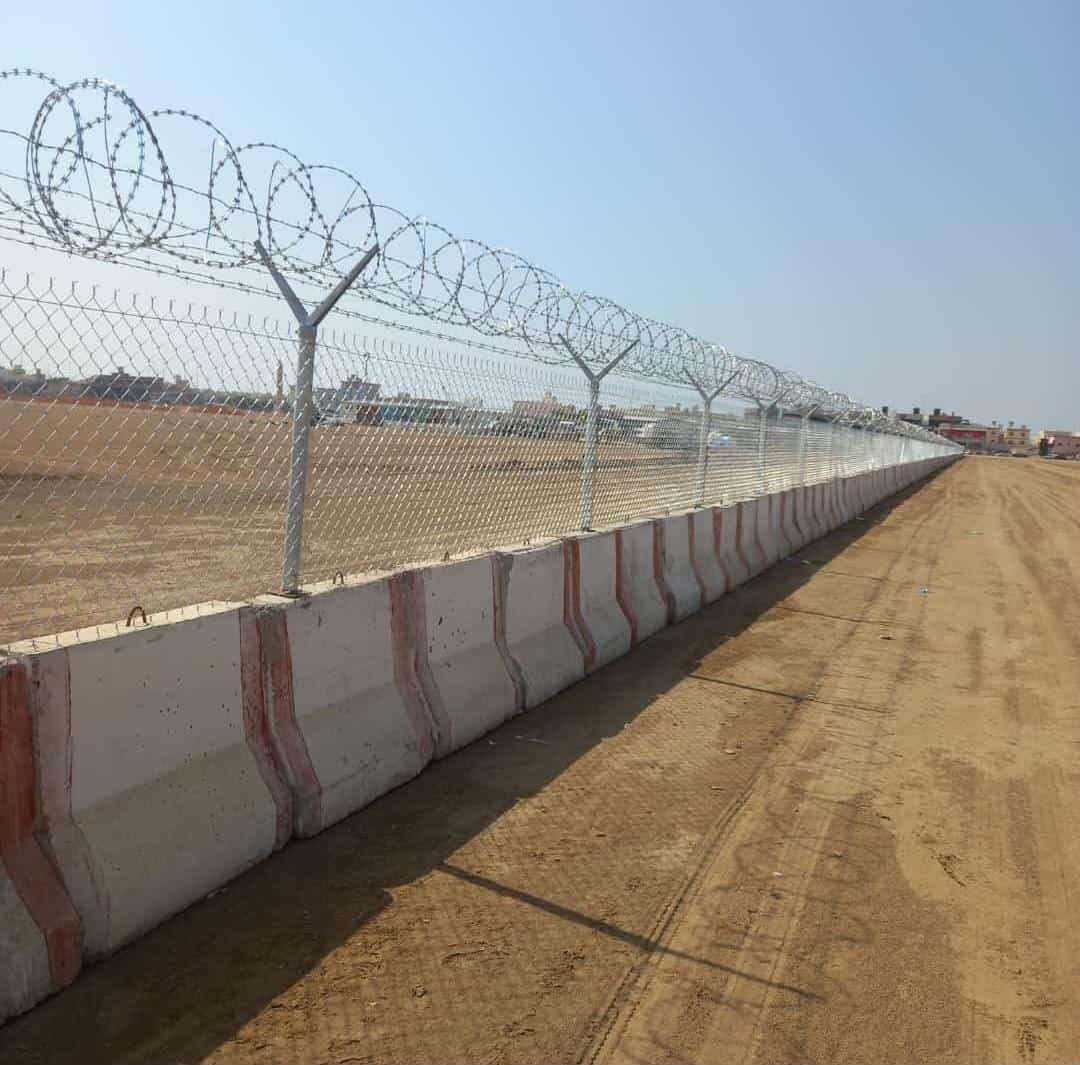
What Is the Best Fence for a Warehouse or Industrial Yard?
Quick answer: The best warehouse fence is a properly designed and installed system that meets the facility's security, operational, environmental, and regulatory requirements.
Is galvanized chain-link fencing suitable for warehouses?
Yes. Galvanized chain-link fencing can be suitable for industrial warehouses and outdoor storage yards when its wire diameter, mesh size, coating, post strength, and installation details meet the project's requirements.
Should I choose welded mesh instead of chain-link fencing?
Choose based on the required rigidity, security performance, appearance, installation method, and maintenance needs.
Welded mesh panels can offer a rigid appearance, while woven chain-link fabric provides flexibility and can be adapted to different perimeter layouts.
Does a taller fence always provide better security?
No. Fence height matters, but overall security also depends on mesh strength, post foundations, gate construction, access management, lighting, and surveillance.
Should I inspect the site before ordering fencing materials?
Yes. A site inspection helps identify the actual perimeter length, ground conditions, elevation differences, underground utilities, vehicle entrances, and potential construction obstacles.
What information should I prepare before requesting a quotation?
Prepare the property location, approximate perimeter length, desired height, preferred fence material, number of gates, site photographs, and any available approved drawings or regulatory requirements.
How Do I Choose Warehouse and Yard Fencing?
Choose fencing by matching the physical and security characteristics of the system with the actual operating requirements of the warehouse.
How do I identify the security requirements of my warehouse?
Evaluate the value and sensitivity of stored materials, operating hours, site location, existing access controls, vehicle activity, and exposure to unauthorized entry.
A general storage yard may require a visible and durable perimeter boundary, while a facility storing expensive equipment may benefit from more robust fencing and additional security controls.
How do I choose fencing for an industrial facility in Riyadh?
Start by reviewing the facility's permitted activity and the requirements applicable to its location. Then evaluate fence material, height, foundations, and gate design.
Industrial estates and regulated facilities may have additional requirements beyond general municipal conditions.
Can the same fencing system be used for warehouses and open yards?
It can, provided the design is appropriate for both sites.
However, an exposed outdoor yard may have different wind loads, soil conditions, vehicle access needs, and security risks from a fenced warehouse compound.
What should I prioritize when comparing fencing quotations?
Compare clearly defined specifications, including mesh material, wire thickness, galvanizing, steel posts, foundations, installation, gates, warranties, and the complete scope of work.
Is the cheapest fencing quotation the best option?
Not necessarily. A lower initial price may exclude essential materials or use specifications that are unsuitable for the expected loads and operating conditions.
Compare complete systems using the same technical requirements before selecting a contractor.
What Are the Strongest Types of Fences?
The strongest fence depends on the required type of resistance. Material strength, wire diameter, mesh geometry, weld quality, frame design, post dimensions, foundations, and connections determine the performance of the completed system.
Is galvanized chain-link fencing strong enough for industrial use?
It can be when the selected specifications and installation are appropriate for the application.
Galvanizing primarily improves corrosion resistance; it does not automatically make a thin steel wire stronger than all other fencing materials.
Is welded wire mesh stronger than chain-link fencing?
Welded mesh can offer greater rigidity in certain configurations, but the actual comparison depends on wire diameter, panel geometry, steel grade, weld integrity, and supporting structure.
Are security mesh panels suitable for high-value warehouses?
They may be suitable where additional resistance is required, provided the selected system has specifications and performance appropriate to the facility's security assessment.
Does thicker steel wire make a fence stronger?
Increasing wire diameter can improve resistance to certain loads when other factors remain comparable.
However, thicker wire also changes weight and structural demands, which must be considered when designing posts and foundations.
Which fencing material performs better in humid environments?
Materials with suitable corrosion protection should be prioritized in humid or aggressive environments.
Evaluate galvanizing and coating specifications according to expected environmental exposure, especially near coastal or industrial areas.
Can solid steel fencing provide greater privacy?
Yes, solid panels can reduce visibility into the property, but they also create different wind-loading conditions and may require stronger foundations and posts.
| Fence Type | Main Advantages | Typical Application | Important Considerations |
|---|---|---|---|
| Galvanized Chain-Link | Flexible layout and multiple available specifications | General warehouses and outdoor storage yards | Wire diameter, mesh openings, tension, posts, and coating |
| Welded Steel Mesh Panels | Rigid construction and organized appearance | Industrial and commercial facilities | Weld quality, panel dimensions, and fixing systems |
| Reinforced Security Mesh | Specialized security configurations | Facilities requiring additional perimeter protection | Verified security performance and system compatibility |
| Solid Metal Panel Fencing | Privacy and visual screening | Sites requiring restricted visibility | Wind loading, foundations, and local requirements |
Selection principle: Do not rank fence systems by appearance alone. Compare verified technical specifications, structural performance, corrosion protection, and security requirements.
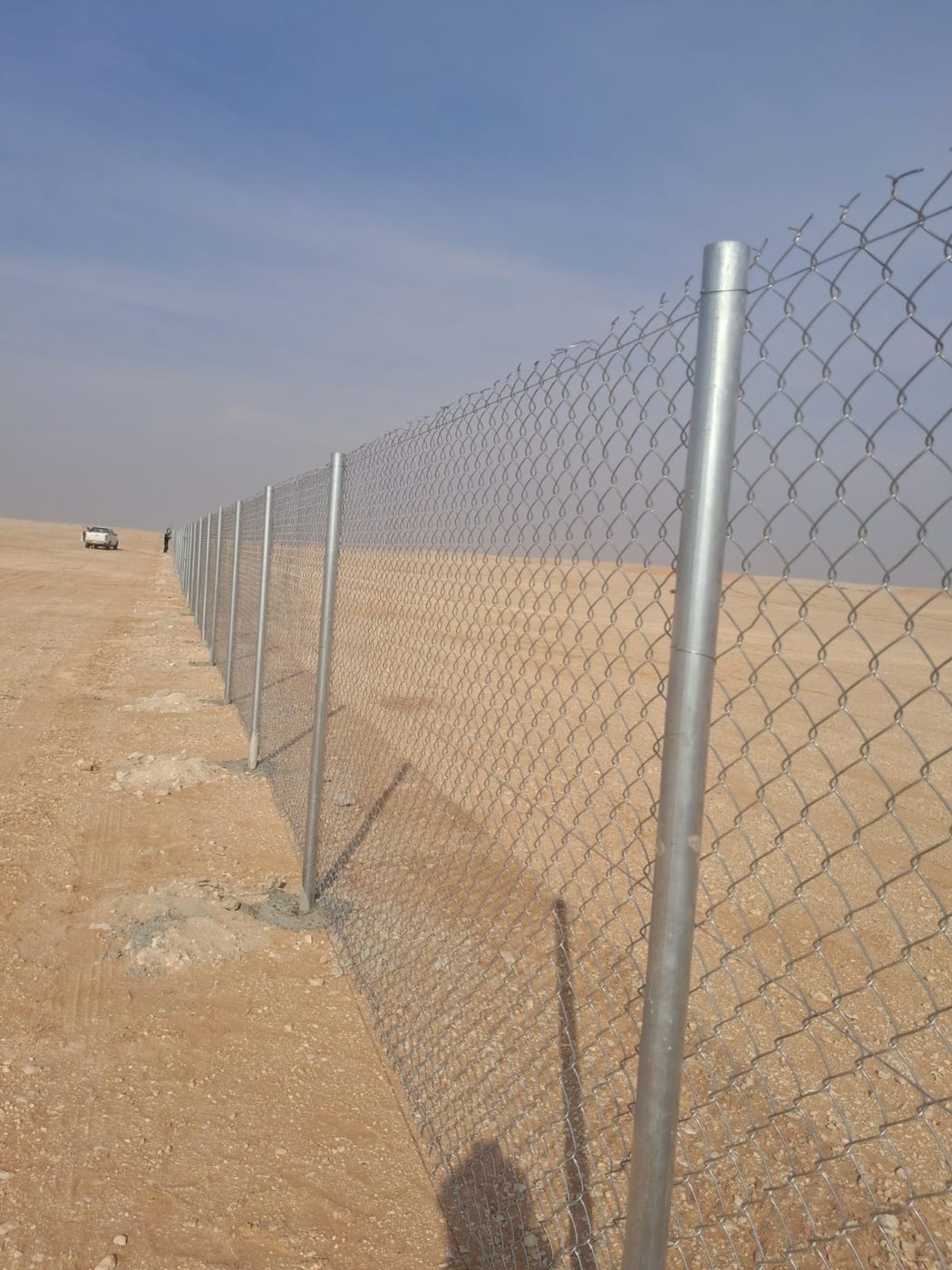
What Is the Security Height for Fences?
There is no single security fence height that applies to every warehouse in Saudi Arabia. The correct height depends on the facility's activity, applicable regulations, security requirements, and approved design.
Is a 2-meter fence high enough for a warehouse?
It may be adequate for certain applications, but a 2-meter height is not a universal legal or security standard for all warehouses.
When should I consider a 2.5-meter or taller fence?
A taller fence may be appropriate where an applicable regulation, security assessment, or approved engineering design requires it.
The height must be evaluated together with post strength, foundations, and environmental loads.
Do factories and warehouses have different fencing requirements?
They may. Requirements can vary according to facility classification, industrial activity, licensing authority, and the location of the property.
Can I add security features above a fence?
Only where permitted and suitable for the site.
Any additional components must comply with relevant safety, property, access, and regulatory requirements.
How do I find the legal fence height for my property?
Review the facility's license, approved site plans, and the current requirements of the relevant authority.
Official sources include Balady and the Saudi Ministry of Municipalities and Housing.
Does increasing fence height affect the foundation design?
Yes. A taller fence can change the loads and overturning forces acting on its posts and foundations.
Final dimensions should be established using an appropriate engineering assessment.
What Distance Is Required Between Fence Posts?
Fence post spacing depends on the fence system, height, post section, structural loads, terrain, and applicable installation specification.
For conventional chain-link fencing within the scope of ASTM F567-23, line posts are spaced at intervals not exceeding 10 feet, approximately 3.05 meters. A project may require closer spacing.
How far apart should chain-link fence posts be?
According to the installation practice in ASTM F567-23, line-post intervals for applicable chain-link fencing must not exceed approximately 3.05 meters.
This is a reference limit within that standard, not a universal design recommendation for all warehouse fences.
Is 2.5 meters between fence posts acceptable?
It may be suitable for many designs, but acceptance depends on post dimensions, fence height, mesh specifications, loading conditions, and engineering requirements.
Should taller fences have closer post spacing?
They may require closer spacing or stronger posts and foundations, depending on the design calculations and environmental loads.
Are post spacings different at corners and gates?
Yes. Corner, end, and gate posts require appropriate structural treatment because they resist loads that differ from those acting on ordinary line posts.
What distance should I leave between fencing and the warehouse building?
Follow approved plans, property boundaries, required setbacks, access routes, and any applicable fire or emergency access requirements.
Do not assume a universal clearance distance.
Should post spacing change on uneven ground?
It may. Changes in ground levels and fence alignment can require additional posts or adjustments to the layout.
| Design Element | Technical Reference | Final Design Requirement |
|---|---|---|
| Chain-link line-post spacing | Maximum 3.05 m within ASTM F567-23 scope | Verify loads and whether closer spacing is needed |
| Corner and terminal posts | Special bracing and anchoring requirements | Design for tension and direction changes |
| Fence height | Depends on permitted use and security needs | Confirm applicable regulations and approved plans |
| Concrete footing dimensions | Depend on soil, loads, posts, and fence height | Use appropriate structural and geotechnical assessment |
| Industrial gate opening | Depends on truck dimensions and access requirements | Verify the operational vehicle movement plan |
Technical note: ASTM F567-23 is a technical reference for chain-link fence installation. It does not replace applicable Saudi regulations or site-specific engineering requirements.
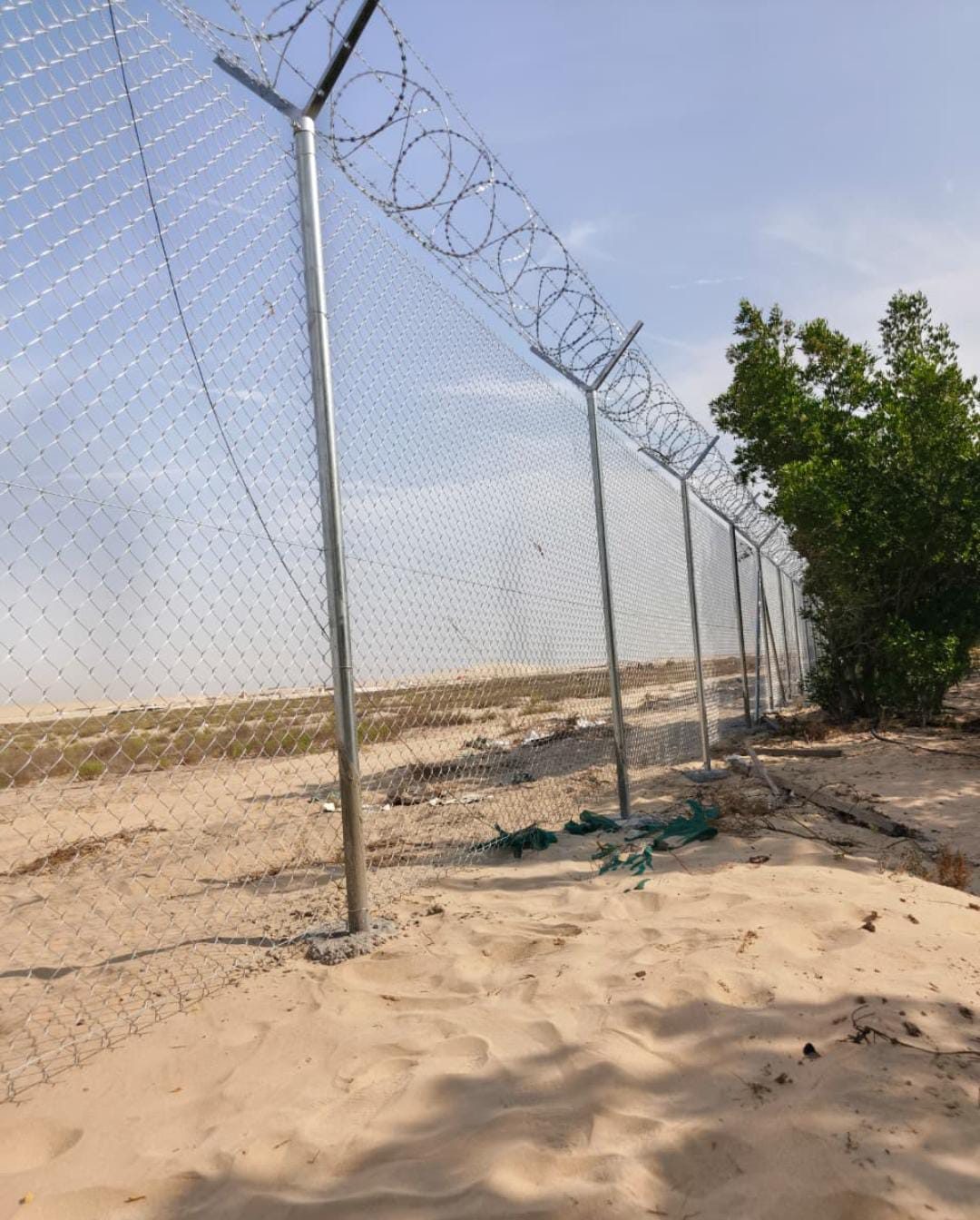
How Do I Install Fences?
Install warehouse fencing by surveying the site, confirming property boundaries, identifying underground utilities, preparing the fence line, setting posts and foundations, installing the mesh and structural components, and conducting a final inspection.
How do I prepare the ground for fence installation?
Clear the planned fence route, verify ground levels, identify underground services, and examine soil conditions before excavation.
How do I mark the fence line accurately?
Use approved drawings, survey references, and suitable setting-out equipment to establish the fence alignment and locations of posts, corners, and gates.
How do I install steel fence posts in concrete?
Prepare footings according to the approved design, position posts vertically, verify their alignment, place suitable concrete, and allow the required curing period before applying significant loads.
How do I attach chain-link mesh to the posts?
Use the specified tensioning components, ties, clips, rails, or other compatible fittings according to the fence design and manufacturer's installation instructions.
How do I install fencing around corners?
Provide appropriate terminal posts and bracing at direction changes, following the approved installation details.
How do I install a fence gate for warehouse trucks?
Design the opening and gate system according to the expected vehicle dimensions, gate operating method, structural requirements, and safe movement routes.
Can I install industrial fencing myself?
Industrial fencing should generally be installed by qualified personnel where excavation, concrete foundations, structural requirements, vehicle access, or regulatory compliance is involved.
How do I check whether the fence installation is correct?
Inspect post alignment, structural connections, foundation condition, mesh attachment, gate operation, safety hazards, and compliance with the approved specifications.
How Do I Know Whether Fence Posts and Foundations Are Strong Enough?
Evaluate post and foundation strength using the material properties, steel section dimensions, support conditions, soil characteristics, and loads acting on the fence.
Are thicker fence posts always stronger?
Not necessarily. Strength depends on the steel grade, cross-sectional shape, dimensions, wall thickness, unsupported height, and connections.
Should I use round or square steel fence posts?
Either may be suitable when properly designed for the specific fence system and loading conditions.
How do I choose the right concrete footing dimensions?
Base the dimensions on the site soil, expected loads, post geometry, installation method, and applicable engineering specifications.
Do sandy soils require different fence foundations?
They may. Soil density, compaction, moisture conditions, and bearing capacity influence foundation design.
Can poor foundations cause a warehouse fence to lean?
Yes. Inadequate footing design, weak soil, ground movement, or external impacts can cause posts to tilt or become unstable.
How do I protect the foundation area from water damage?
Use appropriate drainage and concrete detailing, and avoid conditions that allow persistent water accumulation around critical connections.
How Do I Improve Warehouse Security With Fencing?
Improve warehouse security by combining a suitable perimeter fence with effective gates, controlled access, lighting, monitoring, and documented operating procedures.
Can fencing alone secure an industrial warehouse?
No. Fencing creates a physical boundary, but it should be part of a broader security strategy appropriate to the facility.
How do I choose a secure industrial entrance gate?
Select a gate that meets structural, access-control, operational, and safety requirements, including the movement of trucks and other vehicles.
Should I install cameras along the warehouse fence?
Surveillance may help where appropriate and legally permitted, but camera placement and data management must follow applicable requirements.
How can I improve security without using solid metal walls?
Consider an appropriately specified security mesh system supported by access control, lighting, monitoring, and operational security measures.
How do I identify weak points around a warehouse perimeter?
Review gates, corners, changes in terrain, poorly illuminated areas, vulnerable attachments, and locations where the fence may be exposed to vehicle impacts.
Does fence visibility improve security?
Visibility can support monitoring in some environments, but the appropriate level of screening depends on the facility's security and privacy requirements.
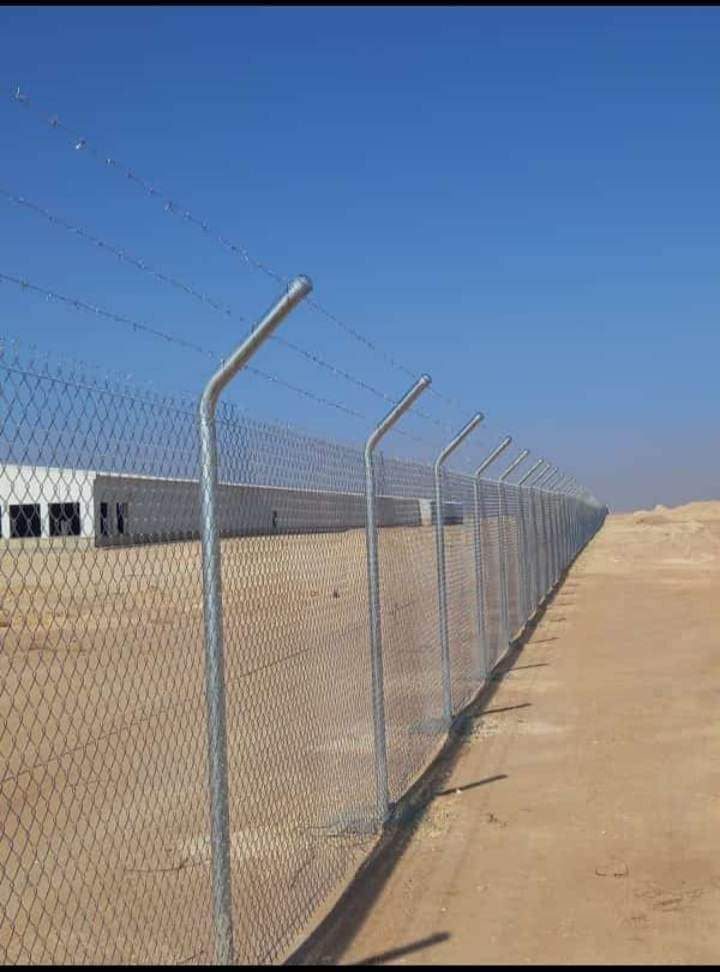
How Do I Choose Fencing That Withstands Saudi Weather?
Choose materials and protective coatings appropriate for the site's exposure to heat, dust, humidity, corrosion, and wind, while ensuring that posts and foundations are designed for the applicable environmental loads.
Does extreme summer heat damage galvanized steel fencing?
Properly specified steel fencing can perform in hot environments, but the long-term condition depends on the complete material and coating system and the local exposure conditions.
How do I prevent corrosion in warehouse fencing?
Specify suitable galvanizing or protective coatings, inspect vulnerable areas, and repair damaged protective layers according to the product requirements.
Can strong winds damage chain-link fencing?
Yes. Wind loads affect posts, foundations, and attachments, and must be considered in the design.
Does adding privacy screening increase wind pressure?
It can significantly change the wind loading because a more solid surface presents greater resistance to airflow.
Review the structural design before adding privacy fabric, metal sheets, or other screening materials.
Should coastal warehouses use different corrosion protection?
Potentially. Coastal exposure can create more aggressive corrosion conditions, so coating selection and maintenance should reflect the actual environment.
How often should industrial fences be inspected?
Use a maintenance schedule appropriate for site conditions and inspect after major storms, vehicle impacts, nearby excavation, or other events that may affect structural stability.
How Much Does Warehouse Fencing Cost in Saudi Arabia?
Warehouse fencing costs depend on total perimeter length, fence height, material specifications, steel posts, foundations, access gates, ground conditions, installation requirements, and transportation.
Is warehouse fencing priced per linear meter?
Many fencing quotations use linear meters for a defined fence height and specification, although materials may also be priced by panel, roll, or square meter.
How do I calculate the perimeter of my warehouse yard?
Add the lengths of the property boundaries that require fencing, taking into account the actual site geometry and approved layout.
Does the fence price include posts and foundations?
Not always. Confirm whether the quotation includes all posts, foundations, concrete, mesh, fittings, gates, labor, transportation, and site preparation.
Does increasing fence height increase the cost?
Usually, because taller fencing can require more material and stronger structural support, depending on the design.
How do I estimate the cost of fencing a large industrial yard?
Calculate the required quantities and multiply them by the quoted unit prices, then add gates, special works, applicable taxes, and other approved project costs.
Can I calculate the exact price from aerial photographs?
Aerial images may help estimate the layout, but accurate pricing normally requires verified dimensions and sufficient information about ground conditions and construction requirements.
| Item | Illustrative Quantity | Illustrative Unit Price | Calculated Amount |
|---|---|---|---|
| Fence supply and installation including posts and foundations | 180 linear meters | SAR 150 per meter | SAR 27,000 |
| Industrial entrance gate | 1 unit | SAR 4,000 | SAR 4,000 |
| Site preparation and auxiliary works | Lump sum | SAR 2,000 | SAR 2,000 |
| Subtotal before VAT | — | — | SAR 33,000 |
| Illustrative 15% VAT | — | — | SAR 4,950 |
| Illustrative Total Including VAT | — | — | SAR 37,950 |
Important pricing disclaimer: The figures above are hypothetical amounts used only to demonstrate the calculation process. They are not verified market prices, confirmed product quotations, or official offers from Shobok Rayat Najd.
The actual project price must be determined after defining the technical specifications, quantities, site conditions, and agreed installation scope.
How Do I Request an Accurate Warehouse Fencing Quotation?
Provide the contractor with the site location, perimeter dimensions, required height, preferred fencing system, gate requirements, and relevant site drawings or photographs.
What details does a fencing contractor need?
The contractor typically needs the project location, dimensions, intended use, ground conditions, access requirements, material specifications, and applicable regulatory constraints.
Can I request an initial quotation using site photographs?
Yes, photographs can support a preliminary discussion, but they may not provide enough information for accurate structural specifications or a final price.
Should I request steel thickness and coating details?
Yes. Request the wire diameter, mesh dimensions, post section size, wall thickness, galvanizing or protective coating specifications, and foundation details.
Should the contractor include installation and transportation?
Clarify exactly which services are included, such as delivery, site preparation, excavation, concrete work, materials, gate installation, cleanup, and final inspection.
How can I contact Shobok Rayat Najd for warehouse fencing?
Visit the official Shobok Rayat Najd website to learn more about fencing solutions and discuss the requirements of your industrial property.
 Call Now
 WhatsApp
How Do I Choose a Warehouse Fencing Installation Contractor?
Choose a contractor who can provide clear technical specifications, explain the installation approach, address site requirements, and define the scope of work in writing.
Should I compare contractors using price alone?
No. Compare the entire system, including material quality, foundation design, installation details, project duration, warranty conditions, and acceptance requirements.
What should be included in the fencing contract?
Include approved specifications, quantities, drawings, work scope, installation schedule, payment terms, safety obligations, inspection procedures, and warranty provisions.
How do I check material quality before installation?
Compare delivered materials with the approved specifications, inspect visible damage, and request relevant product documentation where appropriate.
Should the project include an installation timeline?
Yes. The contract should define the expected work period and account for procurement, site preparation, curing, inspection, and operational restrictions.
Should warehouse fencing have a warranty?
Request written warranty terms defining which defects are covered and which conditions, such as vehicle impacts or unauthorized alterations, are excluded.
What Are the Most Common Warehouse Fencing Installation Mistakes?
Common mistakes include poorly defined specifications, unsuitable post spacing, inadequate foundations, missing corner bracing, poor corrosion protection, and gates that do not match operational needs.
Why do some fence posts start leaning?
Possible causes include inadequate foundations, soil movement, unexpected loading, impact damage, and insufficient structural support.
Why do problems often appear at fence corners?
Corner posts can experience significant tension and direction-changing forces, making correct terminal post construction and bracing important.
Why does fencing deform near warehouse gates?
Gate locations may experience additional loads and repeated movement, and problems can result from inadequate support or incorrect installation.
Can poor soil preparation damage the fencing system?
Yes. Inadequate ground preparation or unsuitable footing construction can reduce stability and create long-term alignment problems.
Can privacy screening damage an existing fence?
It can increase wind loading and potentially overload posts or foundations not designed for the additional resistance.
Why should I inspect material specifications before installation?
Because substitutions in wire thickness, steel post dimensions, or corrosion protection can change the system's performance and expected service life.
| Common Mistake | Potential Consequence | Recommended Prevention |
|---|---|---|
| Incorrect post spacing | Excessive deformation or reduced stability | Follow approved engineering and installation requirements |
| Inadequate concrete foundations | Post movement or structural instability | Design footings for soil and expected loads |
| Missing terminal post bracing | Distortion at corners and ends | Use appropriate bracing and connections |
| Insufficient corrosion protection | Premature rust and material deterioration | Specify suitable galvanizing and protective coatings |
| Poor gate positioning | Vehicle collisions and operational delays | Plan vehicle access and turning requirements |
| Unplanned privacy screens | Additional wind loads | Review structural suitability before installation |
| Unverified property boundaries | Compliance disputes and costly modifications | Confirm surveys, plans, and legal boundaries |
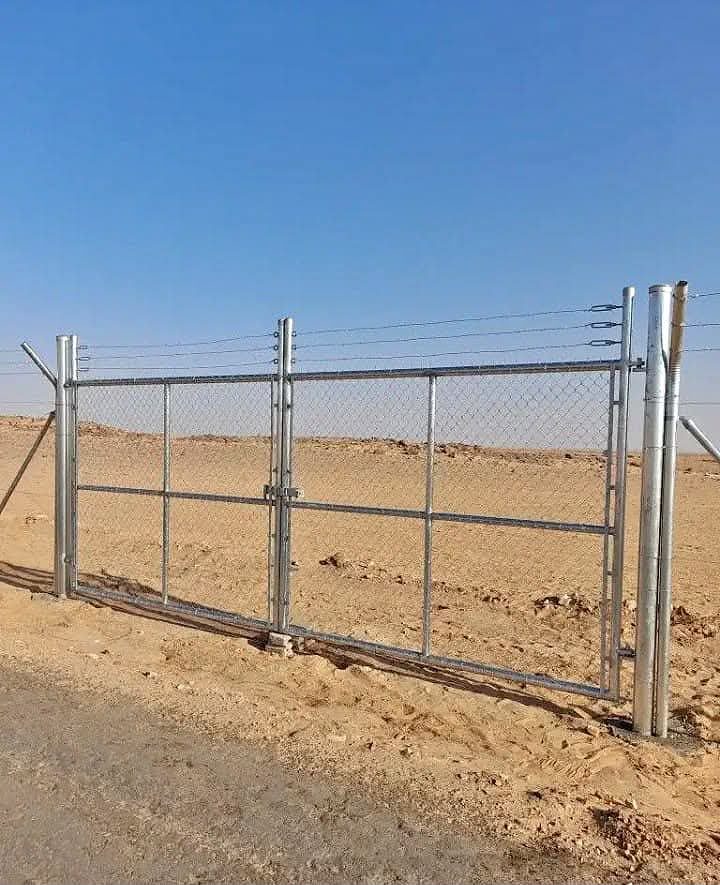
How Do I Inspect a Newly Installed Warehouse Fence?
Inspect the completed fence against the agreed specifications and approved drawings, including dimensions, alignment, materials, foundations, connections, and gate operation.
How do I check fence post alignment?
Use suitable measurement tools to verify vertical alignment, straightness, and consistency with the accepted installation tolerances.
How do I verify the final fence height?
Measure the fence at representative locations, particularly where the terrain changes, and compare it with the approved drawings.
How do I inspect the industrial gates?
Check opening and closing operation, hinges, tracks where applicable, clearances, latches, stops, and any safety systems.
How do I inspect the galvanizing?
Check for visible coating damage, corrosion, poor finishing, or inconsistent materials, and review the required technical documentation when available.
Should I keep a record of the completed installation?
Yes. Keep accepted drawings, measurements, photographs, material specifications, warranty documents, and inspection records for future maintenance.
What should happen if I find an installation defect?
Document the problem and request an appropriate technical assessment and corrective action in accordance with the agreed contract and acceptance requirements.
How Do I Maintain Industrial Fencing After Installation?
Maintain warehouse fencing through periodic inspections, prompt repairs, corrosion management, and monitoring of posts, foundations, connections, and gates.
When should I inspect industrial fencing?
Use a schedule based on site risk and environmental exposure, with additional inspections after storms, impacts, or nearby construction activities.
How do I identify early corrosion?
Look for coating damage, discoloration, rust formation, and deterioration around welds, fasteners, cut edges, and connections.
What should I do if a truck damages a fence post?
Restrict access to any unsafe area and arrange an appropriate inspection of the affected post, foundation, mesh, and connections.
Can I repair only the damaged fence section?
It may be possible when the remaining system is structurally sound and the replacement materials and details are compatible.
Should I replace damaged connections immediately?
Connections affecting structural integrity, security, or user safety should be assessed and corrected promptly.
How can maintenance reduce total ownership costs?
Early identification of corrosion, movement, or connection problems may prevent more extensive repairs and reduce disruption to warehouse operations.
How Can Shobok Rayat Najd Help With Warehouse Fencing?
Shobok Rayat Najd can be contacted to discuss fencing requirements for warehouses, storage yards, industrial properties, and other sites in Saudi Arabia.
Can I request fencing for an outdoor storage yard?
You can discuss your requirements by providing the location, intended use, perimeter dimensions, access requirements, and the desired type of fencing.
Can I select the fence specifications before a site visit?
Preliminary specifications can be discussed using reliable drawings and photographs, but final structural details may require site inspection or engineering assessment.
What should I send to obtain a more useful quotation?
Provide the project city, property dimensions, approximate perimeter, preferred height, number of gates, photographs, and relevant site requirements.
Does every warehouse need the same fence?
No. Fence design should reflect the specific warehouse activity, security objectives, environmental exposure, and applicable regulations.
Where can I contact Shobok Rayat Najd?
Visit the official Shobok Rayat Najd website or use the following direct contact options to discuss your warehouse fencing requirements.
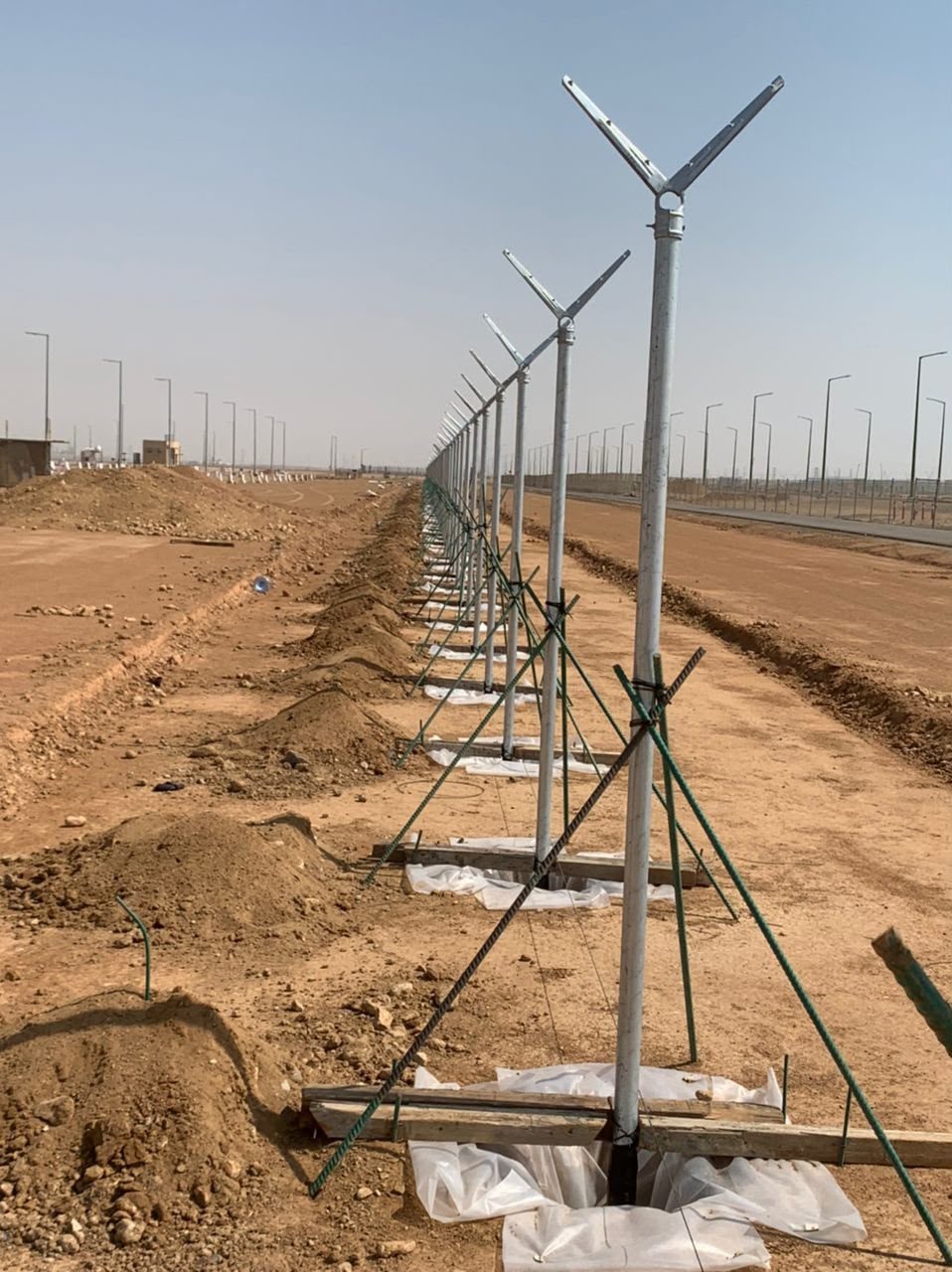
What Should I Check Before Installing Warehouse Fencing?
Use a structured checklist to confirm that the proposed fencing system is appropriate for the site and that all important technical and commercial requirements have been considered.
What should I check before finalizing the fence layout?
Verify the property boundaries, relevant permits, ground conditions, underground utilities, proposed entrances, and operational access routes.
What should I check in the contractor's technical offer?
Review the fence height, mesh type, wire diameter, steel post dimensions, coating specifications, foundations, gate details, installation scope, and warranty conditions.
What should I verify before construction starts?
Confirm approved drawings, site access arrangements, safety procedures, material availability, and responsibilities for inspection and acceptance.
- ☐ Have I confirmed the warehouse's operational and security requirements?
- ☐ Have I checked applicable Saudi fencing requirements?
- ☐ Have I verified the legal property boundaries?
- ☐ Have I measured the full perimeter?
- ☐ Have I confirmed the required fence height?
- ☐ Have I selected a suitable fence material?
- ☐ Have I specified the mesh opening and wire diameter?
- ☐ Have I checked corrosion protection requirements?
- ☐ Have I defined the steel post dimensions?
- ☐ Have I checked post spacing against the required design?
- ☐ Have I assessed the ground and foundation requirements?
- ☐ Have I included adequate corner and terminal post bracing?
- ☐ Have I planned entrance gates for vehicle movement?
- ☐ Have I considered emergency access requirements?
- ☐ Have I verified underground utility locations?
- ☐ Have I confirmed all quotation items and exclusions?
- ☐ Have I established the installation schedule?
- ☐ Have I defined inspection and acceptance procedures?
- ☐ Have I reviewed warranty and maintenance conditions?
- ☐ Have I documented the final agreed specifications?
What Are the Most Frequently Asked Questions About Warehouse Fencing?
These answers address common questions from warehouse owners, industrial facility managers, logistics operators, and customers looking for perimeter fencing in Saudi Arabia.
1. What are the strongest types of fences?
Strength depends on the entire fence system. Reinforced security mesh panels may be appropriate for higher-security applications, while properly specified galvanized chain-link fencing can suit many industrial storage yards.
2. How do I install fences?
Survey the property, prepare the ground, establish the fence line, install foundations and posts, attach the mesh, construct gates, and inspect the completed installation.
3. What distance is required between fence posts?
Post spacing depends on the fence design. ASTM F567-23 specifies a maximum line-post spacing of approximately 3.05 meters for chain-link fencing within its scope, although closer spacing may be required.
4. What is the security height for fences?
There is no universal security height. The correct height depends on site security requirements, facility classification, applicable regulations, and the approved design.
5. How do I choose warehouse fencing?
Evaluate security needs, fence material, height, post specifications, foundations, vehicle entrances, corrosion protection, and long-term maintenance requirements.
6. Is galvanized chain-link fencing suitable for warehouses?
Yes, when the wire, coating, posts, structural components, and installation are appropriately specified for the project.
7. How much does warehouse fencing cost in Saudi Arabia?
Actual pricing varies according to perimeter length, fence height, materials, foundations, gates, site conditions, and installation scope. Request a project-specific quotation.
8. Do warehouse fences require concrete foundations?
Foundation requirements depend on the fencing system, soil, structural loads, and approved design. Concrete foundations are common in many industrial installations.
9. Can fencing be installed on uneven ground?
Yes. The installation can be adapted to changes in ground elevation, provided the fence alignment, post design, stability, and security requirements are addressed.
10. How do I find a warehouse fencing contractor in Riyadh?
Prepare your project dimensions, specifications, and location, then contact a fencing provider such as Shobok Rayat Najd to discuss the requirements and available options.
Where Can I Find Official Warehouse Fencing Standards?
Official technical standards and Saudi regulatory resources can help establish suitable materials, installation procedures, and compliance requirements.
Where can I find a technical standard for chain-link fence installation?
Review ASTM F567-23: Standard Practice for Installation of Chain-Link Fence.
This standard addresses procedures involving site preparation, post locations, post setting, bracing, fence fabric, and related components.
Where can I find other technical specifications for steel fencing?
Visit ASTM International to research applicable standards for steel materials, protective coatings, fencing components, and testing.
Where can I check warehouse fencing requirements in Saudi Arabia?
Consult the Ministry of Municipalities and Housing and Balady for current municipal requirements and relevant warehouse or storage facility regulations.
Where can I review Saudi structural construction requirements?
Visit the Saudi Building Code website to identify relevant construction references and structural requirements applicable to the proposed works.
Can international fencing standards replace Saudi regulations?
No. International standards may provide useful technical guidance, but applicable Saudi legal requirements, approved designs, and authority-specific conditions remain necessary.
Should warehouse fencing specifications be approved before construction?
Where required by the project or competent authority, obtain the necessary design approval and confirm compliance before starting construction.
How Do I Start a Warehouse Fencing Project in Saudi Arabia?
Begin by identifying your warehouse's perimeter, security objectives, operational requirements, and applicable regulations. Then prepare a clear technical specification before comparing suppliers and installation quotations.
Should I measure the property before choosing fencing materials?
Yes. Confirming property dimensions and required fence height helps prevent incorrect quantities and unsuitable material selection.
How can I make the quotation process faster?
Provide reliable measurements, site photographs, location details, preferred fence type, gate requirements, and any available approved drawings.
How do I improve the long-term reliability of industrial fencing?
Use suitable materials, appropriate structural design, professional installation, proper corrosion protection, and periodic maintenance.
How can I contact Shobok Rayat Najd about my project?
Visit Shobok Rayat Najd to discuss fencing requirements for industrial properties, warehouses, and outdoor yards in Riyadh and other locations in Saudi Arabia.
Final takeaway: Choosing reliable warehouse and yard fencing in Saudi Arabia requires more than selecting the thickest steel mesh or the lowest price. A successful system combines the appropriate fence material, security height, post spacing, structural foundations, corrosion protection, access gates, and compliance with applicable local requirements.
Before purchasing materials, evaluate the property and define clear specifications. A well-planned warehouse fencing project can provide an effective perimeter boundary, support daily operations, and reduce avoidable maintenance and replacement costs over its service life.