


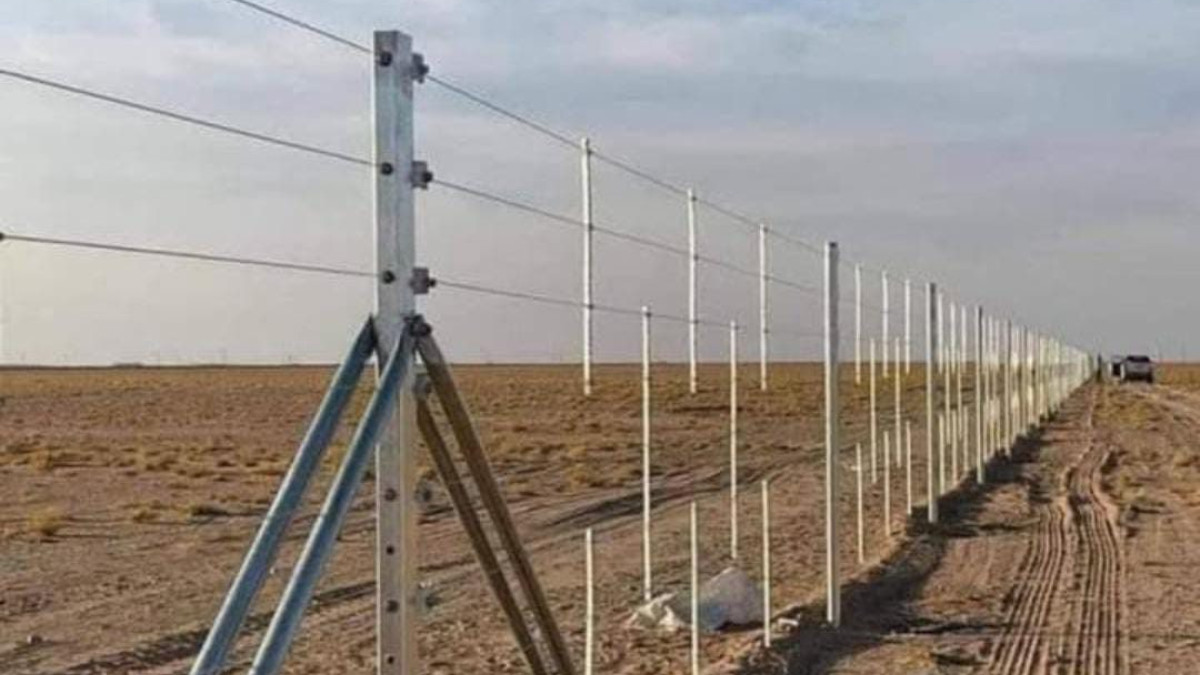
To fence a construction site in Saudi Arabia, first identify the approved site boundary and applicable municipal requirements, then select a suitable temporary fencing system, design stable posts and supports, provide secure access gates, and inspect the installation regularly. The fence must protect workers and the public, discourage unauthorized entry, and remain stable throughout construction. Depending on the municipality, project type, and location, a solid temporary construction enclosure may be required instead of ordinary chain-link mesh.
Construction projects in Riyadh and other Saudi cities need carefully planned site boundaries. These may include residential developments, commercial buildings, infrastructure works, industrial facilities, and building renovation projects. The correct fencing system helps separate active construction operations from surrounding property, roads, pedestrian routes, and public spaces.
However, installing any available steel mesh around a building site does not automatically satisfy construction regulations. The site owner, contractor, and supervising professionals must verify the approved fencing specifications and safety conditions before starting work.
In this guide, Shobok Rayat Najd explains how to choose construction site fencing, compare galvanized mesh systems, determine post spacing and security height, plan gates, understand installation costs, and inspect temporary fencing throughout a project.
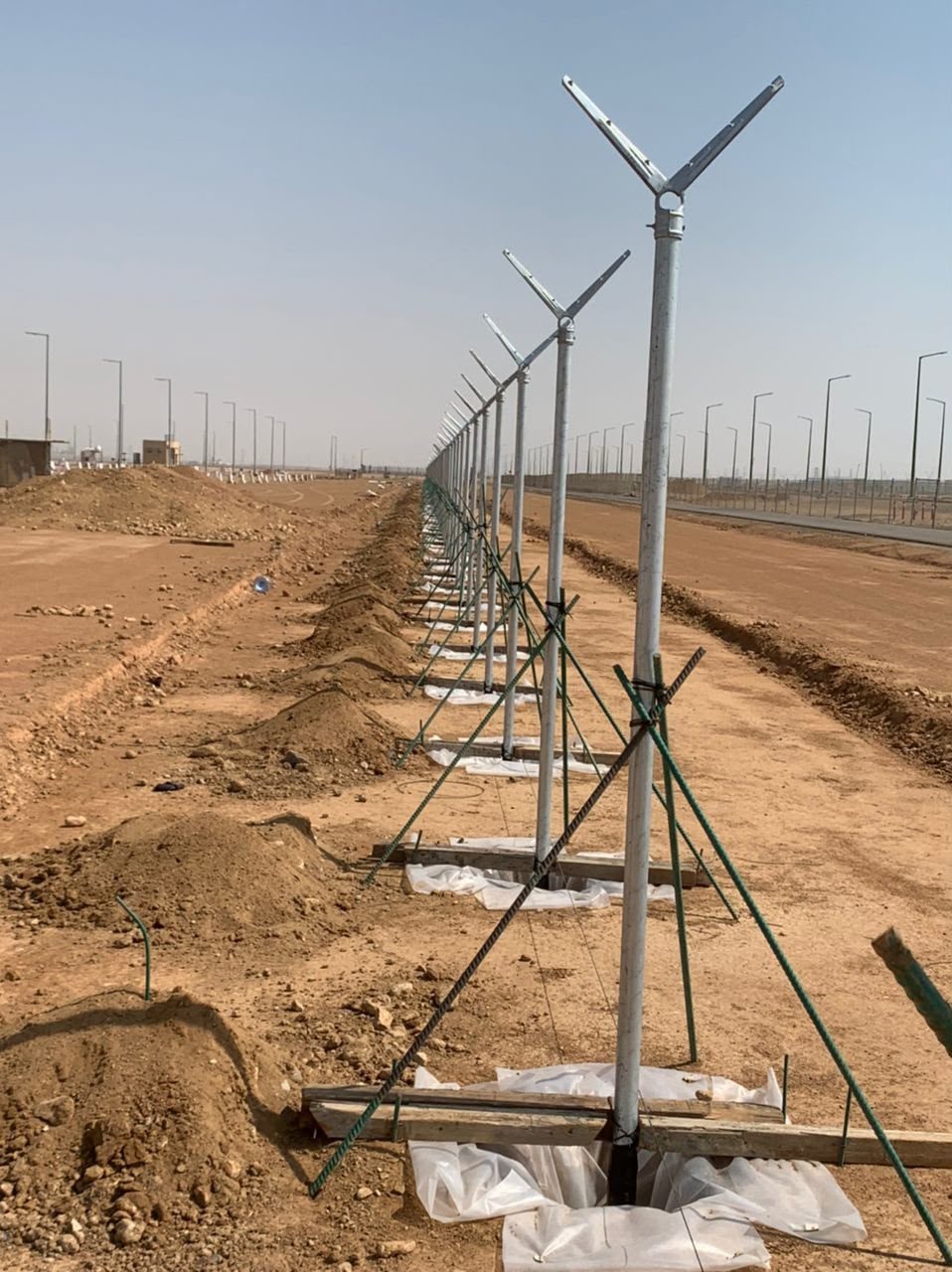
The correct construction site fence must satisfy both site safety requirements and the applicable municipal specifications. Start by checking whether the project requires a solid enclosure, a particular appearance, an approved height, or other conditions. Then select the fence material, posts, foundations, gates, and installation method based on the approved design.
Important: Temporary construction fencing is not the same as permanent property fencing. The safest or legally acceptable solution depends on the site's location, hazards, construction activities, and official requirements.
 Call Now
 WhatsApp
Why Does a Construction Site Need Temporary Fencing?
Temporary construction fencing establishes a controlled boundary around active works, helping separate hazardous operations from unauthorized visitors, neighboring properties, and public circulation areas.
Why should I install fencing before construction begins?
A suitable temporary perimeter helps define the work zone and control access before hazardous activities begin.
Early installation also reduces the likelihood of construction materials, machinery, or excavation areas being accessible from surrounding public spaces.
The timing and exact installation requirements must follow the project's approvals and relevant site safety procedures.
Can a construction fence prevent unauthorized entry?
It can discourage entry and establish a controlled boundary, but it cannot guarantee complete security.
Actual protection depends on fence construction, access gates, supervision, lighting, and other security measures appropriate to the site's risks.
Does temporary fencing protect pedestrians?
A correctly designed construction enclosure can help separate pedestrian routes from work activities.
However, falling materials, vehicle movements, excavation hazards, and overhead construction may require additional engineered protection beyond a perimeter fence.
Is construction fencing only required for large projects?
No. Fencing requirements depend on the type of activity, location, approvals, and applicable regulations rather than project size alone.
Even a relatively small building project may create hazards that require proper site separation.
What Are the Strongest Types of Fences?
The strongest fencing system is one whose panels or mesh, posts, connections, foundations, and gates are designed together to meet the required loads and protection level.
Is galvanized chain-link fencing strong enough for construction sites?
Galvanized chain-link fencing can be suitable for certain temporary or internal construction boundaries when its specifications meet the project's requirements.
Its performance depends on wire diameter, mesh openings, corrosion protection, post stability, and correct tensioning.
For external municipal construction boundaries, transparent mesh may not meet the required enclosure specification. Confirm the permitted system before ordering materials.
Are welded mesh fence panels stronger than chain-link fences?
Neither type is automatically stronger in every application.
Welded mesh panels provide a fixed panel structure, while chain-link mesh can offer flexibility and practical installation for some sites.
Compare the actual materials, panel dimensions, supports, connections, and tested performance rather than relying only on the product category.
Are solid temporary construction fences better than mesh fences?
Solid enclosures may be necessary for municipal compliance, privacy, dust management, or public separation, depending on the site.
However, solid panels can experience substantial wind forces and require an appropriately designed structural support system.
A solid fence is not inherently safer if its posts and foundations cannot resist the applied loads.
Which construction fence should I choose?
Choose the system that satisfies the approved project requirements and provides adequate structural stability and access control.
The following comparison shows the general differences among common fencing approaches.
| Fence type | Main characteristics | Possible application | Important limitation |
|---|---|---|---|
| Galvanized chain-link mesh | Flexible woven steel mesh | Approved temporary or internal boundaries | May not satisfy solid enclosure requirements |
| Welded mesh panels | Rigid prefabricated mesh sections | Controlled temporary work areas | Panel supports must be stable |
| Solid metal panels | Opaque site enclosure | Projects requiring solid boundaries | Wind loading requires careful engineering |
| Engineered temporary barriers | Specialized systems for defined hazards | Construction or traffic protection where specified | Must match the required protection function |
A chain-link perimeter fence is not a substitute for a certified vehicle-impact barrier, excavation edge protection, or other specialized safety system.
How Do I Install Fences?
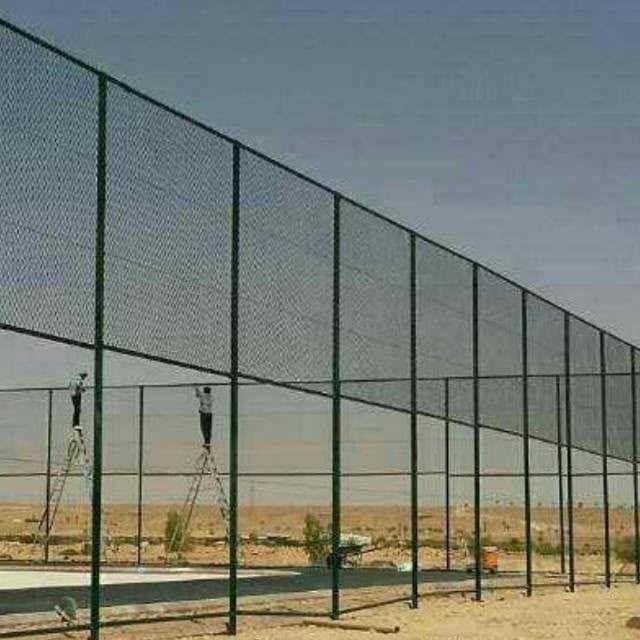
Install temporary construction fencing by confirming the approved site boundaries, surveying underground services, preparing the support system, installing posts and panels or mesh, securing gates, and completing a documented safety inspection.
What should I do before installing construction fencing?
Review the approved site layout, fencing specifications, access requirements, and potential underground or overhead hazards.
The installation team should identify utility lines, drainage systems, adjacent roads, pedestrian routes, and equipment access points before excavation or placement of supports.
How do I mark the construction fence boundary?
Use the approved construction drawings and verified property or site boundaries to establish the intended fence line.
Do not extend fencing into public land, pedestrian routes, or neighboring property without the necessary approvals.
How do I install chain-link fence posts?
Position and secure posts according to an approved structural design that accounts for fence height, soil conditions, wind loads, and gate forces.
Post dimensions, foundation depth, and concrete specifications cannot be chosen safely from a single universal rule.
How do I attach chain-link mesh to the posts?
Use the tensioning and fastening method required by the selected fencing system.
Check that the mesh is properly secured to terminal posts, corners, and intermediate supports without deforming the structure.
How do I know when the installation is complete?
The fence is ready for acceptance when its materials, dimensions, supports, gates, and safety provisions meet the approved requirements and have passed inspection.
Visual appearance alone is not sufficient evidence of structural stability.
What Distance Is Required Between Fence Posts?
Fence post spacing depends on the selected fencing system, fence height, wind exposure, ground conditions, structural loads, and manufacturer or engineer-approved specifications.
What is the normal distance between chain-link fence posts?
Some conventional chain-link fence systems use preliminary spacing in the approximate range of two to three meters, but this must not be treated as an approved design for every construction site.
The actual spacing may need to be shorter or otherwise modified depending on site loads and structural requirements.
Can I increase post spacing to save money?
Only if the revised spacing remains compliant with the approved design and structural requirements.
Increasing the distance without analysis can increase deformation and reduce the stability of the fence.
Do corner posts need different spacing or supports?
Corner and terminal posts may require additional bracing or different structural arrangements because they transfer forces from adjoining fence sections.
The exact details should follow the approved system design.
Does post spacing change for solid construction fences?
Yes, solid panels produce different wind-loading conditions from open mesh fences, so spacing and foundations must be evaluated for the actual panel system.
Never apply chain-link spacing assumptions directly to a solid sheet-metal enclosure.
How do I calculate the number of fence posts?
Start with the measured length of each fence section and divide it by the approved maximum post spacing, then account for terminal, corner, gate, and intermediate supports.
For example, a straight 24-meter section designed with a maximum spacing of 2.4 meters would require at least 10 spans and 11 positions along that section, including both end positions.
This is a mathematical illustration only. It does not establish a required spacing or account for all special structural supports.
What Is the Security Height for Fences?
The appropriate construction fence height is determined by applicable municipal requirements, the approved project design, public safety considerations, and the intended security function.
Is a two-meter construction fence high enough?
A two-meter height may be used in some fencing applications, but it cannot be assumed to satisfy every Saudi construction-site requirement.
Projects may have different requirements depending on their location, activity, municipality, and approved enclosure design.
Does a higher construction fence provide better protection?
Additional height may make entry more difficult, but it can also increase structural loads and does not correct weak foundations or insecure gates.
A fence must be assessed as a complete system.
How high should fencing be near a public sidewalk?
Use the height and enclosure design required by the applicable municipal and project approvals.
Public protection may require a solid enclosure, pedestrian management measures, or additional safeguards that cannot be provided by a transparent fence alone.
Can I add privacy screening to a chain-link fence?
Only after confirming that it is permitted and that the support system can resist the additional loads.
Privacy fabric, advertising sheets, and other attachments can substantially increase wind forces on an otherwise open mesh fence.
What dimensions should I confirm before installation?
Confirm the approved height, post spacing, gate dimensions, clearance requirements, and foundation details as one coordinated design.
| Design element | How it is determined | What to avoid |
|---|---|---|
| Fence height | Municipal and project requirements | Assuming one height is universally compliant |
| Post spacing | Structural design and system specifications | Increasing spacing without approval |
| Post foundations | Loads, soil and installation method | Using arbitrary depths or sizes |
| Gate width | Vehicle movement and site access needs | Blocking emergency or delivery access |
| Public clearance | Approved site boundary and pedestrian provisions | Unapproved encroachment onto public routes |
| Bottom clearance | Ground conditions and access-control requirements | Unintentional gaps or drainage obstruction |
How Do I Secure the Main Entrance to a Construction Site?
Secure the construction entrance with an appropriately designed gate, controlled access procedures, and a layout that accommodates authorized vehicles while protecting pedestrians.
Should I install a single or double construction gate?
Select the gate configuration based on the size and movement requirements of vehicles and equipment entering the site.
Double-leaf or sliding arrangements may suit wider entrances, provided they are properly designed and do not interfere with surrounding circulation.
How wide should a construction site gate be?
The gate must be sized according to the dimensions and turning requirements of the largest authorized vehicles and equipment.
Consider delivery trucks, construction machinery, emergency access, and any restrictions imposed by the adjacent road.
How do I stop a heavy steel gate from becoming unstable?
Use an engineered frame, suitable hinges or support system, correctly designed foundations, and appropriate locking and stopping arrangements.
The gate should be inspected throughout the project for changes in alignment, unusual movement, or damaged components.
Can construction workers use the vehicle gate as their only entrance?
Pedestrian and vehicle access should be arranged according to the site's approved traffic and safety plan.
Where practicable and required, separate pedestrian routes reduce exposure to moving construction vehicles.
How can I keep the entrance secure outside working hours?
Apply the site's authorized access-control procedure and verify that the gate closes and locks correctly.
Security measures must not obstruct required emergency access or safe evacuation arrangements.
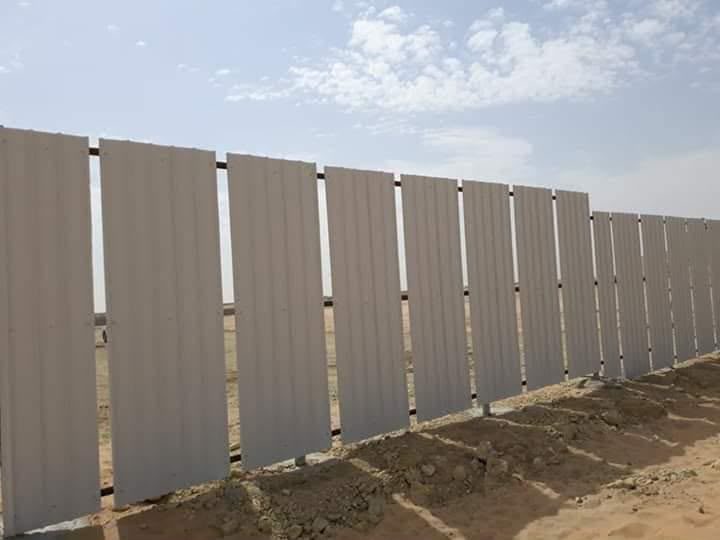
How Do I Keep Temporary Fencing Stable in Strong Winds?
Temporary fencing should be designed and installed to resist the wind loads applicable to its location, geometry, materials, attachments, and support system.
Can strong wind damage a temporary construction fence?
Yes. Strong wind can deform panels, loosen connections, displace temporary supports, or overturn an inadequately designed fence.
Wind exposure may vary between open desert locations, urban streets, and areas between tall buildings.
Is chain-link mesh better than solid panels during high winds?
Open mesh generally allows more airflow than solid panels, but this does not automatically make every mesh fence safe.
Structural stability still depends on post dimensions, mesh properties, connections, foundations, and design loads.
Can I add banners to construction fencing?
Only when the attachments are permitted and the fence has been evaluated for the additional forces.
Banners and opaque coverings can create significant wind loading and may require changes to the support design.
How should I inspect fencing after a storm?
Check the fence from a safe location for leaning posts, displaced supports, loose panels, damaged connections, and unstable gates.
If instability is suspected, restrict access to the affected area and arrange inspection by qualified personnel before attempting repairs.
How Do I Fence a Construction Site on Sandy Ground?
Fencing on sandy ground requires a foundation or support system designed for the actual soil conditions, fence loads, installation method, and project duration.
Can temporary fence posts be installed in sand?
Yes, when the support system is designed for the soil and expected loads.
However, loose fill or variable ground conditions can reduce stability and may require special foundation treatment.
Should I use concrete foundations for every post?
Not necessarily. The appropriate foundation method depends on the approved fencing system and site conditions.
Some temporary systems use engineered reusable supports, while others require embedded or concrete-supported posts.
How deep should fence posts be installed?
Foundation depth must be determined from the design, ground conditions, and load requirements.
It is unsafe to recommend one excavation depth for all temporary construction fences.
How do I prevent erosion near the fence?
Manage drainage and ground stability so runoff or excavation activities do not undermine the support system.
The site contractor should inspect foundations where ground movement, water accumulation, or adjacent excavation occurs.
How Much Does Construction Site Fencing Cost?
Construction fencing costs in Saudi Arabia depend on the approved fence design, perimeter length, height, materials, foundations, gates, installation conditions, and project duration.
How much does chain-link fencing cost per meter?
The actual price depends on wire specifications, height, corrosion protection, post requirements, foundations, and the scope of installation.
A price for mesh material alone should not be compared directly with a complete installed perimeter fence.
Is temporary fencing cheaper than permanent fencing?
It may have a lower initial cost in some applications, but the total cost depends on the system, duration, installation, maintenance, and removal.
A temporary fence that requires repeated repairs may become more expensive than a better-engineered solution.
Does the construction site size affect fencing cost?
Yes, because perimeter length influences material quantities and installation work.
However, two sites with the same perimeter can have different costs because of ground conditions, access, gates, and structural requirements.
How do I calculate the fencing perimeter?
Measure the approved boundary of the area to be enclosed, accounting for its actual shape.
For a simple rectangular site measuring 50 meters by 30 meters, the theoretical perimeter is:
Perimeter=2 × (50 + 30)=160 linear meters.
This example does not determine how much mesh is required, because gates, solid boundary sections, and other project details may change material quantities.
What should a construction fencing quotation include?
A useful quotation identifies the complete scope and explains what is included or excluded.
| Cost item | What affects the cost? | What should be confirmed? |
|---|---|---|
| Fence materials | Type, thickness, coating and quantity | Approved material specifications |
| Fence height | Material quantities and support loads | Required design height |
| Posts and supports | Sections, spacing and structural design | Approved post layout |
| Foundations | Ground conditions and installation method | Required excavation and support works |
| Access gates | Dimensions, frames and hardware | Gate quantity and operating requirements |
| Site preparation | Terrain, access and buried utilities | Scope of preparatory work |
| Installation labor | Complexity, duration and working conditions | Installation and inspection responsibilities |
| Removal or relocation | Project schedule and reuse requirements | Whether dismantling is included |
No universal per-meter price is given because actual material prices and installation conditions must be verified for the specific project.
How Do I Choose a Construction Fencing Contractor in Riyadh?
Choose a contractor who can supply the required materials, understand the approved fencing specifications, coordinate with the site team, and provide clear installation and inspection responsibilities.
What should I ask a fencing contractor before hiring?
Ask for a specification-based quotation that clearly identifies the fence system, materials, supports, gates, installation scope, and applicable safety requirements.
The contractor should not substitute a different fence type without approval when a particular municipal enclosure is required.
Should the contractor inspect the site before quoting?
A site assessment is valuable when ground conditions, access, existing utilities, or the fence layout are uncertain.
For straightforward work with complete drawings and specifications, some preliminary pricing may be possible from verified documents.
How do I compare two fencing quotations?
Compare equivalent specifications and complete installation scopes rather than the lowest total amount alone.
Check whether both quotations include gates, foundations, installation, transportation, and required inspection activities.
How can I contact Shobok Rayat Najd?
Contact Shobok Rayat Najd to discuss fencing materials, project requirements, and the appropriate scope for your site.
Official website: Shobok Rayat Najd.
How Do I Inspect Construction Site Fencing After Installation?
Inspect the installed fence against its approved design and continue checking its condition throughout the construction period, especially after severe weather or site changes.
What should I inspect before accepting the fence?
Check material specifications, post alignment, support stability, fasteners, fence continuity, gate operation, and compliance with the approved site arrangement.
Structural or foundation acceptance must rely on appropriate engineering documentation and inspection, not visual checks alone.
How often should temporary fencing be inspected?
The inspection frequency should reflect site hazards, the approved safety plan, manufacturer requirements, and changing conditions.
Additional inspections may be necessary after strong winds, nearby excavation, impact damage, or relocation of fence sections.
What should I do if a fence post starts leaning?
Restrict access around the affected section and arrange a competent assessment before repairing or reusing it.
A leaning post may indicate foundation movement, connection failure, impact damage, or excessive loading.
How do I inspect construction gates?
Check hinges, support posts, frames, locking systems, alignment, and safe opening and closing.
Confirm that the gate remains compatible with vehicle movements and emergency access requirements.
What should my inspection report cover?
Use a consistent inspection record that identifies defects, corrective actions, responsibilities, and completion status.
| Inspection item | What to check | Expected result |
|---|---|---|
| Fence panels or mesh | Damage, openings and fastening | Complete and securely attached |
| Posts | Alignment, movement and deformation | Condition consistent with approved design |
| Supports and foundations | Movement, undermining and damage | Stable and appropriately verified |
| Gates | Movement, hinges and locking | Safe authorized access |
| Fence attachments | Screening, signs and additional loads | Approved and safely secured |
| Public boundary | Clearance and pedestrian protection | Compliance with approved arrangements |
| Corrective actions | Defect closure and evidence | Documented completion |
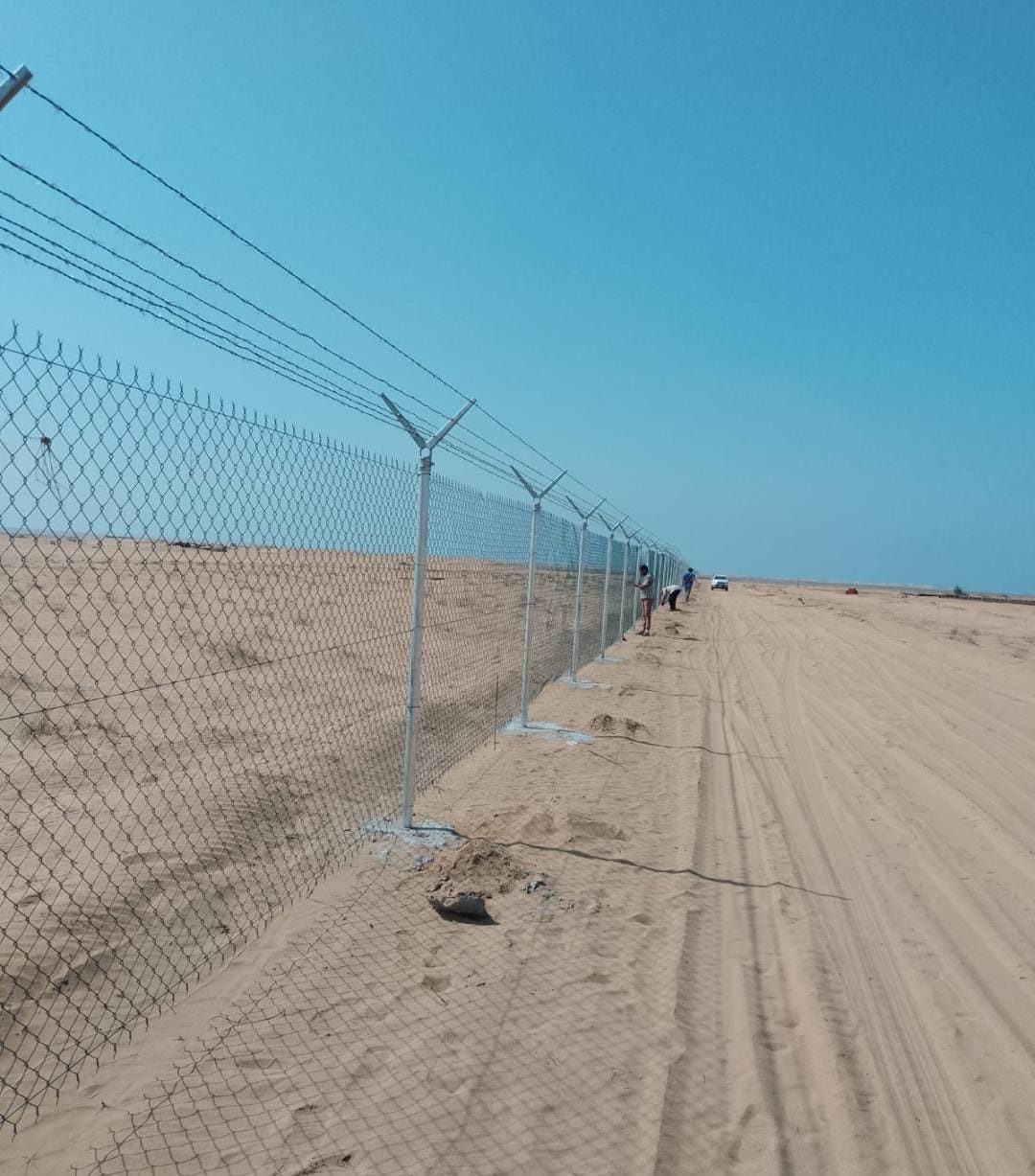
What Are the Most Common Construction Fencing Mistakes?
Common mistakes include using an unapproved fence type, ignoring public safety, installing unstable supports, placing gates poorly, and failing to inspect the fence during construction.
Is choosing the cheapest fence always a mistake?
The lowest price can be unsuitable if the materials or design do not meet the project's requirements.
Compare complete installation quality and safety provisions alongside price.
Can I use chain-link fencing everywhere?
No. Some locations or construction activities require a different enclosure, including solid temporary fencing.
Check the municipal and project-specific requirements before selecting the material.
Is it dangerous to install fencing without checking underground utilities?
Yes. Excavation near buried electrical cables, water lines, or other services can create serious hazards.
Use the required utility identification and excavation permit procedures before foundation work.
Can I leave a temporary gate open throughout the day?
Gate operation must follow the site's access-control and safety procedures.
Uncontrolled openings may allow unauthorized access or create hazards involving construction vehicles and pedestrians.
Is it safe to attach solid advertising panels to mesh fencing?
Not without verifying that the structure can resist the additional wind loading and that the attachments are permitted.
Added surfaces can change the behavior of a temporary fence significantly.
What Should I Check Before Ordering Construction Site Fencing?
Confirm project requirements, site dimensions, fence specifications, foundation design, access arrangements, and installation responsibilities before placing an order.
What should be included in my construction fencing checklist?
Use this checklist to organize the technical and operational information needed for a fencing project.
- ☐ Confirm the approved construction-site boundary.
- ☐ Review applicable municipal fencing requirements.
- ☐ Check whether a solid temporary enclosure is required.
- ☐ Measure the actual fencing perimeter.
- ☐ Determine the approved fence height.
- ☐ Confirm the material and corrosion protection specifications.
- ☐ Review structural stability and wind load requirements.
- ☐ Determine the approved fence post spacing.
- ☐ Check foundation and support requirements.
- ☐ Identify underground and overhead utilities.
- ☐ Plan authorized vehicle and pedestrian entrances.
- ☐ Confirm gate width and operating arrangements.
- ☐ Review public access and pedestrian protection.
- ☐ Check temporary traffic management requirements.
- ☐ Determine any approved signage or enclosure appearance requirements.
- ☐ Confirm installation responsibilities and safety procedures.
- ☐ Agree on inspection and maintenance requirements.
- ☐ Clarify removal or relocation responsibilities.
- ☐ Review the full quotation and excluded works.
- ☐ Establish final inspection and acceptance procedures.
What should I check after fence installation?
Verify the completed installation against the approved specifications and confirm that the boundary, supports, and gates are safe for the intended use.
Document any defects and ensure corrective actions are completed before formal acceptance.
What Are the Most Frequently Asked Questions About Construction Fencing?
These answers address common questions from contractors, developers, and property owners planning construction site fencing in Saudi Arabia.
1. How do I fence a construction site in Saudi Arabia?
Check municipal requirements, confirm the approved boundary, select the required enclosure, install engineered supports and gates, and inspect the completed fence.
2. What are the strongest types of fences?
The strongest suitable system depends on the design of its mesh or panels, posts, connections, and foundations. Strength should be evaluated against the actual project loads and requirements.
3. How do I install fences?
Survey the fence line, verify utilities, prepare the approved supports, install posts and fence sections, secure the gates, and inspect the installation.
4. What distance is required between fence posts?
The spacing is determined by fence height, structural design, wind conditions, ground conditions, and the selected system. Do not use a universal spacing rule.
5. What is the security height for fences?
The required height depends on applicable municipal specifications and the project's approved safety and security requirements.
6. Can chain-link fencing be used around a building project?
It may be suitable where permitted, but some construction sites require solid temporary enclosures or other specified barriers.
7. How much does construction site fencing cost?
Costs depend on perimeter length, fence type, height, posts, foundations, gates, and installation conditions. Obtain a quotation based on actual specifications.
8. Can temporary fencing withstand Saudi desert winds?
A properly engineered system can be designed for the required wind conditions, but safety depends on the specific structure and installation.
9. How often should construction fencing be inspected?
Follow the approved inspection plan and conduct additional inspections after conditions that may compromise the fence.
10. How do I choose a construction fencing contractor in Riyadh?
Choose a contractor who can work to the approved specifications and provide clear details about materials, supports, gates, installation, and inspection.
Where Can I Check Construction Fencing Regulations in Saudi Arabia?
Construction fencing requirements should be verified using official Saudi municipal guidance, applicable building regulations, and the approved project documents.
Where can I check municipal construction-site fencing requirements?
Use the official Balady platform and the applicable municipal guidance for construction-site enclosures.
Saudi municipal guidance addresses requirements for temporary construction-site fencing. Depending on the project and location, an ordinary chain-link fence may not meet the required enclosure specifications.
Official reference: Official Saudi Guide to Fencing Construction Sites (Arabic PDF).
Where can I review Saudi Building Code requirements?
Consult the official Saudi Building Code National Committee website.
Applicable building code provisions and construction safety requirements should be identified by the project's qualified professionals, rather than assuming one rule covers every temporary fence.
Does a construction fence replace other site safety requirements?
No. Perimeter fencing does not replace the required protection for excavation, traffic movement, falling objects, equipment hazards, or emergency access.
The project's safety management arrangements must address each relevant hazard with appropriate measures.
Is fencing a vacant plot the same as fencing an active construction site?
No. The purposes, approval routes, and applicable specifications can differ.
A vacant land fencing permit should not automatically be treated as authorization for the enclosure of an active construction project.
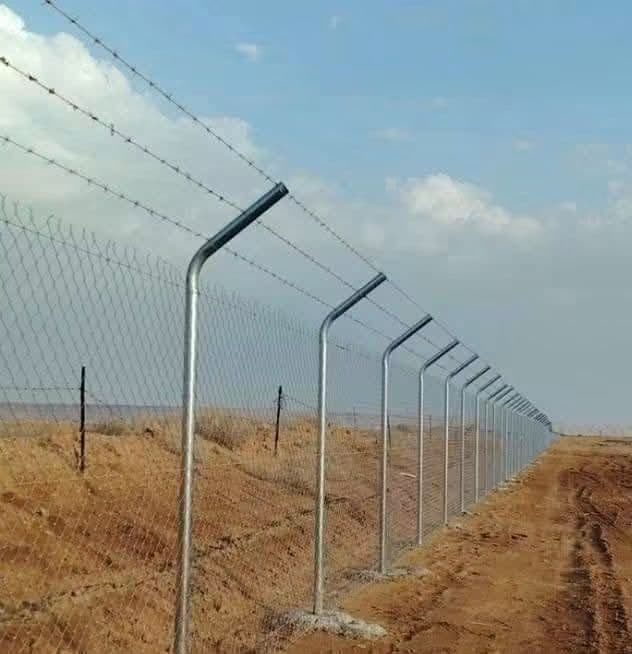
How Do I Fence a Construction Site in Saudi Arabia Correctly?
Start with compliance, engineering, and safety rather than material price alone. Identify the enclosure required by the relevant municipality and project approvals, then select appropriate fence materials, engineered posts, foundations, access gates, and inspection procedures.
When chain-link fencing is permitted, correctly specified galvanized steel mesh can provide a practical boundary solution. Where a solid construction enclosure is required, the design must address that requirement rather than substituting an ordinary transparent mesh fence.
What is the first step before requesting construction fencing?
Obtain the project's approved boundary and confirm the required fence type, height, and access arrangements.
Prepare accurate site measurements, available drawings, and information about soil conditions and nearby public routes.
How can I avoid unnecessary construction fencing costs?
Specify the project correctly, compare equivalent quotations, and avoid buying materials that do not satisfy the approved requirements.
Do not reduce necessary structural or public safety provisions simply to lower the initial cost.
How can I request a fencing quotation from Shobok Rayat Najd?
Share the project location, approximate fencing length, required height, approved fence type, gate details, and available site information.
These details make it easier to discuss materials and installation requirements, with final pricing depending on the verified project scope.
If your question is “How do I fence a construction site in Saudi Arabia?”, the answer is to use a compliant, appropriately engineered fencing system that provides effective site separation and remains stable throughout the project.
For construction fencing, galvanized mesh, steel fence posts, and perimeter fencing inquiries in Riyadh and Saudi Arabia, contact Shobok Rayat Najd through the official Shobok Rayat Najd website.