


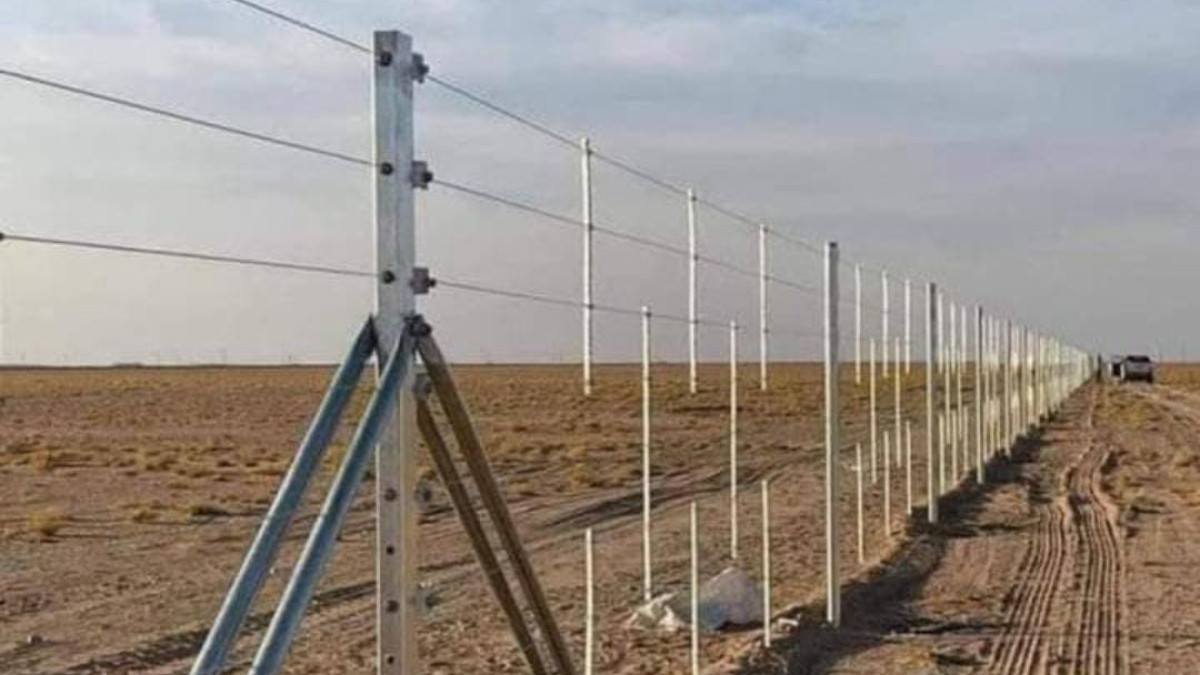
To fence an outdoor AC equipment area, choose a durable security fence that prevents unauthorized access without restricting equipment ventilation or maintenance. Confirm the required clearances with the HVAC manufacturer and project engineer, then select suitable mesh, posts, foundations, and access gates. Use corrosion-resistant materials and an approved installation design that accounts for Saudi Arabia's heat, wind, and site conditions.
Outdoor air conditioning equipment is common in Saudi commercial buildings, factories, warehouses, offices, shopping facilities, and residential compounds. These systems are valuable operational assets, and their locations may need protection against unauthorized entry, accidental impacts, and interference.
However, outdoor AC equipment fencing requires more than choosing strong steel mesh. A poorly designed enclosure can obstruct cooling airflow, restrict maintenance, interfere with emergency access, or create costly operational problems.
This guide from Shobok Rayat Najd explains how to choose suitable fencing materials, evaluate security requirements, determine post spacing, plan access gates, and prepare a practical installation specification for outdoor HVAC equipment in Saudi Arabia.
Important safety note: An outdoor equipment fence must follow the HVAC manufacturer's installation requirements, the approved site drawings, and applicable building, electrical, fire-safety, and access requirements. This guide does not establish universal equipment clearance distances or authorize drilling near buried electrical, refrigerant, or utility services.
 Call Now
 WhatsApp
Why Should I Install a Fence Around Outdoor AC Units?
Outdoor AC equipment fencing helps control access to mechanical equipment and reduce the risk of accidental contact or unauthorized interference, provided the enclosure is compatible with the equipment.
Does a metal fence protect outdoor air conditioning equipment?
Yes, a properly designed fence can provide a physical barrier around exposed equipment.
It may discourage unauthorized entry, help define maintenance-only areas, and reduce some forms of accidental interference.
However, a fence does not guarantee protection against every security threat or physical impact. The required performance depends on the site's actual risks.
Do commercial AC units need security fencing?
Some installations benefit from security fencing, but not every outdoor AC unit requires a separate enclosure.
The decision depends on accessibility, equipment value, public exposure, operational requirements, and the property owner's security plan.
A condenser located inside an already controlled mechanical compound may need a different solution from exposed equipment beside a public walkway.
Can fencing prevent accidental damage to cooling equipment?
A fence may reduce accidental access, but it should not automatically be treated as a vehicle-impact barrier.
Where forklifts, trucks, or other vehicles operate nearby, a separate engineered impact-protection system may be necessary.
Mesh fencing and vehicle barriers serve different purposes and should be evaluated separately.
What Are the Strongest Types of Fences?
The strongest fence depends on the complete system, including mesh material, wire diameter, posts, connections, foundations, and the structural loads it must withstand.
Is welded mesh stronger than chain-link fencing?
Welded mesh can provide rigid panels, while chain-link fencing uses a flexible interwoven structure. Neither is universally stronger in every configuration.
Performance depends on wire thickness, panel dimensions, mesh openings, post specifications, attachment methods, and installation quality.
For equipment enclosures, the choice should reflect required security, ventilation, maintenance, and lifecycle costs.
Is galvanized steel mesh suitable for outdoor AC units?
Galvanized steel mesh can be suitable for outdoor equipment areas when the material and coating meet the project's environmental and structural requirements.
Galvanizing helps protect steel against corrosion. However, the coating's durability depends on its quality, thickness, exposure conditions, and damage during installation.
Should I use rigid mesh panels or flexible chain-link?
Rigid panels may provide a structured enclosure appearance, while chain-link can offer flexibility for certain perimeter layouts.
The most appropriate system depends on the dimensions, openings, maintenance access, and project specifications.
How do different fencing materials compare?
Compare security performance, corrosion protection, airflow, maintenance, and installation requirements before selecting a system.
| Fencing System | Main Characteristics | What Should Be Checked? |
|---|---|---|
| Galvanized welded mesh | Rigid panels with fixed wire intersections | Panel strength, weld quality, coating, and fixing details |
| Galvanized chain-link | Flexible woven steel mesh | Wire gauge, tension, post layout, and secure attachments |
| Steel bar fencing | Rigid metal framework with open spaces | Bar spacing, security requirements, airflow, and structural capacity |
| Perforated metal panels | Metal panels with manufactured openings | Free-air area, pressure loss, wind loads, and ventilation approval |
| Solid metal enclosure | Reduced direct visibility and airflow | Thermal engineering and equipment manufacturer approval |
Technical consideration: A fence material that is physically strong is not necessarily suitable for HVAC use if it obstructs air intake, exhaust, service access, or required safety clearances.
How Do I Choose the Best Fence for Outdoor AC Equipment?
Choose the fence by evaluating equipment layout, airflow requirements, required security, maintenance access, material durability, and approved construction specifications.
Should I choose the fence before reviewing the AC equipment?
No. Review the equipment's installation and service requirements before finalizing the fence layout.
Different systems have different intake, exhaust, access, and clearance configurations.
The fence design must be compatible with the actual equipment rather than a generic illustration.
Does fence design depend on the type of air conditioner?
Yes. Air-cooled condensers, packaged units, and other outdoor mechanical equipment may require different airflow and maintenance arrangements.
Some equipment discharges warm air upward, while other systems use different intake or exhaust paths.
The manufacturer and mechanical engineer should identify which areas must remain unobstructed.
Can the fence be installed close to the equipment?
Only when the approved design confirms sufficient operating and service clearances.
A fence installed too close to a unit may restrict airflow, make servicing difficult, or interfere with component removal.
Do not assume that a visually open mesh can always be installed immediately beside a condenser.
How Do I Maintain Airflow Around Outdoor AC Units?
Maintain airflow by keeping the equipment's required intake and exhaust paths unobstructed and selecting enclosure materials that meet the manufacturer's clearance and ventilation requirements.
Does an open mesh fence allow better airflow than a solid wall?
An open mesh generally presents less physical blockage than a solid wall, but actual airflow performance depends on the mesh openings and installation geometry.
Even an open barrier can affect airflow under some conditions, particularly when it is close to an equipment intake or exhaust.
Can a fence cause hot air to circulate back into the AC unit?
Yes. An enclosure that obstructs air discharge or changes airflow patterns can contribute to warm-air recirculation.
This may reduce equipment efficiency or contribute to high-temperature operating conditions.
The risk depends on equipment design, enclosure geometry, spacing, and prevailing airflow conditions.
Should I install decorative privacy panels around the equipment?
Only after confirming their compatibility with the mechanical system.
Decorative panels may reduce visible openings or increase resistance to airflow.
If screening is required for appearance, the mechanical designer should approve a suitable solution rather than relying on appearance alone.
What should I ask the HVAC contractor before installing fencing?
Request written confirmation of the required clearances, airflow paths, maintenance access, and any prohibited enclosure configurations.
This information should be incorporated into the fencing drawings before construction begins.
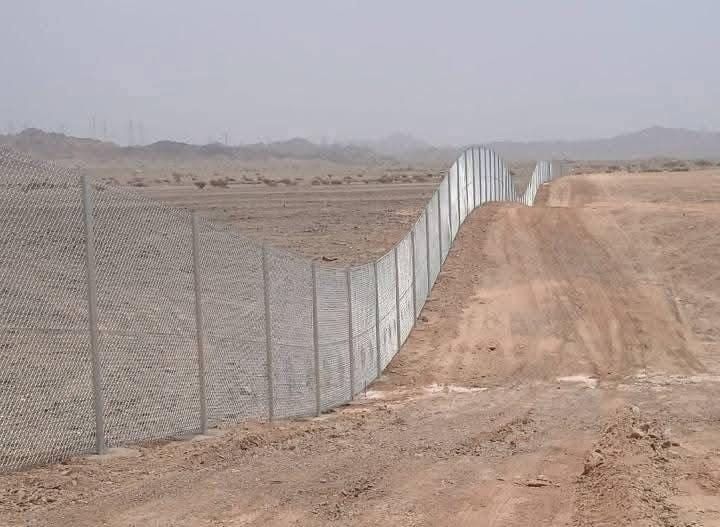
What Distance Is Required Between Fence Posts?
The required distance between fence posts depends on the fence height, panel system, wind loads, post sections, foundation design, and manufacturer or project specifications.
Is two meters the correct spacing between fence posts?
Not necessarily. Two meters may be used in some designs, but it should not be treated as a universal requirement.
Post spacing must be compatible with the selected fencing system and engineering conditions.
A taller fence or a system with reduced airflow may experience different wind loads and require a different structural arrangement.
Does wind affect the distance between posts?
Yes. Wind loads influence the forces transferred from the fence panels to the posts and foundations.
The design should account for the site's relevant wind conditions and the fence's effective exposed area.
Can I increase post spacing to reduce installation costs?
Only if the revised spacing remains structurally acceptable and is approved for the chosen system.
Increasing the spacing without evaluation may cause excessive movement, panel deformation, or overloaded posts.
How should fence spacing be determined for my project?
Use the approved structural design and the selected fence system's technical specifications.
| Design Element | What Determines It? | Why Does It Matter? |
|---|---|---|
| Fence post spacing | Panel dimensions, structural loads, and system specifications | Controls panel support and post loading |
| Fence-to-equipment clearance | HVAC manufacturer and mechanical design | Protects airflow and service access |
| Gate opening width | Maintenance access and equipment movement | Allows approved servicing and replacement |
| Foundation dimensions | Ground conditions, loads, and structural design | Provides the required support |
| Fence height | Security objectives and approved requirements | Influences access control and structural design |
What Is the Security Height for Fences?
The appropriate security fence height depends on the property's risk assessment, applicable regulations, access-control objectives, and approved project specifications.
Is a two-meter fence high enough for outdoor AC equipment?
It may be suitable for some applications, but it cannot be approved as a universal security height.
Different facilities may require different heights depending on their location and the level of protection needed.
The owner or designer should define the required height before the materials are purchased.
Does a taller fence always provide better security?
Not necessarily. Height is only one part of a complete security design.
Weak access gates, insecure connections, or poorly supported posts may undermine a tall fence.
Increasing fence height may also increase material quantities, wind loads, and foundation requirements.
Should I add barbed wire above an AC equipment fence?
Only if the applicable regulations, project requirements, and safety assessment permit it.
Sharp security extensions may create injury risks in areas accessed by maintenance workers or other authorized personnel.
The security design should consider how the enclosure will be used and who needs access.
How Do I Install Fences?
Install the fence using an approved layout, verified underground service information, suitable foundations, correctly positioned posts, secure panels, and functional access gates.
What should I check before installing an equipment fence?
Confirm the approved fence alignment, equipment clearances, ground conditions, and locations of underground utilities.
Outdoor cooling areas may contain electrical feeders, refrigerant lines, drainage pipes, and other services.
Drilling or excavation must not begin until the required utility identification, permissions, and safety procedures are complete.
Should I install fence posts before the AC equipment?
The construction sequence should be coordinated with the mechanical installation plan.
In some projects, installing the fence too early may obstruct equipment delivery or replacement.
The mechanical contractor, project manager, and fencing contractor should agree on a workable sequence.
Can I install the fence while the AC units are operating?
That decision requires an approved site-specific safety assessment.
Work near operating mechanical and electrical equipment may involve moving components, electrical hazards, hot surfaces, and restricted access.
The responsible site personnel must determine safe working conditions and any necessary isolation procedures.
How are steel mesh panels attached to fence posts?
Use fastening details and components approved for the fencing system.
Connections must provide the specified strength and durability without damaging protective coatings or introducing unacceptable sharp edges.
How do I confirm the completed fence is stable?
Inspect the posts, connections, panels, foundations, and gates against the approved installation requirements.
Where the project requires structural tests, they should be carried out using approved methods rather than improvised force tests.
What Foundations Should I Use for Outdoor Equipment Fencing?
Foundation selection depends on ground conditions, structural loads, post dimensions, and the available space around equipment and buried services.
Do all fence posts need concrete foundations?
Not every fencing system uses the same foundation arrangement.
Some designs use cast-in-place concrete foundations, while others may use engineered base plates and anchors.
The suitable method depends on the approved structural design.
Can I bolt posts directly onto an existing concrete slab?
Only if the existing slab and anchorage can safely support the proposed fencing system.
The assessment may need to consider slab thickness, concrete condition, reinforcement, edge distances, and embedded services.
Do not assume every concrete surface can accept structural anchors.
Do Saudi soil conditions affect fencing foundations?
Yes. Ground conditions can vary between locations and influence foundation performance.
Foundation design should use appropriate information about the site rather than assuming identical soil characteristics throughout Riyadh or other Saudi regions.
Can foundations interfere with underground AC services?
Yes. Excavation or drilling may damage electrical cables, refrigerant piping, drainage lines, or other concealed infrastructure.
Verify the service layout and obtain the required clearance before ground-disturbing work.
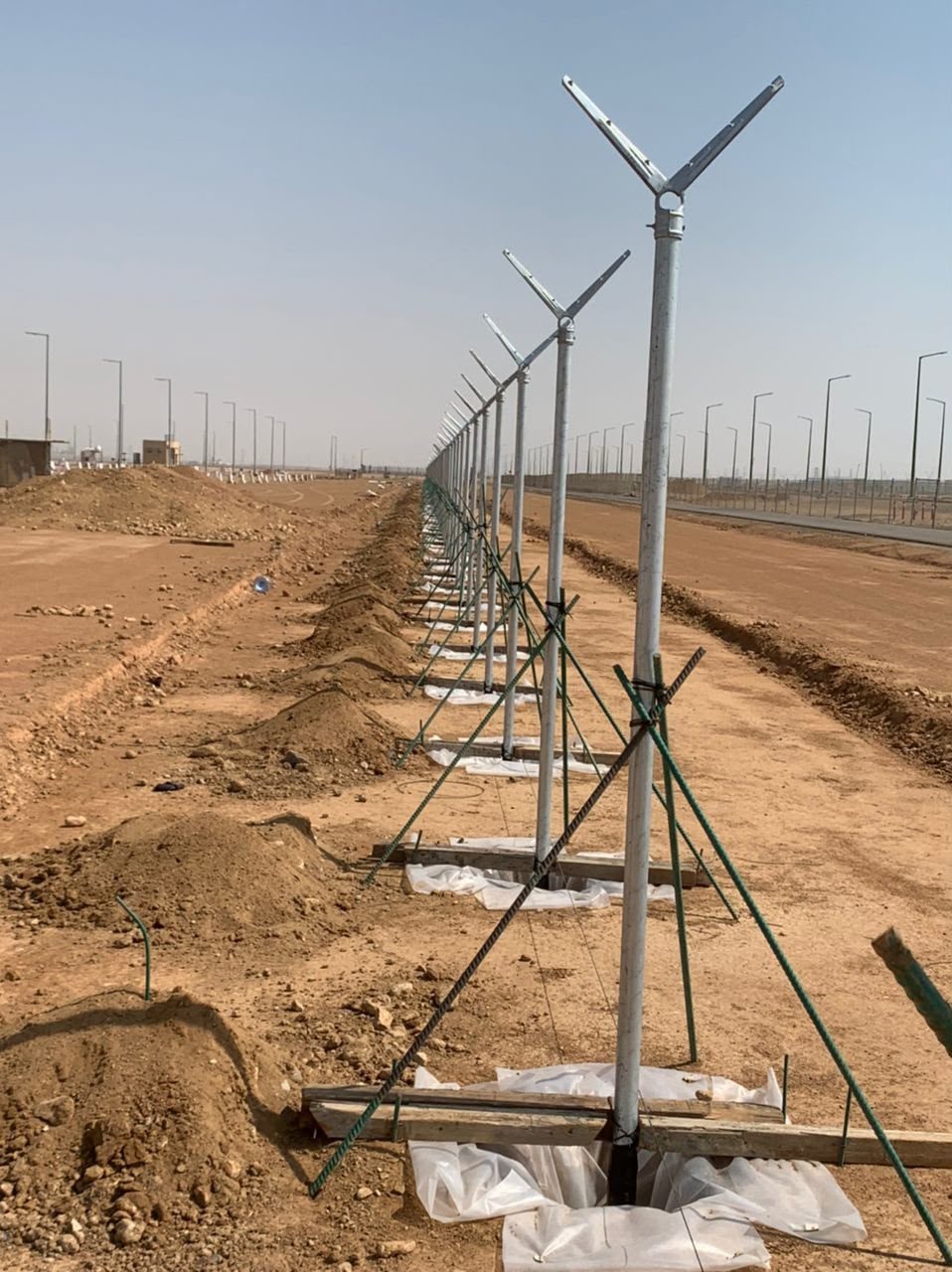
How Do I Choose Gates for an Outdoor AC Equipment Fence?
Choose gates that meet the approved access and security requirements while allowing maintenance personnel to reach and, when necessary, replace equipment safely.
Should the enclosure have a single or double gate?
The gate configuration should reflect the required access width and maintenance operations.
A pedestrian gate may serve routine inspections, while equipment replacement could require a wider access arrangement.
How wide should an AC equipment maintenance gate be?
The gate width should be based on the actual equipment dimensions and approved maintenance or replacement procedures.
Consider access equipment, handling arrangements, and available movement paths.
Do not base the gate width solely on what is convenient for pedestrians.
Should the gate open inward or outward?
Follow the approved layout and applicable safety, access, and egress requirements.
The gate must not obstruct equipment clearances, circulation routes, or necessary emergency access.
What type of locking system should I use?
Choose a locking arrangement that balances security with authorized operational access.
The system should be compatible with the facility's maintenance and emergency procedures.
A lock that prevents required emergency access can introduce a new risk.
How Do I Protect Outdoor Equipment Fences From Rust?
Use corrosion-resistant materials and protective coatings appropriate to the project's exposure conditions, then maintain the coating and connections throughout the fence's service life.
Does hot-dip galvanizing prevent corrosion?
Hot-dip galvanizing provides corrosion protection, but it does not make steel permanently immune to deterioration.
Its performance depends on coating quality, exposure conditions, mechanical damage, and maintenance.
Is powder-coated steel better than galvanized steel?
The answer depends on the complete coating system and environmental conditions.
Powder coating can provide color and surface protection, while galvanizing provides a different corrosion protection mechanism.
Some projects use combined coating systems when technically justified.
Does coastal humidity change the fence specification?
Yes. Marine exposure and airborne salts may increase corrosion demands compared with less aggressive environments.
Projects in coastal Saudi cities should consider the local corrosion environment when specifying materials and finishes.
How do I check the galvanized coating quality?
Review material certifications and the inspection requirements defined in the project specifications.
Depending on the approved standards, verification may include coating thickness, visual condition, and treatment of damaged areas.
How Much Does Outdoor AC Equipment Fencing Cost?
The cost depends on enclosure size, fence height, mesh type, foundations, gates, coating specifications, installation conditions, and required engineering or safety work.
Can I calculate the total cost using the price per meter?
The fence price per meter can support an initial estimate, but it does not necessarily include the full project cost.
Foundations, gates, access constraints, protective finishes, and work near existing equipment may significantly affect the total.
Does welded mesh cost more than chain-link fencing?
Pricing varies according to material specifications, fabrication, coating, quantities, and installation requirements.
Compare equivalent systems with clearly defined specifications instead of assuming one material is always more expensive.
Will a larger gate increase the project price?
It may, because larger gates can require stronger frames, hinges, posts, and supporting foundations.
The actual cost depends on the design and fabrication requirements.
How can I request an accurate fencing quotation?
Provide the approved layout, total perimeter, height, material specification, gate requirements, and site access details.
| Cost Component | Main Pricing Factors | Required Quotation Detail |
|---|---|---|
| Mesh panels | Length, height, wire size, openings, and coating | Material specification and quantity |
| Steel posts | Post section, spacing, height, and load requirements | Post schedule and fixing details |
| Foundations | Soil, excavation, concrete, and anchorage | Civil works and exclusions |
| Access gates | Quantity, dimensions, frames, and hardware | Gate specifications and access requirements |
| Surface protection | Galvanizing or approved coating system | Coating specification and quality documentation |
| Site installation | Access, safety controls, and coordination | Scope, permissions, and implementation conditions |
Pricing note: No universal Saudi market price can be reliably assigned to every outdoor AC equipment enclosure. The final amount should be based on verified dimensions, approved specifications, and a project-specific quotation.
Can I Install an Equipment Fence on a Rooftop?
Rooftop fencing requires additional evaluation of structural capacity, wind loads, waterproofing, access, and the mechanical equipment's operating requirements.
Can I drill fence anchors into an existing roof?
Not without checking the roof structure, waterproofing system, embedded services, and approved anchorage design.
Unplanned drilling may compromise waterproofing or damage structural and mechanical elements.
Does rooftop wind affect fence selection?
Yes. Rooftop locations can expose fencing to demanding wind conditions depending on building geometry and surrounding structures.
The structural engineer should evaluate the relevant loads and confirm the suitability of the mounting arrangement.
Should rooftop equipment have a solid privacy enclosure?
Only if the mechanical and structural design confirms that the enclosure is suitable.
Solid screening can change airflow and wind loading, making it inappropriate to select solely for appearance.
Can fencing obstruct rooftop maintenance routes?
Yes. Poorly positioned fencing or gates may restrict access to equipment or interfere with required service routes.
Coordinate the fence design with the building's maintenance and safety plans.
Can Outdoor AC Fencing Reduce Equipment Noise?
Standard open mesh fencing generally provides limited acoustic attenuation. Noise reduction requires a separate acoustic design compatible with the equipment's ventilation requirements.
Will galvanized mesh block condenser noise?
Not significantly in most ordinary open-mesh arrangements.
Sound can travel through the large openings, so the fence should primarily be considered a physical security barrier rather than a soundproofing system.
Can I add solid panels to reduce noise?
Only after an appropriate acoustic and mechanical engineering assessment.
A panel that blocks sound may also interfere with cooling airflow or increase heat recirculation.
Are acoustic enclosures available for outdoor equipment?
Engineered acoustic solutions exist, but they must be designed for the equipment's heat rejection, service access, and operating requirements.
They are not interchangeable with ordinary perimeter mesh fencing.
How Do I Secure Outdoor AC Equipment Without Blocking Maintenance?
Use controlled access points, suitable gates, and a layout that respects the equipment manufacturer's service clearances and the facility's safety procedures.
Should maintenance staff be able to reach every unit?
Yes. The approved arrangement must provide the access required for inspection, servicing, and equipment replacement.
Access needs depend on the specific equipment and maintenance procedures.
Should the enclosure include removable panels?
Removable panels may be useful where approved equipment replacement procedures require temporary access.
Such panels must remain secure during normal operation and comply with the structural and safety requirements of the fencing design.
Can I use electronic access control on the fence gate?
It may be possible if the system is compatible with the facility's security and emergency access requirements.
Power failures, emergency release arrangements, and authorized access procedures must be considered.
How do I protect against unauthorized entry?
Use a consistent security system that combines the specified fence, secure gate hardware, and controlled access procedures.
A physically strong fence offers limited protection if its gate is routinely left unsecured.
What Safety Rules Apply to Outdoor AC Equipment Fencing in Saudi Arabia?
Applicable requirements depend on the property, equipment, location, and scope of construction. Relevant considerations may include building regulations, electrical safety, fire access, and approved manufacturer instructions.
Does the Saudi Building Code affect equipment fencing?
Relevant Saudi Building Code provisions may apply depending on the type of facility and construction work.
Project teams should review the current requirements applicable to the site, rather than assuming that one general fence specification satisfies every building type.
Official information is available from the Saudi Building Code National Committee.
Can the fence interfere with emergency access?
Yes. A fence or locked gate must not obstruct emergency access or required means of egress.
Review the facility's approved safety plans and coordinate with the responsible authorities or specialists.
Do metal fences near AC equipment need electrical grounding?
Grounding and bonding requirements depend on the electrical installation and the applicable engineering design.
Do not improvise connections between a metal fence and electrical equipment.
Any required electrical work should be designed and performed by qualified personnel according to the applicable standards and project requirements.
Can I install fencing without checking underground services?
No. Excavation and drilling near equipment areas require appropriate utility identification and authorization.
Damage to concealed electrical cables or refrigerant lines can create serious safety and operational risks.
What Mistakes Should I Avoid When Fencing AC Equipment?
The most serious mistakes are restricting cooling airflow, blocking service access, using unapproved foundations, and installing fencing without checking utilities and safety requirements.
Why is placing the fence too close to the condenser risky?
Insufficient clearance may obstruct airflow, restrict maintenance, and interfere with proper equipment operation.
Required distances must be established for the actual unit and approved configuration.
Why should I avoid using a completely solid fence?
A solid enclosure may increase airflow resistance or contribute to warm-air recirculation.
It should not be used without the relevant mechanical evaluation and approvals.
Can poor fence post installation damage the enclosure?
Yes. Inadequate foundations or fixings can cause movement, misalignment, or structural failure.
Use the approved structural design and inspect the work before handover.
What are the main installation mistakes and solutions?
Prevent problems by checking the complete system before construction rather than correcting defects after installation.
| Common Mistake | Potential Consequence | Correct Approach |
|---|---|---|
| Installing mesh too close to AC units | Restricted airflow or service access | Follow approved equipment clearances |
| Using solid panels without review | Heat recirculation or excessive wind loading | Obtain mechanical and structural approval |
| Choosing arbitrary fence height | Unsuitable security or structural performance | Use the approved design specification |
| Excessive post spacing | Overloaded or unstable fence components | Follow engineering calculations and system limits |
| Drilling without utility checks | Damage to electrical or mechanical services | Verify underground and embedded services |
| Installing a narrow maintenance gate | Difficult servicing or equipment replacement | Confirm access dimensions with the mechanical team |
| Ignoring protective coatings | Premature corrosion | Use suitable materials and inspect coating quality |
How Do I Inspect Outdoor Equipment Fencing After Installation?
Inspect the completed fence against the approved drawings, material specifications, structural requirements, and access arrangements before accepting the work.
What should I check on the fence posts?
Check their alignment, fixing details, visible condition, and conformity with the approved foundation design.
Where required, review foundation and anchorage inspection records.
How do I inspect the mesh panels?
Confirm that the panels are securely fixed, undamaged, and consistent with the specified material and opening dimensions.
Inspect for loose fasteners, sharp damaged areas, and unacceptable coating defects.
How do I test the gate?
Verify that the gate opens and closes correctly and meets the approved locking and access requirements.
Check hinges, frame alignment, stops, and any required safety features.
Should I inspect the AC equipment after the fence is installed?
Yes. The responsible mechanical specialist should confirm that equipment access and airflow requirements remain satisfied.
Fence completion does not replace mechanical or operational approval where required.
How Do I Maintain a Galvanized Equipment Fence?
Maintain the fence by inspecting corrosion protection, posts, connections, gates, and any changes that may affect equipment ventilation or access.
How often should I inspect the fence?
Set the inspection interval according to the exposure environment, manufacturer guidance, and facility maintenance requirements.
High-use gates and areas exposed to accidental impacts may require additional attention.
Can I repair rusted fence components?
Some coating damage may be repairable using an approved treatment, while severely deteriorated components may need replacement.
The appropriate response depends on the material specification and the extent of deterioration.
Should I remove debris around the fence?
Yes, maintain a clean enclosure in accordance with the equipment manufacturer's safety and maintenance requirements.
Keep loose packaging, vegetation, and other unnecessary materials away from equipment airflow paths and service areas.
Can I add privacy screening after installation?
Do not add screening without confirming its effect on cooling performance, wind loading, and approved clearances.
A modification that seems minor from a security or visual perspective may materially affect mechanical performance.
How Do I Choose a Fence Contractor in Riyadh?
Choose a contractor capable of supplying and installing the specified fencing system while coordinating with the project's approved mechanical, structural, and safety requirements.
Should the contractor inspect the site before quoting?
A site assessment is useful when equipment clearances, underground services, access restrictions, and foundation conditions affect the work.
Approved drawings and project documentation should form the basis of the quotation.
What should the fence quotation include?
It should clearly describe the materials, quantities, foundations, gates, protective finishes, installation scope, exclusions, and required inspections.
A quotation based only on the linear meter price may not capture the full scope.
Can a fencing contractor approve HVAC clearance distances?
No. Required equipment clearances should be confirmed by the manufacturer's documentation and the responsible mechanical designer.
The fence contractor should implement the approved layout rather than independently changing equipment access requirements.
How can I contact Shobok Rayat Najd?
Contact Shobok Rayat Najd to discuss fencing supply and installation requirements, including the proposed layout and material specifications.
Through Shobok Rayat Najd's official website, customers can learn about fencing services and request information about a suitable project scope.
For specialized HVAC equipment areas, final design acceptance and equipment clearances remain the responsibility of the relevant qualified designers and project authorities.
What Are the Most Common Questions About Outdoor AC Equipment Fencing?
These frequently asked questions cover fencing strength, post spacing, installation, security height, maintenance access, and project costs.
1. What are the strongest types of fences?
Strong fencing systems use appropriately specified mesh, posts, connections, and foundations. Compare complete engineered systems rather than wire thickness alone.
2. How do I install fences?
Use an approved layout, verify utilities and clearances, install engineered posts and foundations, and inspect the completed system. Coordinate work near HVAC equipment with qualified personnel.
3. What distance is required between fence posts?
Post spacing depends on fence dimensions, loads, materials, and the approved structural design. No single distance applies to every installation.
4. What is the security height for fences?
Security height depends on the site's risk assessment and applicable project requirements. A commonly used height should not automatically be treated as sufficient.
5. Can I install fencing close to outdoor AC units?
Only if the approved clearances for ventilation and service access are maintained. Follow the actual equipment manufacturer's requirements.
6. Is galvanized mesh suitable for Saudi weather?
It can be suitable when the material and coating are specified for the site's conditions. Exposure severity and maintenance affect service life.
7. Will a metal mesh fence reduce AC cooling performance?
It may affect performance if it restricts airflow or creates unfavorable circulation patterns. Obtain mechanical approval for the enclosure layout.
8. How much does outdoor AC equipment fencing cost?
The price depends on perimeter length, materials, height, foundations, gates, and installation conditions. Request a project-specific quotation.
9. Can I install fencing on a rooftop?
It may be possible after appropriate structural, waterproofing, safety, and mechanical assessments. Do not drill anchors without approval.
10. Should an outdoor AC fence have a maintenance gate?
It should provide the access required by the approved equipment maintenance and replacement procedures. Gate dimensions and placement must reflect those needs.
What Should I Check Before Ordering Outdoor AC Equipment Fencing?
Review the equipment layout, approved operating clearances, fencing specifications, structural design, gate requirements, and construction conditions before purchasing materials.
What is the essential equipment fencing checklist?
Use this checklist to confirm that the project is ready for quotation and implementation.
- ☐ Identify all outdoor AC units and related mechanical equipment.
- ☐ Obtain the equipment manufacturer's installation requirements.
- ☐ Confirm required airflow and service clearances.
- ☐ Obtain approval for the proposed fence alignment.
- ☐ Determine the security objectives of the enclosure.
- ☐ Select an approved fencing system and material specification.
- ☐ Confirm fence height and structural requirements.
- ☐ Determine post spacing from the approved design.
- ☐ Confirm foundation type and ground conditions.
- ☐ Locate buried electrical, mechanical, and drainage services.
- ☐ Confirm gate dimensions and maintenance access routes.
- ☐ Check applicable fire-safety and emergency access requirements.
- ☐ Review electrical grounding or bonding requirements where relevant.
- ☐ Select corrosion protection suitable for the location.
- ☐ Confirm rooftop waterproofing requirements if applicable.
- ☐ Identify vehicle-impact risks separately from perimeter fencing.
- ☐ Agree on inspections and final acceptance procedures.
- ☐ Confirm contractor responsibilities and exclusions.
- ☐ Request material certificates and warranties where required.
- ☐ Approve the final quotation before ordering materials.
What should I verify during installation?
Check that the contractor follows the approved alignment, structural details, safety procedures, and equipment access restrictions.
Unplanned changes near mechanical equipment should be referred to the relevant designer or responsible project authority.
What should I verify before final payment?
Confirm completion, material compliance, gate operation, approved inspections, and correction of outstanding defects.
Where required, obtain written confirmation that the fence does not violate the mechanical equipment's approved operating and service requirements.
How Can I Improve Outdoor Equipment Security Without Creating New Risks?
Use a balanced design that protects the equipment while preserving mechanical operation, safe access, structural performance, and long-term maintenance.
Should security or airflow be the main priority?
Both are essential requirements that must be satisfied together.
A fence that is difficult to enter but causes cooling equipment to overheat is not a successful design.
Likewise, an enclosure that allows adequate ventilation but fails to provide the required access control does not meet its security objective.
Can I expand the fence later if more AC units are installed?
Expansion may be possible, but the revised enclosure should be reassessed for airflow, foundations, access, and structural requirements.
Adding more equipment may change maintenance routes and the required free space around the units.
What is the most important decision before construction?
Obtain an approved fence layout that incorporates the mechanical equipment's actual operating and maintenance requirements.
This reduces the risk of building an enclosure that later requires modification or removal.
How Do I Fence an Outdoor AC Equipment Area Successfully?
A successful outdoor AC equipment fence combines suitable security materials, structurally sound posts, corrosion protection, practical maintenance gates, and approved cooling clearances.
What should I prioritize when comparing fencing options?
Prioritize compliance with equipment and project requirements, followed by durability, security, maintainability, and lifecycle cost.
Do not select the cheapest or tallest fence without confirming its suitability for the equipment area.
How do I make sure the fence lasts in Saudi conditions?
Use appropriate materials, engineered foundations, corrosion protection, and a documented inspection plan.
Account for local environmental exposure, including wind, heat, dust, and coastal corrosion where relevant.
How do I request an outdoor equipment fence from Shobok Rayat Najd?
Prepare the approved layout and material requirements, then contact Shobok Rayat Najd to discuss the fencing scope and request a quotation.
If your question is How Do I Fence an Outdoor AC Equipment Area?, begin with the HVAC equipment's clearance and maintenance requirements before selecting mesh, posts, or gates.
The right solution is not simply a strong metal barrier. It is an integrated fencing system that protects valuable equipment while allowing the cooling installation to operate and be maintained safely.
For fencing services and project inquiries, visit Shobok Rayat Najd or contact the company through its official communication channels.
Shobok Rayat Najd | Professional Fencing and Security Mesh Solutions – Saudi Arabia.